Are you constantly tracking the rapidly changing digital landscape? If so, you are observing a fundamental shift that is defining the Future of Online Marketing. The journey toward 2026 reveals a professional landscape where success is inextricably linked to embracing Artificial Intelligence (AI) and Machine Learning (ML).
In India’s dynamic and hyper-competitive digital market, where consumer behavior is evolving at breakneck speed and digital ad spending is soaring, understanding the future of online marketing is no longer optional—it is critical. The brands that successfully integrate AI will achieve unprecedented efficiency and deeper customer connection, securing their position in the next era of commerce. The battlefield is noisier, faster, and far less forgiving.
This deep-dive analysis explores exactly how AI and ML are fundamentally reshaping your strategies, detailing the key trends, and offering actionable advice specifically tailored for navigating the future of online marketing in the diverse Indian market.
I. The New Era of Personalization in the Future of Online Marketing: From Segmentation to Hyper-Relevance
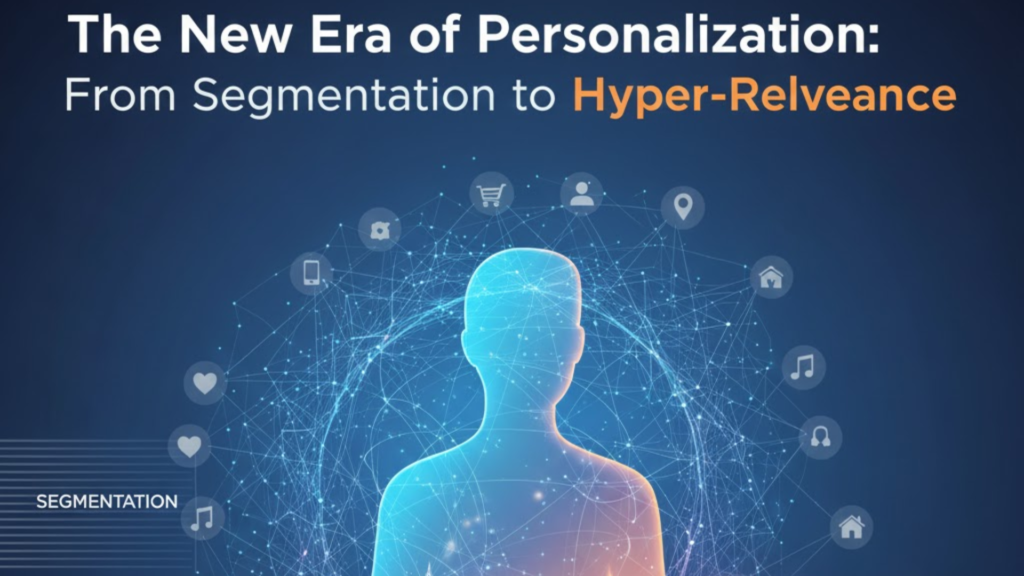
The days of segmenting customers merely by age or city are over. AI has ushered in an era where marketing is not just personalized, but hyper-relevant and delivered at the moment of need.
1. Real-Time, Predictive Customer Journeys – Future of Online Marketing
AI algorithms now use real-time behavioral data to influence the customer journey instantaneously, a capability far beyond human analysis.
- How AI Changes It: ML systems analyze milliseconds of interaction—the hover time on a product image, the scroll depth of a landing page—to dynamically change the content, recommendations, and advertisements shown. AI can predict future behaviors, delivering content dynamically, and adapting in real-time to consumer signals.
- Relevance for India: India’s massive e-commerce and OTT platforms are leading this. Their ML systems not only suggest products based on past purchases but also factor in local festivals, vernacular language preferences, and cultural events to push highly localized and ultra-relevant offers. This level of granularity is crucial for winning trust and wallet share in a diverse market.
2. The Power of Generative Experience (GX)
Beyond just recommending products, AI is now being used to generate entire user experiences (GX) instantly.
Example: Imagine an e-commerce site using AI to rearrange its homepage layout and prioritize categories based on the individual user’s inferred intent before they even search. For one user, it might prioritize “Electronics” while for another, it pushes “Traditional Wear,” based on their location and browsing history.Actionable Takeaway: Integrate ML-powered personalization engines into your website and app. Focus on using real-time data streams to make your user experience feel truly unique to every single visitor.
II. The Transformation of Content Creation and SEO in the Future of Online Marketing
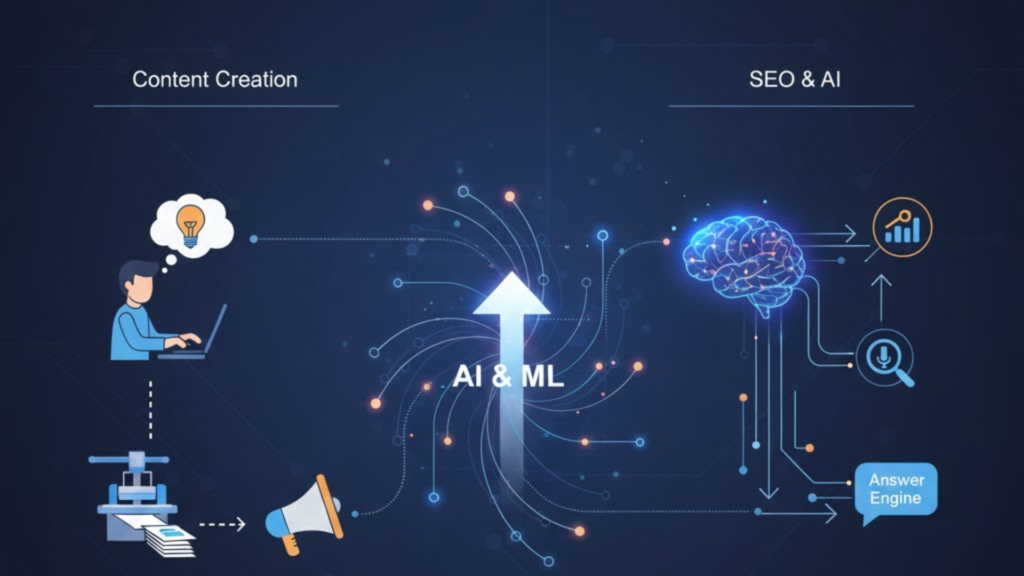
The core pillar of online marketing—content—is undergoing a revolution. AI is becoming the ultimate co-pilot for content creators, fundamentally altering how we produce, optimize, and distribute information.
1. Generative AI as a Productivity Engine in the Future of Online Marketing
Generative AI tools are automating the tedious, repetitive elements of content creation, freeing up human bandwidth for strategic thinking.
- Speed and Scale: AI can produce SEO-friendly blog outlines, email copies, social media captions, and even basic scripts in minutes. For businesses needing high volumes of content—especially for vast product catalogs or diverse local niches—this speed is indispensable.
- The Localization Advantage in India: AI is becoming indispensable for effective localization. Tools and government-backed platforms like Bhashini, Anuvadini, and BharatGen are enabling marketers to rapidly translate and localize core messages into Hindi, Bengali, Tamil, and other vernacular languages while maintaining semantic accuracy, ensuring cultural context is respected.
- The Human Touch Imperative: However, consumers are increasingly tired of generic “AI-slop.” The Future of Online Marketing will see brands succeed by blending AI-generated drafts with human creativity, unique insights, and authentic storytelling.
2. SEO’s Shift to Generative Search Optimization (GSO)
Google’s adoption of AI Overviews (Search Generative Experience – SGE) means that SEO must evolve beyond just competing for a link; it’s competing for the answer itself.
- From Clicks to Answers: Now, you must focus on Answer-Engine Optimisation. The goal is to structure your content so that Google’s AI deems it the most trustworthy, comprehensive, and structured answer worthy of being summarized directly in the AI Overview box. This requires providing direct answers to customer questions in clear, concise formats like bullet points and FAQs.
- Multi-Modal Search: Voice and Visual search are going mainstream in India. You need to optimize for conversational queries (“Show me red shoes under ₹8,000 near Chandigarh”) and ensure images and videos are properly tagged, transcribed, and indexed to serve visual and audio search results.
| SEO Focus Area | Shift in Strategy for 2026 |
| Keywords | From Single Keywords to Conversational Questions |
| Content Goal | From Ranking Position to Best Answer (Featured Snippets/AI Overviews) |
| Technical Requirement | Increased reliance on Schema Markup (Structured Data) |
Actionable Takeaway: Use AI for drafting and research, but ensure every piece of content is edited, verified, and injected with unique human perspective and expertise (E-A-T). Implement robust Schema Markup to help AI easily understand the core facts and answers within your content.
III. The Automation and Precision of Performance Marketing
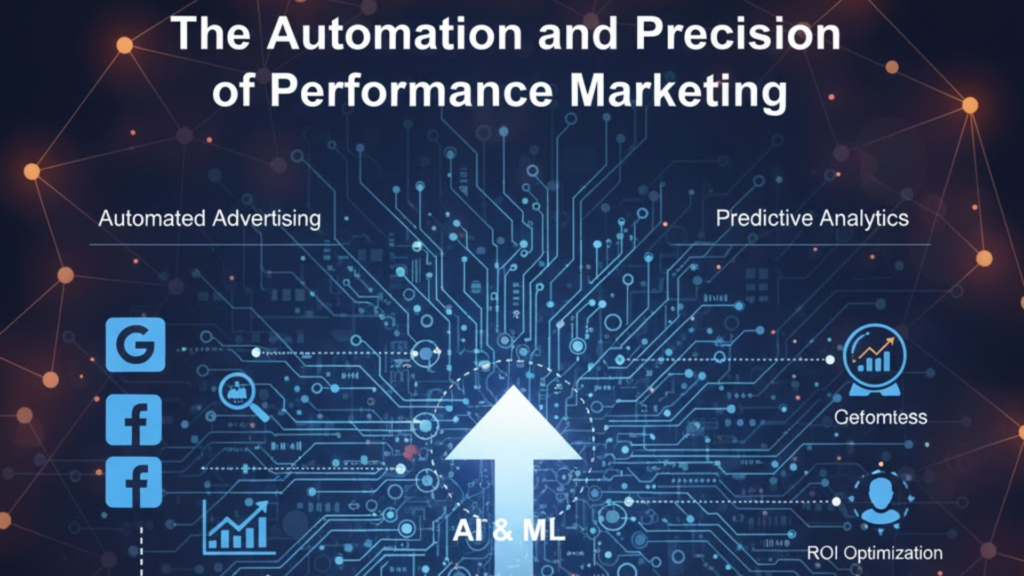
Advertising platforms are becoming sophisticated machine learning ecosystems where human input is increasingly supervisory rather than tactical.
1. Predictive Analytics and Budget Optimisation
AI eliminates the guesswork in campaign management by using predictive models to forecast which audience segment is most likely to convert.
- Real-Time Allocation: AI automatically adjusts bidding and budget allocation across channels (Google, Meta, etc.) in real-time. If an ad campaign is performing exceptionally well on one platform for a specific demographic, the AI can automatically shift budget to maximize the Return on Investment (ROI).
- AI Creative Optimization: AI enables multivariate testing across thousands of creative variations (headlines, images, CTAs) simultaneously, selecting the winning combination instantly. By 2026, many brands expect a significant portion of their video ads to be AI-generated.
2. Short-Form Video Dominance and Social Commerce
Short-form video platforms (Reels, Shorts) are where the audience lives and shops in India.
- Shoppable Video: Social commerce is accelerating. Marketers must move beyond passive video and make content interactive and shoppable, integrating direct links and frictionless checkout within the video environment itself.
- Actionable Takeaway: Embrace Performance Max (PMax) campaigns and other automated bidding tools. Shift your team’s focus from manual campaign management to high-level creative strategy and ensuring high-quality assets that feed the ML system.
IV. The Ethical Imperative: Data Privacy and Trust
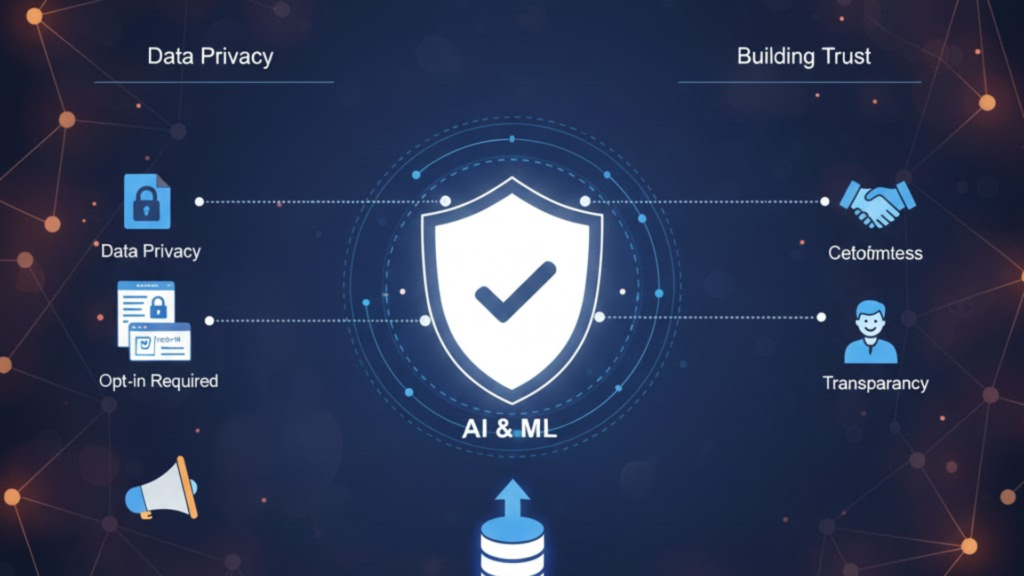
The demise of third-party cookies and India’s stringent Digital Personal Data Protection Act (DPDPA), 2023 are dictating a privacy-first marketing landscape.
1. The Primacy of First-Party Data
The DPDPA mandates explicit, specific, and clear consent for processing personal data, effectively dismantling the reliance on third-party data.
- First-Party Data Strategy: Your own collected data (email subscriptions, loyalty programs, app usage) will be the most valuable asset. AI will now focus on analyzing this First-Party Data through Customer Data Platforms (CDPs) to create a unified, accurate, and compliant customer profile.
- Compliance and Consent: Marketers must overhaul their user interfaces and consent mechanisms to comply with the DPDPA’s requirement for a transparent ‘opt-in’ methodology.
2. Ethical AI and Trust as a Differentiator
As AI permeates every decision, the spotlight shifts to ethical marketing and transparency.
- Algorithmic Fairness: Marketers must actively guard against algorithmic bias in their AI models.
Actionable Takeaway: View DPDPA compliance not as a cost, but as an opportunity to build customer trust.
V. Strategic Shifts for the Indian Marketer in 2026
To successfully navigate the AI-driven Future of Online Marketing in India, a few specific strategic pivots are necessary:
| Strategic Focus Area | AI Implementation & Indian Context |
| Vernacular AI Adoption | Leverage platforms like Bhashini to scale multilingual voicebots and content. Goal: Unlock rural and regional users who prefer local language interactions. |
| Focus on Human Expertise (E-A-T) | The creative differentiator will be unique, human-led storytelling and domain expertise. AI handles the “how” (speed, scale); humans own the “what” and “why” (strategy, empathy). |
| Immersive Experiences | Explore Augmented Reality (AR) for virtual try-ons and Gamification to keep users engaged. Static content will not suffice. |
| Data Governance | Implement a robust First-Party Data collection system and ensure all data processing aligns with the DPDPA. Trust is the new ROI. |
Frequently Asked Questions (FAQ)
Q1: Will AI replace digital marketers by 2026?
A: No, AI will not replace digital marketers, but it will transform their roles. AI is best at handling repetitive, data-intensive tasks like budget allocation, A/B testing, and initial content drafting. Marketers will shift into roles that require strategic thinking, ethical oversight, creative direction, and relationship building—skills AI cannot replicate. The future is a Human-AI partnership.
Q2: What is the single most important trend defining the Future of Online Marketing?
A: The most important trend is the shift toward Hyper-Personalization driven by First-Party Data. Since third-party cookies are disappearing, the ability to collect, analyze (using ML), and ethically utilize your own customer data to create 1:1 experiences will determine market winners.
Q3: How should Indian businesses start adopting AI?
A: Start small with tools that provide immediate returns:
- AI Writing Assistants for faster social media and email copy.
- ML-powered Chatbots for 24/7 customer service in local languages.
- Automated Bidding and PMax campaigns on Google/Meta for efficient ad spend.
Conclusion: The Human-AI Partnership Defines the Future of Online Marketing
The Future of Online Marketing is undeniably intertwined with the evolution of AI and Machine Learning. By 2026, AI won’t just be an optional add-on; it will be the operating system running the core functions of customer acquisition and engagement.
For the Indian marketer, this evolution is a colossal opportunity to manage vast data sets, cater to an incredibly diverse population with personalized messages, and achieve unparalleled efficiency. The key differentiator will remain the Human-AI Partnership. AI provides the speed, precision, and scale; the human marketer provides the creativity, ethical oversight, cultural nuance, and emotional connection that builds lasting brand loyalty.
Embrace the technology, but never lose sight of the customer. That synergy is the true definition of success in the digital marketing landscape of 2026.