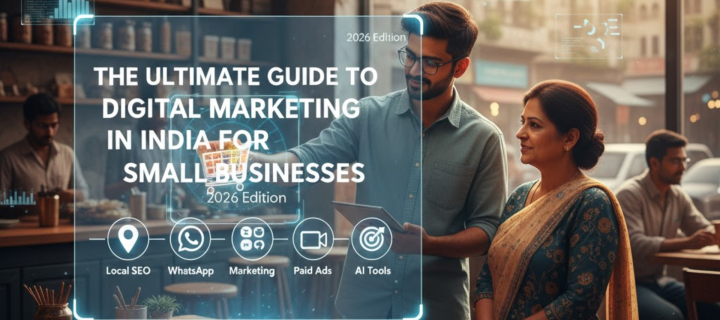
In the vibrant, chaotic, and rapidly evolving economy of India, the “Local Dukaan” is undergoing a massive transformation. From the tea stalls in Siliguri to the boutique agencies in South Delhi, the smartphone has become the new storefront. As we navigate 2026, the scope of digital marketing in India has expanded beyond just “posting on Facebook.” It is now a complex ecosystem of AI, regional languages, and hyper-local trust.
If you are a small business owner (SME/MSME), this guide is your comprehensive manual to transitioning from a local player to a digital powerhouse.
1. The Digital Landscape of India in 2026: How Digital Marketing in India Is Transforming Small Businesses
To understand digital marketing in India, you must first understand the Indian consumer. India is not a monolithic market; it is a collection of micro-markets divided by language, culture, and purchasing power.
The Statistics That Matter:
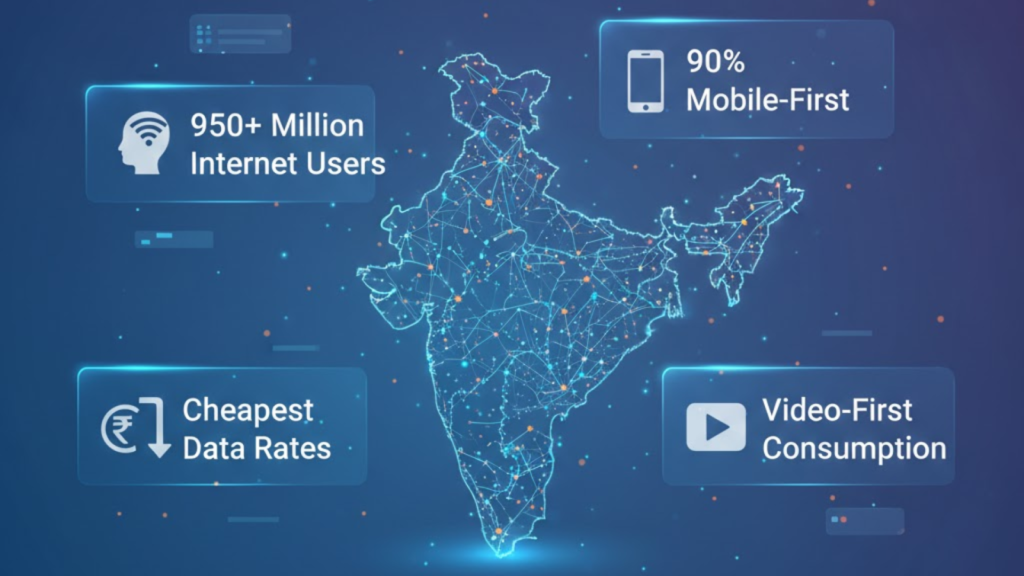
- Internet Users: Over 950 million Indians are now online.
- Data Usage: India continues to have the world’s cheapest mobile data, leading to massive video consumption.
- Mobile-First Nation: 90% of all digital discovery in India happens on a smartphone, not a desktop.
- The Trust Gap: Indian consumers are value-conscious and skeptical. They require “Social Proof” (reviews and testimonials) before spending a single Rupee.
2. Why Small Businesses Must Prioritize Digital Marketing in India
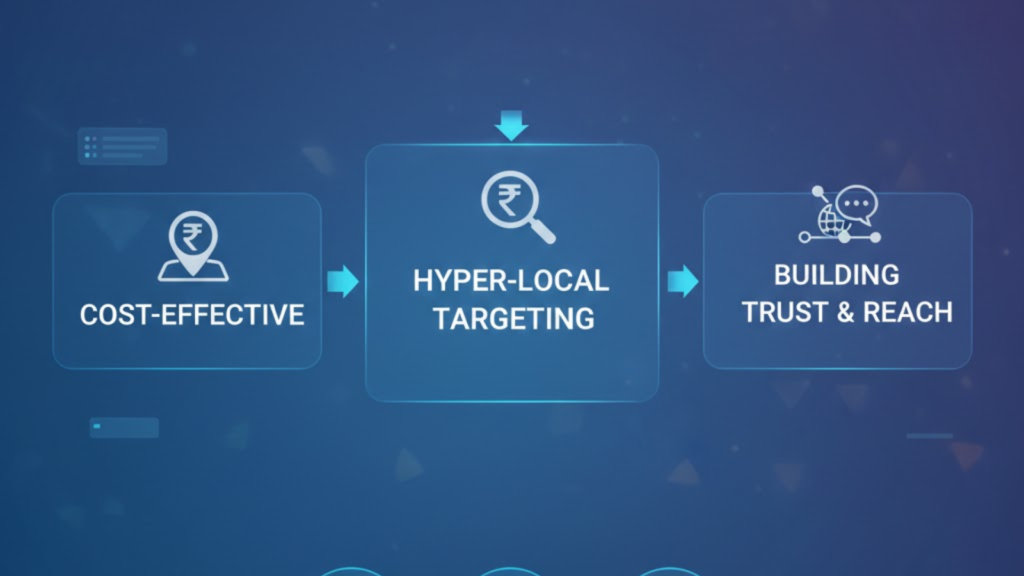
Traditional marketing (Newspaper ads, Pamphlets, Hoardings) is dying in India for three reasons: High Cost, Zero Tracking, and Declining Attention.
Key Advantages for SMEs:
- Hyper-Local Targeting: If you run a coaching center in Jaipur, you don’t need to show ads to people in Mumbai. Digital tools allow you to target specific pin codes.
- Level Playing Field: A small spice brand from Kerala can look as professional as a multinational corporation with a well-designed website and Instagram feed.
- Measurable ROI: You know exactly how many people clicked your “Book Now” button and how much each lead cost you.
3. The 5 Pillars of Digital Marketing Strategy in India
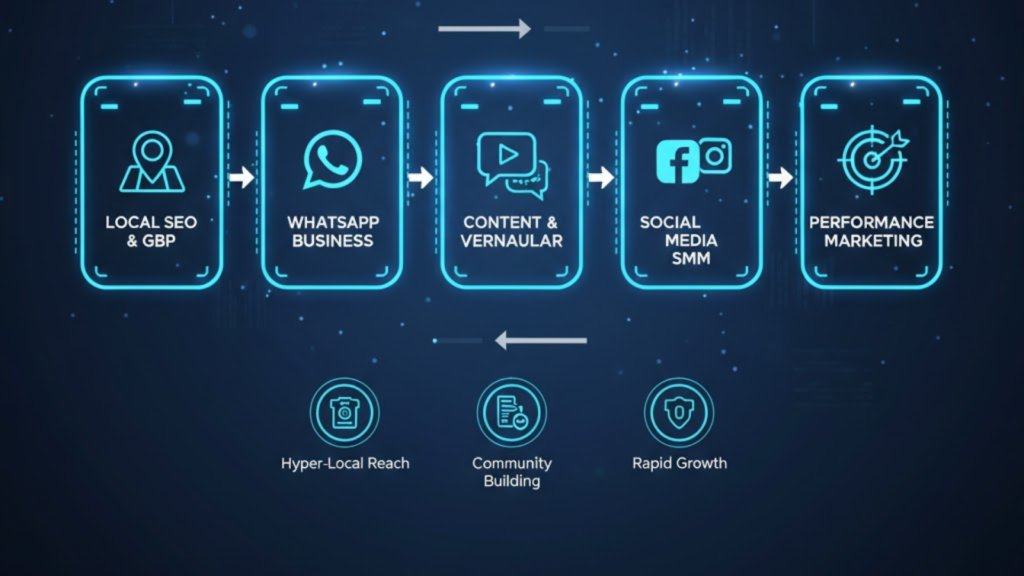
Pillar 1: Local SEO & Google Business Profile (GBP)
For 80% of small businesses, the journey starts when a customer types “____ near me” into Google.
- Google Business Profile (Formerly GMB): This is your digital identity. In 2026, Google uses AI to match your business with local intent.
- The Review Economy: In India, a 4.5-star rating is a “Green Flag.” You must actively ask customers for reviews. Use QR codes at your billing counter to make it easy.
- Local Citations: Ensure your business is listed in Indian directories like JustDial, IndiaMart, and Sulekha to build local authority.
Pillar 2: The WhatsApp Business Revolution
India is a “WhatsApp First” nation. For an Indian SME, WhatsApp is your CRM, your helpdesk, and your storefront.
- WhatsApp Catalogues: Instead of a complex e-commerce site, use the WhatsApp Catalogue to showcase products.
- Automated Greetings: Use “Away Messages” and “Quick Replies” to ensure no customer feels ignored, especially during Indian festival rushes.
- Broadcast Lists vs. Groups: Use Broadcasts to send personalized offers without compromising customer privacy.
Pillar 3: Content Marketing & The “Vernacular” Advantage
English is the language of the elite, but Regional Languages are the language of the masses.
- Hinglish & Regional Content: Use a mix of English and local languages (Hindi, Tamil, Marathi, etc.). It creates an instant emotional connection.
- Educational Videos: If you sell solar panels, make a video in Hindi explaining “How much money can you save on electricity bills?”
- Short-Form Video (Reels/YouTube Shorts): These are the only tools providing “Viral” organic reach in 2026 without spending on ads.
Pillar 4: Social Media Management (SMM)
Don’t try to be everywhere. Choose the platform where your audience hangs out.
- Instagram: Best for Lifestyle, Fashion, Food, and Jewelry.
- Facebook: Still king for reaching the 35-60 age demographic in Tier 2 and Tier 3 cities.
- LinkedIn: Essential for B2B services (Accounting, IT, Legal).
Pillar 5: Performance Marketing (Paid Ads)
Organic reach is slow. Paid ads are the fuel.
- Meta Ads: Use “Click to WhatsApp” ads. These are highly effective in India as they reduce the friction of filling out a form.
- Google Search Ads: Perfect for high-intent services like “Plumbers,” “Lawyers,” or “Emergency Repair.”
4. Comparison Table: Marketing Channels for Indian SMEs
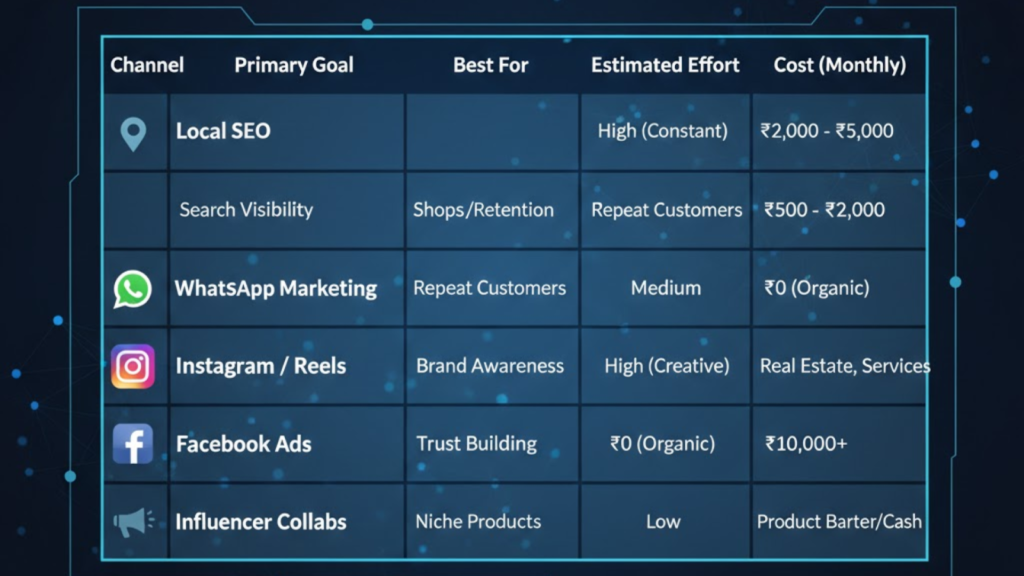
| Channel | Primary Goal | Best For | Estimated Effort | Cost (Monthly) |
| Local SEO | Search Visibility | Shops, Clinics, Salons | High (Constant) | ₹2,000 – ₹5,000 |
| WhatsApp Marketing | Sales/Retention | Repeat Customers | Medium | ₹500 – ₹2,000 |
| Instagram/Reels | Brand Awareness | Visual Products | High (Creative) | ₹0 (Organic) |
| Facebook Ads | Lead Generation | Real Estate, Services | Medium | ₹10,000+ |
| Influencer Collabs | Trust Building | Niche Products | Low | Product Barter/Cash |
5. Budgeting for Success: The SME Breakdown
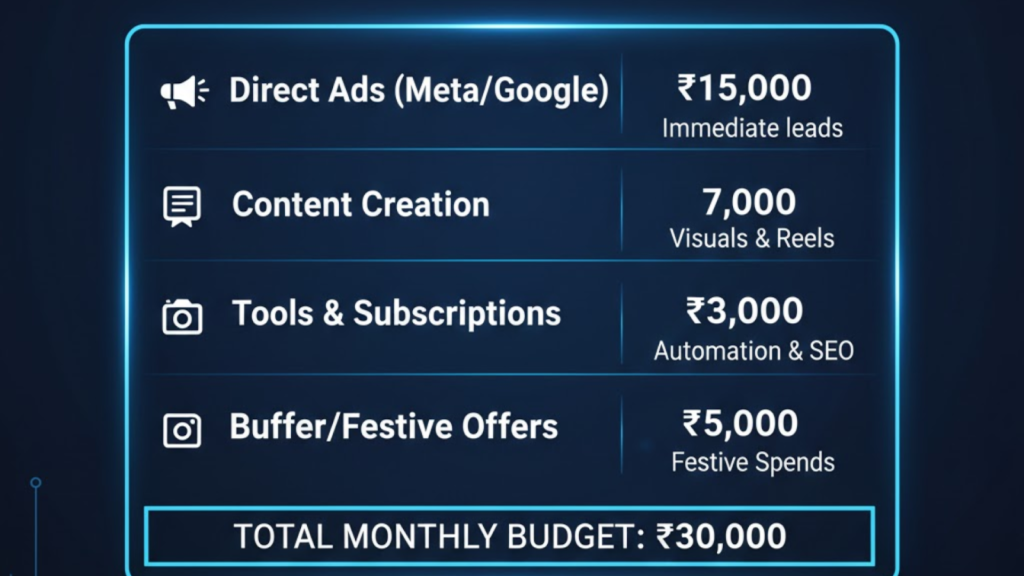
One of the biggest hurdles in digital marketing in India is budget allocation. Many owners overspend on “Fancy Websites” and have zero money left for “Ads.”
Recommended Monthly Budget (₹30,000 Example):
- ₹15,000 (Direct Ads): Spending on Meta or Google to bring in immediate inquiries.
- ₹7,000 (Content Creation): Paying a local freelancer or using tools like Canva/CapCut to make high-quality Reels and Graphics.
- ₹3,000 (Tools & Subscriptions): For WhatsApp automation or SEO tools.
- ₹5,000 (Buffer/Festive Offers): Extra spending during Diwali, Eid, or Wedding seasons.
6. Detailed Step-by-Step Action Plan
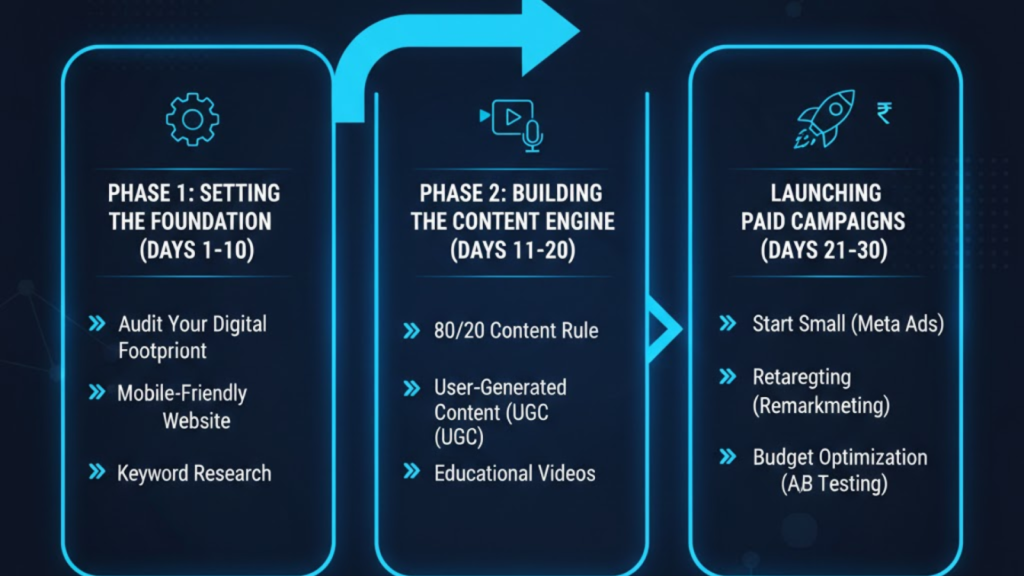
1: Setting the Foundation (Days 1-10)
- Audit your digital footprint: Search your business name on Google. What do you see? If it’s empty or has bad reviews, that’s your first task.
- Mobile-Friendly Website: If you build a site, it must load in under 2 seconds. In India, people lose patience faster than their data runs out.
- Keyword Research: Use tools like Google Keyword Planner to see what people in your city are searching for. Use terms like “Best digital marketing in jaipir
2: Building the Content Engine (Days 11-20)
- The 80/20 Rule: 80% of your posts should be helpful/educational, and only 20% should be “Salesy.”
- User-Generated Content (UGC): Ask a customer to record a 10-second video saying they liked your product. In India, a “Normal Person” talking is more believable than a “Professional Model.”
3: Launching Paid Campaigns (Days 21-30)
- Start Small: Run a “Brand Awareness” ad for ₹200 a day. See which image or video gets the most clicks.
- Retargeting: Ever noticed how an ad follows you? That’s retargeting. Use it to show ads to people who visited your website but didn’t buy.
7. Frequently Asked Questions (FAQ)
Q1: Can I do digital marketing for free?
Yes, tools like Google Business Profile, Organic Instagram, and WhatsApp Status are free. However, they take time to show results. If you want fast growth, a small ad budget is necessary.
Q2: Should I hire an agency or do it myself?
If your revenue is below ₹1 Lakh/month, Do It Yourself (DIY). Learn the basics. Once you scale, hire a specialized freelancer or a small agency that understands the Indian context.
Q3: Is SEO still relevant in 2026 with AI taking over?
Absolutely. AI search engines (like Perplexity or Google Search Generative Experience) still pull data from websites. SEO is now about being the most “Reliable Source” for those AI bots.
Q4: How do I handle negative reviews on Google?
Never ignore them. Respond politely. In India, other customers watch how you handle a complaint. A professional response to a negative review can actually build more trust than a fake 5-star review.
Conclusion: The Digital Leap
The landscape of digital marketing in India is no longer a mystery. It is a structured science of being visible, being helpful, and being consistent. For a small business, the goal isn’t to reach the whole world—it’s to be the “Famous Name” in your own city or niche.
By leveraging Local SEO, mastering WhatsApp Marketing, and embracing Regional Content, you can ensure your business doesn’t just survive but thrives in the digital age.