The Indian solar ecosystem is witnessing a historic gold rush. Propelled by the government’s ambitious PM Surya Ghar: Muft Bijli Yojana aiming to light up 1 crore households, alongside soaring commercial and industrial (C&I) electricity tariffs ranging between ₹8 to ₹12 per unit, the demand for solar infrastructure is at an all-time high. Engineering, Procurement, and Construction (EPC) companies, regional installers, and solar component distributors are racing to capture market share.Many solar entrepreneurs find themselves burning lakhs of rupees on generic digital marketing agencies that promise “cheap leads.” Instead, their sales teams are flooded with inquiries from tenants who do not own rooftops, individuals looking for a completely free government handout, or consumers whose monthly electricity bills do not even touch ₹500.To scale profitably in 2026, you cannot rely on generalist marketers. You need a highly specialized solar marketing agency that understands the mechanics of solar engineering, regional regulations, consumer psychology, and complex financing models.
This guide breaks down the exact parameters, data frameworks, and operational metrics you must analyze before partnering with an agency.
1. Deep Domain Expertise: Navigating Indian Government Policies & Subsidies

Solar equipment is a high-ticket, consultative purchase. Unlike e-commerce products or real estate apartments, selling solar requires overcoming regulatory hurdles, technical doubts, and financial skepticism. A generalist digital agency focuses purely on ad creatives; a specialized solar marketing agency aligns its messaging with active policies.
A. Mastering the PM Surya Ghar Yojana Framework
For the residential segment, your marketing partner must understand the subsidy slab structures inside out. If an agency creates a generic ad saying “Get Free Government Solar Panels,” you will be overwhelmed by non-serious calls.
An expert agency crafts ad copies that filter users based on the modern subsidy reality:
- Up to 2 kW: Fixed subsidy of ₹60,000.
- 3 kW and Above: Capped subsidy of ₹78,000.
The marketing funnel must explicitly educate consumers that solar involves an upfront investment and that the subsidy is a reimbursement settled post-installation and net-metering approval.
B. Compliance with the Approved List of Models & Manufacturers (ALMM)
The regulatory landscape is highly dynamic. For instance, the implementation of ALMM mandates for inverters and specific module technologies plays a significant role in consumer eligibility for central financial assistance (CFA). If an installer deploys non-compliant equipment, the customer’s subsidy can be instantly rejected.
Your chosen solar marketing agency must proactively use technical safety nets in your ad copies—positioning your brand as an “ALMM-Compliant, Certified National Portal Vendor” to separate your business from unorganized, fly-by-night local aggregators.
C. Navigating C&I (Commercial & Industrial) Financing Models
If your primary revenue driver is high-ticket B2B installations for factories, textile mills, cold storages, or educational institutions, your agency’s content strategy must pivot entirely away from residential subsidies. Instead, their marketing campaigns must demonstrate a masterclass level of understanding in:
- CAPEX Model: Capital Expenditure investments where the business owns the asset. The ad copies must address Accelerated Depreciation (AD) benefits under Section 32 of the Income Tax Act, custom duties, and direct ROI timelines.
- OPEX / PPA Model: Renewable Energy Service Company (RESCO) or Power Purchase Agreements, where the client pays only for the generated units. The marketing funnel here must be geared toward CFOs and corporate procurement managers, highlighting zero upfront capital requirements and long-term tariff hedging.
2. Vanity Metrics vs. Operational ROI: The Conversion Funnel
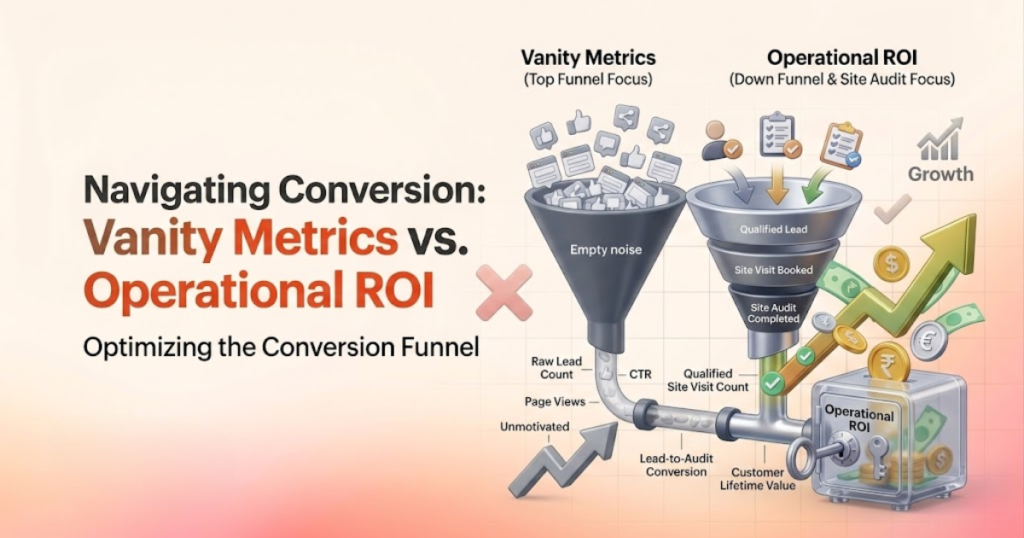
The core friction between solar installers and marketing agencies lies in data misinterpretation. Generic agencies boast about vanity metrics like Cost Per Click (CPC), click-through rates (CTR), and the total volume of raw leads. A performance-driven solar marketing agency, however, focuses on metrics that directly impact your bottom line.
Key Metrics Comparison: Generic Agency vs. Solar Marketing Agency
| Marketing Metric | The Generic Agency Approach | The Specialized Solar Agency Approach |
| Primary KPI | Total Lead Volume (More forms filled = Success). | Cost Per Qualified Lead (CPQL) & Site-Audit Bookings. |
| Lead Filtering | Single-click Facebook Instant Forms with pre-filled, outdated phone numbers. | Multi-step Qualification Funnels (Asks for roof type, monthly bill, ownership status). |
| Data Optimization | Optimizes Facebook Pixel for raw lead volume, driving down cost-per-lead while dropping intent. | Optimizes Conversion APIs for down-funnel events like “Site Audit Completed.” |
| Content Style | Flashy stock images of generic solar panels with clickbait headlines. | Real site-installation videos, localized customer video testimonials, and regional languages. |
| Sales Alignment | Drops an Excel sheet of raw names and numbers into your inbox every weekend. | Deep CRM integration (Zoho/HubSpot) with automated lead scoring and immediate WhatsApp nurturing. |
The “Education-First” Filtering Funnel
To ensure your sales team doesn’t waste hours chasing dead ends, a proficient agency builds a strict filtration funnel. Instead of redirecting ad traffic to a simple contact form, they utilize interactive custom web apps, such as a Solar Savings Calculator.
[User Clicks Ad]
│
▼
[Interactive Savings Calculator]
│
├── Question 1: What is your average monthly electricity bill? (Filters out < ₹1,500)
├── Question 2: Do you own the rooftop of the property? (Filters out tenants)
└── Question 3: Is your roof concrete or tin-shed? (Gathers engineering pre-data)
│
▼
[High-Intent Lead Form + Roof Photo Upload Option]
By adding friction to the lead generation process, the overall lead volume drops, but the Lead-to-Site-Visit Conversion Rate skyrockets from a miserable 1.5% to a highly profitable 12% to 18%.
3. Platform Distribution Strategy: Balancing Search Intent with Visual Discovery
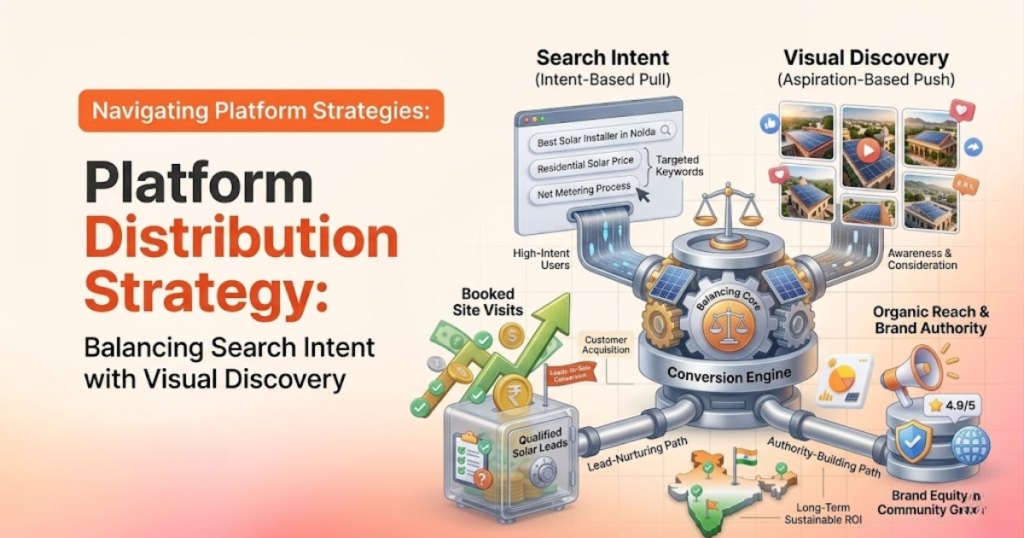
A balanced digital architecture does not put all its advertising eggs in one basket. Solar lead acquisition demands a distinct split between Pull Marketing (capturing existing, high-intent market demand) and Push Marketing (generating awareness and curiosity).
┌───────────────────────────┐
│ Solar Ad Budget Allocation│
└─────────────┬─────────────┘
│
┌───────────────────────┴───────────────────────┐
▼ ▼
[Pull Marketing: 40%] [Push Marketing: 60%]
Google Search Ads – Meta (FB & Instagram) Reels
-High-Intent SEO Content – Regional Language Creatives
-Local Maps Optimization – Visual Site Testimonials
A. Google Search Ads & Technical SEO (The Pull Strategy)
When a factory owner or a residential bungalow owner searches for:
- “Best commercial solar EPC company in Jaipur”
- “On-grid solar system installer near me”
- “Top 10kW solar panel price in Delhi”
They are expressing immediate, high-intent buying behavior. Your marketing agency must dominate these search terms.
- Negative Keyword Management: A competent solar marketer maintains a massive, pre-built negative keyword list (e.g., “free solar panel scheme myth,” “diy mini solar panel long life,” “solar toy car kit”). This ensures your budget is never squandered on casual searchers or hobbyists.
- Long-Form Technical SEO Content: Building articles around local state solar policies (such as the specific net-metering rules set by DISCOMs like MSEDCL, UPPCL, or Bescom) establishes long-term organic authority, driving inbound organic B2B leads completely free of ad costs.
B. Meta Ads (Facebook & Instagram) & Video Reels (The Push Strategy)
Solar panels are inherently visual and physical. Most homeowners do not fully realize how much money they can save until they see a working system installed on a roof similar to theirs.
- The Power of Real Site Video Footages: High-quality smartphone videos of real site installations executed by your engineering crew outperform over-designed studio graphics every single time. A video showing a client pointing to their zero-rupee electricity bill builds massive social proof.
- Localization & Regional Language Ad Copies: India is a continent of diverse cultures and languages. Running an English-only ad campaign in rural or semi-urban areas of Gujarat, Uttar Pradesh, Maharashtra, or Assam yields sub-par conversion rates. Your agency must have the in-house capabilities to produce script variants, voiceovers, and ad copies in Hindi, Gujarati, Marathi, Tamil, Assamese, and other regional dialects to trigger immediate emotional connection and trust.
4. Hyper-Local SEO & Google Business Profile (GBP) Domination
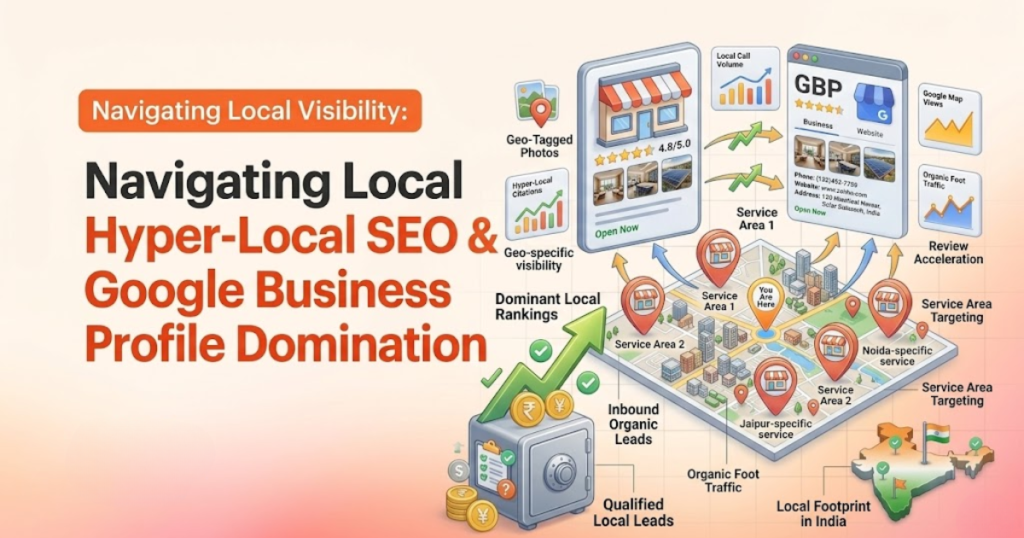
Solar deployment is fundamentally a localized business ecosystem. A building owner in Ahmedabad will rarely hire an installer headquartered in Chennai due to maintenance, logistics, and post-sales service concerns. Therefore, local market visibility is non-negotiable.
The Local Map Pack Optimization Checklist
When auditing a potential solar marketing agency, demand a clear, actionable execution roadmap for your Google Business Profile (GBP) and local citations. The agency must actively manage:
- Geo-Tagged Image Uploads: Regularly uploading high-resolution photos of newly completed solar sites. These images must contain embedded metadata (EXIF data) matching the latitude and longitude coordinates of your targeted local suburbs.
- Review Velocity and Quality Management: Setting up automated systems to gather 5-star reviews from satisfied clients. These reviews shouldn’t just say “Good service.” The agency should prompt clients to write keyword-rich reviews, such as: “Installed a 5kW Tata solar panel system through this team in Pune. Highly professional net-metering assistance.”
- Hyper-Local Sub-Pages: Creating distinct geo-targeted service pages on your main domain website (e.g., yourbrand.com/solar-installation-company-in-noida). This hyper-focused structure signals to Google’s ranking algorithms that your business is deeply rooted in that specific geographic territory.
5. Account Ownership, Transparency, & Data Sovereignty
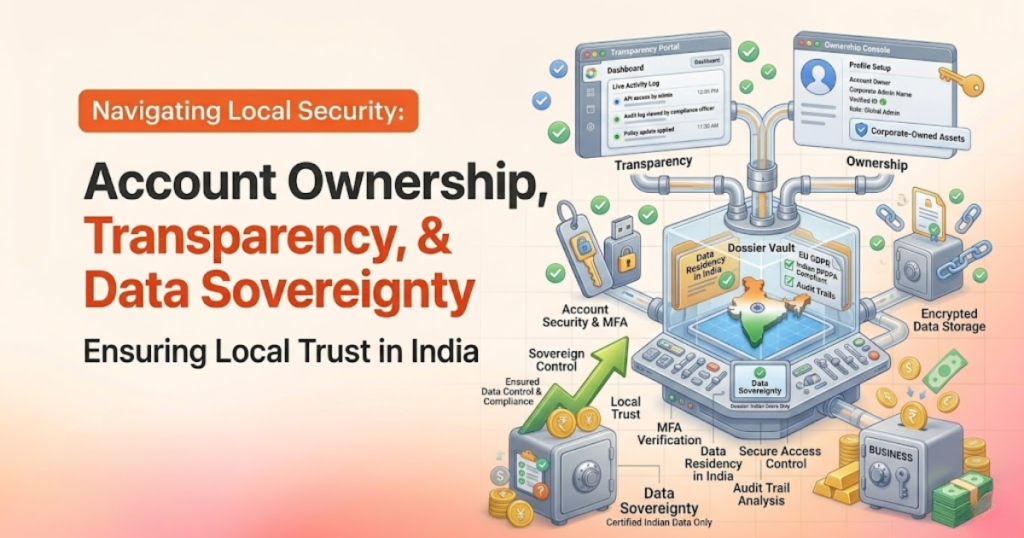
One of the most dangerous traps an unorganized agency sets is managing your marketing budget inside their own personal ad accounts, providing you with nothing more than end-of-month PDF summary sheets. This practice can severely cripple your long-term business security.
Safeguard Your Brand Data Assets
Before signing a contract with any agency, ensure they adhere to strict data security protocols:
- Absolute Business Manager Ownership: Your Meta Business Manager, Google Ads Master Account, Google Analytics 4 (GA4), and Google Search Console accounts must be created using your corporate email addresses. The agency must only be granted “Partner Access” or “Manager Access.”
- Retaining the Pixel & Algorithm Learning: The data gathered by ad pixels (tracking who visited your site, who filled forms, and who converted) is highly valuable business asset. If the agency runs ads out of their own ad account, they own your data asset. If you part ways with them, your data-driven edge resets completely back to zero.
- Live Performance Dashboards: Demand automated, real-time reporting dashboards via platforms like Google Looker Studio. You should be able to view exactly how much money was spent today, what the precise cost-per-qualified-lead is, and the direct conversion rates across your different regional markets at any given hour.
Comprehensive Frequently Asked Questions (FAQ)
Q1: What is the typical cost structure of hiring a professional solar marketing agency in India?
Ans: Most reputable, specialized agencies operate under three primary models:
- Monthly Retainer Fee: A flat fee ranging from ₹35,000 to ₹1,50,000+ per month depending on the scale of campaigns, regional languages covered, and content production requirements.
- Retainer + Performance Percentage: A lower baseline monthly fee combined with a 3% to 10% cut of the total ad spend or a performance bonus per validated site audit.
- Pay-Per-Qualified-Lead (CPL Model): You pay strictly for pre-filtered, verified leads matching your specific target criteria (e.g., residential homeowners with electricity bills above ₹3,000/month).
Q2: How long does it take for a solar marketing agency to show real, tangible sales outcomes?
Ans:
- Paid Ads (Meta/Google Search): You should start seeing raw leads within the first 7 to 14 days of active campaigns launch. However, because solar sales cycles involve site surveys, structural evaluation, financing approvals, and net-metering clearances, these leads typically take 30 to 60 days to fully mature into closed, paid contracts.
- Organic SEO & Local Maps Optimization: This requires sustained, compounding effort and generally takes 4 to 6 months to rank on highly competitive terms, after which it delivers a continuous flow of zero-cost inbound inquiries.
Q3: Should our solar agency focus more on Facebook Ads or Google Ads?
Ans: It depends entirely on your targeted solar tier and market segment:
- For Residential Solar (2kW to 10kW), allocate roughly 60-70% of your budget to Meta Ads (FB & Instagram) using educational reels and local testimonials to drive mass consumer awareness, and the remaining 30% to Google Search to capture high-intent buyers.
- For Commercial & Industrial (C&I) Solar (50kW to 1MW+), reverse the strategy: channel 80% of your budget into Google Search Ads, LinkedIn Account-Based Marketing (ABM), and targeted SEO-driven B2B funnels, as corporate decision-makers actively search for structural solutions via professional channels.
Q4: How do we identify if an agency is selling the same leads to multiple solar installers?
Ans: This is a major concern with generic lead aggregators. To prevent this, ensure your contract states that the agency will build exclusive custom landing pages and dedicated ad campaigns owned solely by your brand. If an agency claims they already have a “ready-made list of 1,000 solar-interested homeowners in your city” for cheap, they are reselling a degraded, over-called database that will destroy your sales team’s morale and harm your brand’s market reputation.
Final Verdict: Evaluating Your Path Forward
Choosing a solar marketing agency is not a routine outsourcing task; it is a core business decision that determines the quality of your sales pipeline and the scalable valuation of your EPC enterprise.
Steer clear of agencies that talk about clicks, impressions, and creative aesthetics. Partner with an agency that speaks the language of kilowatts, cost-per-site-visit, conversion margins, and regional regulatory dynamics. Inspect their past solar case studies, demand absolute transparency over your digital accounts, and ensure they have a robust strategy to filter out junk traffic so your team can focus exclusively on converting high-value, site-visit-ready solar buyers.