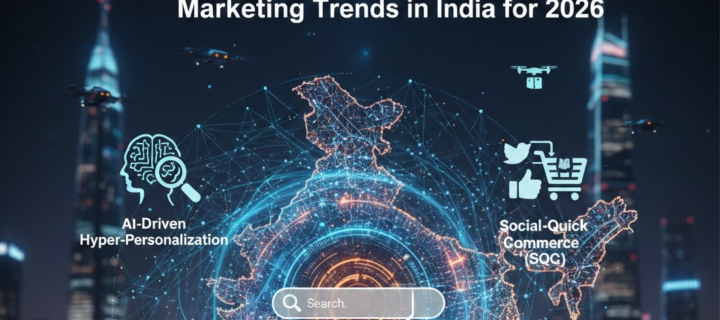
The Indian digital ecosystem has moved past the “mobile-first” phase and has officially entered the “AI-Native” era. With the rollout of 6G testing and the saturation of 5G across rural India, the barriers between the physical and digital worlds have dissolved.For brands looking to capture the Indian consumer’s attention, 2026 is not about who spends the most on ads—it is about who understands the online marketing trends in India with the most precision. This guide provides an exhaustive deep dive into the five pillars of the 2026 digital landscape.
1. AI-Driven Hyper-Personalization: The “Segment of One” in Online Marketing Trends in India
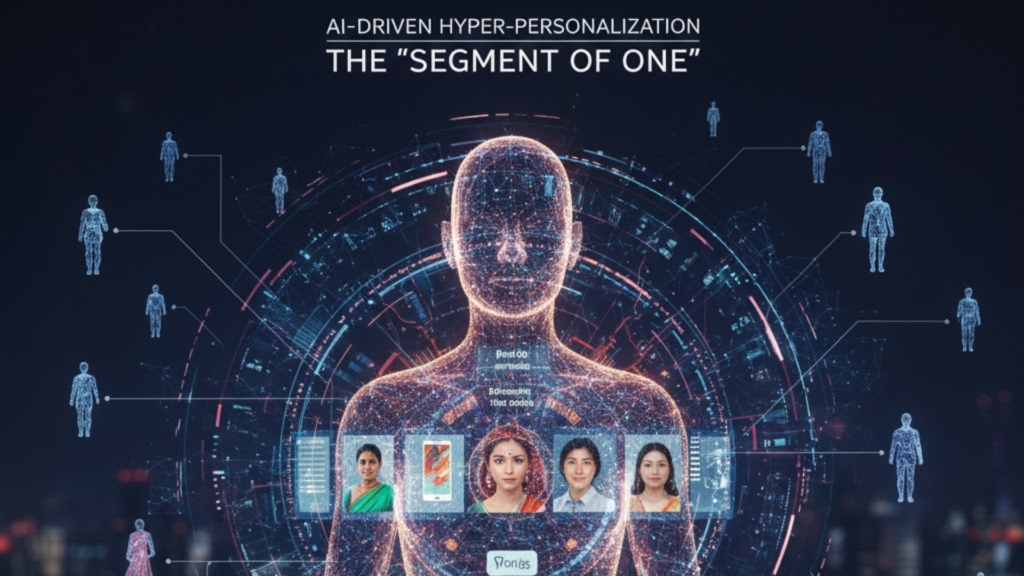
In 2026, the concept of “target audiences” (like Males, 25-34, Metro cities) is obsolete. AI has enabled marketers to target the “Segment of One.” This means every single user sees a different version of your website, receives a different email, and interacts with a different ad creative based on their real-time psychological state.
Deep Dive into Implementation:
- Predictive Intent Engines: By utilizing machine learning, Indian e-commerce giants and D2C brands now predict a purchase before the customer searches for it. If a user’s browsing pattern suggests they are planning a destination wedding in Udaipur, AI triggers specific luxury travel and ethnic wear ads across all their touchpoints.
- Dynamic Creative Optimization (DCO): In 2026, an ad for a smartphone will look different for a college student in Delhi (focusing on gaming/camera) than it does for a businessman in Mumbai (focusing on battery/productivity), all generated in real-time by AI.
- Vernacular NLP (Natural Language Processing): AI now understands the nuances of “Hinglish.” It recognizes that a user typing “Ye phone kaisa hai?” is looking for a review, while “Sasta phone dikhao” is looking for a discount.
The Impact Table:
| Personalization Level | 2022 Method | 2026 AI-Native Method |
| Email Marketing | “Dear [Name]” | Content based on last 5 minutes of browsing. |
| Product Suggestions | Based on “Customers also bought” | Based on “User’s current mood and budget.” |
| Customer Support | Scripted Chatbots | Empathetic AI that detects frustration in voice. |
2. Social-Quick Commerce (SQC): The 10-Minute Economy in Online Marketing Trends in India
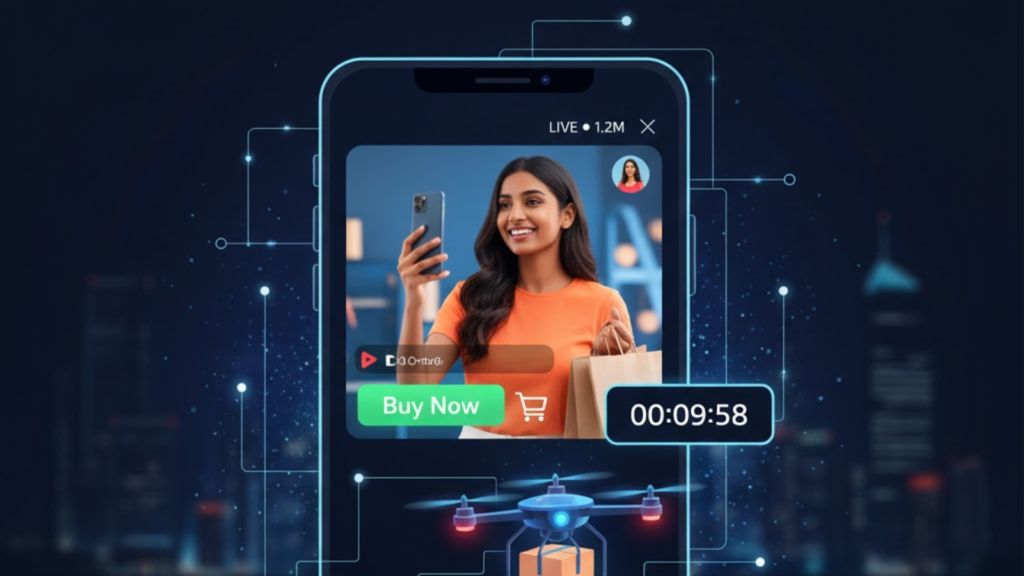
India has become the global capital of Quick Commerce. What started with groceries in 2023 has expanded to electronics, fashion, and beauty by 2026. The trend has now evolved into Social-Quick Commerce (SQC).
How SQC Works in 2026:
- In-Stream Purchasing: While watching a makeup tutorial on Instagram, a “Get it in 15 mins” button appears. Integration with dark stores (Blinkit, Swiggy Instamart, Zepto) ensures the product reaches the user before they finish watching the video.
- The Rise of “Micro-Warehousing”: Brands are no longer shipping from central warehouses in Bhiwandi or Gurgaon. They are stocking inventory in thousands of “Nano-hubs” across Indian cities to meet the demand for instant gratification.
- Community Group Buying: Platforms are incentivizing users in housing societies (like those in Bangalore or Noida) to buy together via WhatsApp groups to unlock instant “Flash Discounts” and free 10-minute delivery.
Key Statistic: In 2026, over 45% of impulse purchases in India are expected to happen via Social-Quick Commerce platforms.
3. Answer Engine Optimization (AEO) & The Death of the “Blue Link”
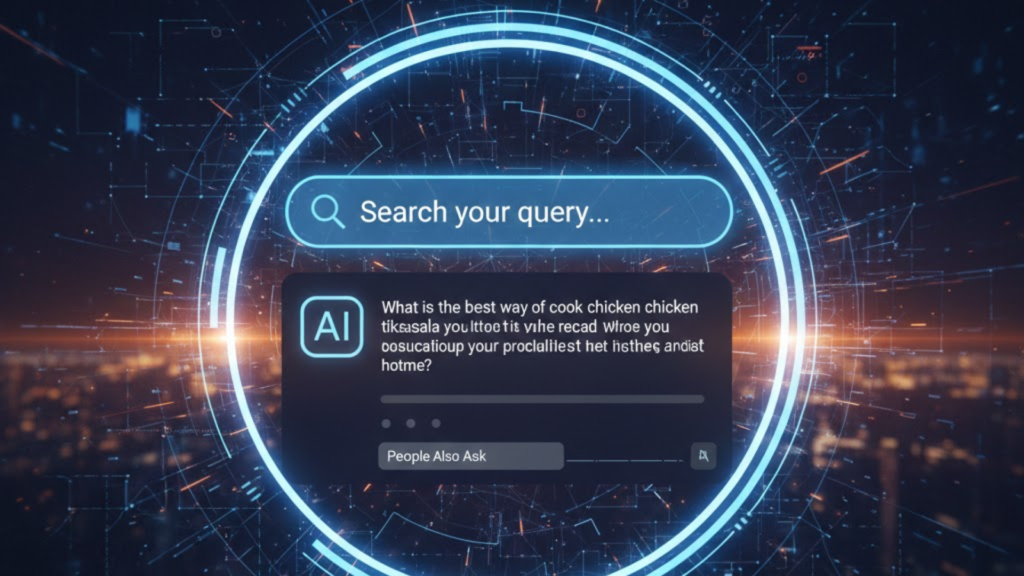
Traditional SEO is undergoing its biggest crisis. Google’s Search Generative Experience (SGE) and specialized AI engines like Perplexity have changed how Indians find information. Instead of a list of 10 blue links, users get a single, synthesized answer.
Strategies for AEO Dominance:
- Direct Answer Formatting: Your content must be structured to answer “Who, What, Where, When, and Why” in the first 100 words of a page.
- Schema Markup 3.0: Using advanced technical SEO to tell AI exactly what your data means. If you are a coaching institute in Kota, your schema must highlight success rates, fees, and faculty credentials clearly for AI crawlers.
- Voice-First Content: Since 60% of rural Indian users use voice commands, your keywords must be Long-tail and Conversational. * Old Keyword: “Best AC India”
- 2026 Keyword: “Which 1.5-ton AC is best for a small room in a humid city like Chennai?”
The AEO Checklist:
- [ ] Use Bullet points for all process-related queries.
- [ ] Include a “Key Takeaways” section at the top of every blog.
- [ ] Host FAQ sections with “People Also Ask” style questions.
- [ ] Optimize for “Zero-Click” searches where the user stays on Google.
4. The “Bharat” Strategy: Regional Language Supremacy
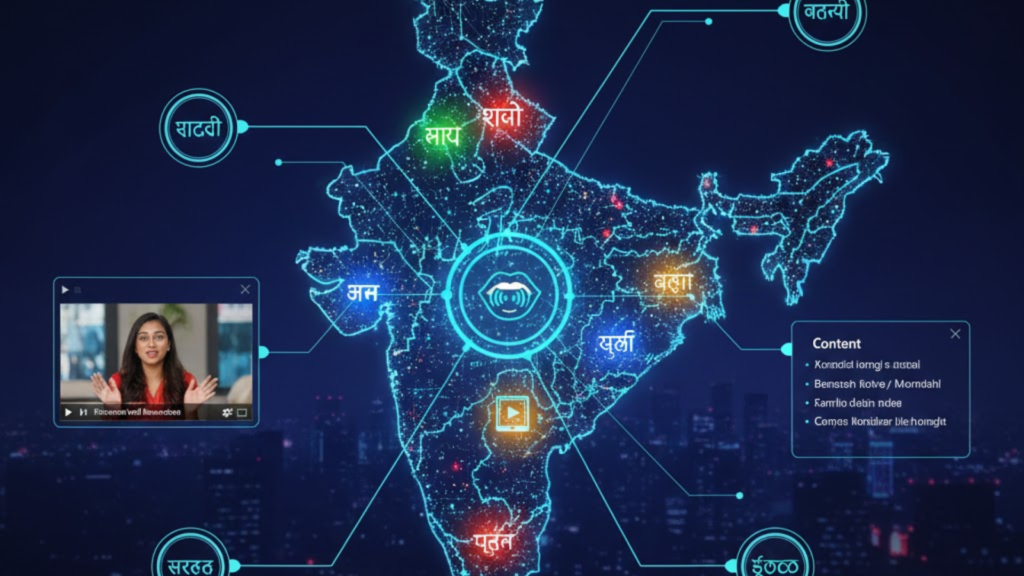
By 2026, the internet is no longer an English-speaking club. 9 out of 10 new internet users in India consume content in regional languages. If your digital marketing strategy is only in English, you are ignoring 80% of the potential market.
Deep Dive into Regional Trends:
- The “Hinglish” Dominance: Most urban marketing now uses a mix of Hindi and English. However, for deep penetration in states like Tamil Nadu, West Bengal, or Maharashtra, pure regional content is the only way to build trust.
- Cultural Contextualization: A “Vishu” sale in Kerala requires different visuals, music, and influencers than a “Baisakhi” sale in Punjab. Brands are now hiring Regional Creative Officers to ensure cultural accuracy.
- Video Over Text: In Tier-4 towns, literacy levels vary, making video the universal language. Short-form video (SFV) in local dialects is the most powerful tool for brand awareness.
5. Privacy-First Marketing & The “Trust Economy”
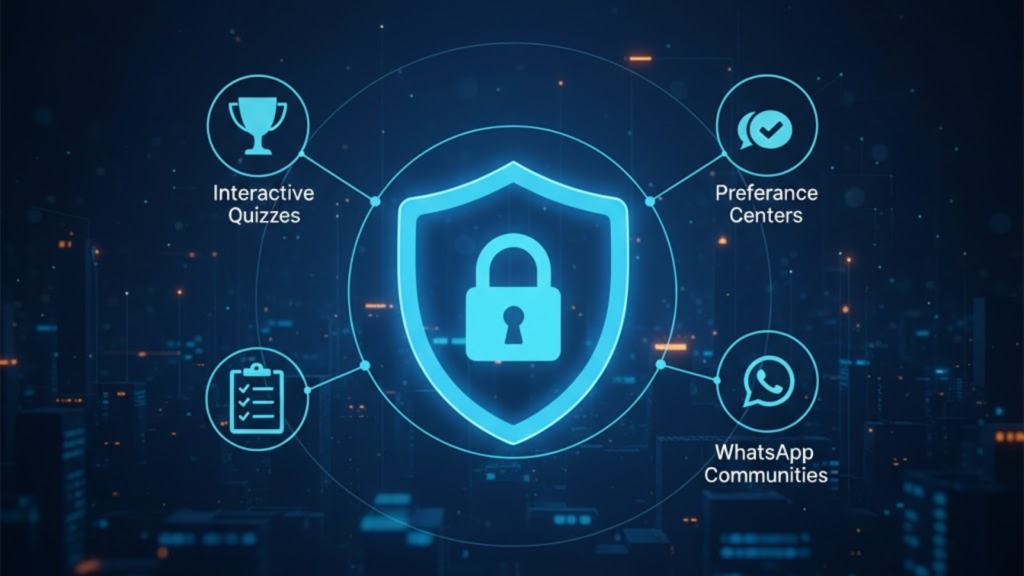
With the Digital Personal Data Protection (DPDP) Act being strictly enforced in India, the era of “creepy tracking” is over. Users are now hyper-aware of their data rights.
The Shift to Zero-Party Data:
Marketers are now focusing on Zero-Party Data—data that the customer gives you willingly because they trust you.
- Gamified Data Collection: Instead of boring forms, brands use “Style Quizzes” or “Health Calculators” to learn about the user.
- WhatsApp as a Private Hub: WhatsApp has become the “OS of India.” Brands are building private communities where users get exclusive access in exchange for their preferences.
- Blockchain for Transparency: Some high-end Indian brands are using blockchain to show the “Sourcing Journey” of their products (e.g., Organic cotton from Vidarbha), building massive trust with Gen Z consumers.
FAQ: Online Marketing Trends in India (2026)
1. How do I start with AI marketing if I have a small budget?
You don’t need custom AI. Use tools like Midjourney for visuals, ChatGPT-5 for regional content drafting, and Canva’s AI for localized ad designs. Focus on automating repetitive tasks first.
2. Is influencer marketing still effective in 2026?
Yes, but “Mega-influencers” are losing trust. The ROI is now in Nano-influencers (1k-10k followers) who have a hyper-local influence in specific pin codes or communities.
3. What is the most important metric to track in 2026?
Forget “Likes” and “Follows.” The most important metrics are Customer Lifetime Value (CLV) and Share of Voice (SoV) within AI-generated search answers.
4. How does the DPDP Act affect my Facebook/Google Ads?
You can no longer rely on automatic tracking. You must have explicit consent. This makes Email and WhatsApp lists (First-party data) more valuable than ever before.
Summary Checklist for 2026 Success
| Category | Action Item | Priority |
| Technology | Implement an AI Chatbot with Regional Language support. | High |
| Content | Convert all top-performing blogs into 60-second Reels/Shorts. | Medium |
| SEO | Optimize website for “Voice Search” and “Direct Answers.” | High |
| Strategy | Launch at least one “Vernacular-only” campaign for Tier-2 cities. | High |
| Data | Create a loyalty program to collect First-Party Data. | Critical |
Conclusion: The Human-Tech Balance
Online marketing in India for 2026 is a paradox. On one hand, it is driven by the most advanced AI and Data Science the world has ever seen. On the other hand, it requires a deeply human touch—understanding the emotions, languages, and cultural nuances of a billion people.
The brands that will win in 2026 are those that use AI to handle the mechanics of marketing, while using their human creativity to build trust and stories.