The Meta advertising ecosystem—which spans Facebook, Instagram, WhatsApp, Messenger, and the Audience Network—has evolved into a hyper-complex, data-driven auction marketplace. Succeeding in this landscape requires an intricate blend of data engineering, creative psychology, psychological consumer framing, and rigorous financial analysis.Because of this steep learning curve, outsourcing your growth to specialized meta ads services is one of the smartest operational decisions you can make. However, the market is completely flooded. From boutique freelance setups to legacy digital agencies, everyone claims to be a “growth expert” or a “ROAS specialist.”
Choosing the wrong partner doesn’t just mean losing your hard-earned ad spend; it can result in broken tracking setups, corrupted pixel data, shadow-banned ad accounts, and severe damage to your brand’s reputation.
This comprehensive guide breaks down the exact framework and checklist you must use to evaluate, interview, and select the right meta ads services to unlock massive, predictable Return on Investment (ROI).
The Landscape of Indian Digital Advertising in 2026
The Indian digital landscape presents unique operational challenges that a global template cannot solve. With skyrocketing smartphone adoption across Tier-2 and Tier-3 cities, localized buying behaviors, diverse languages, and varying payment structures (like Cash on Delivery vs. UPI), your Meta media buyer needs to be highly contextualized.
Before diving into the technical components, it is critical to align on the core terminology used throughout this evaluation blueprint:
- ROAS (Return on Ad Spend): The total revenue generated divided by the total ad budget spent.
- CAC (Customer Acquisition Cost): The total amount spent to acquire a single paying customer.
- CAPI (Conversions API): Meta’s server-side tracking mechanism that bypasses browser-level data blocks.
- LTV (Lifetime Value): The total monetary value a single customer brings to your business over their entire relationship with your brand.
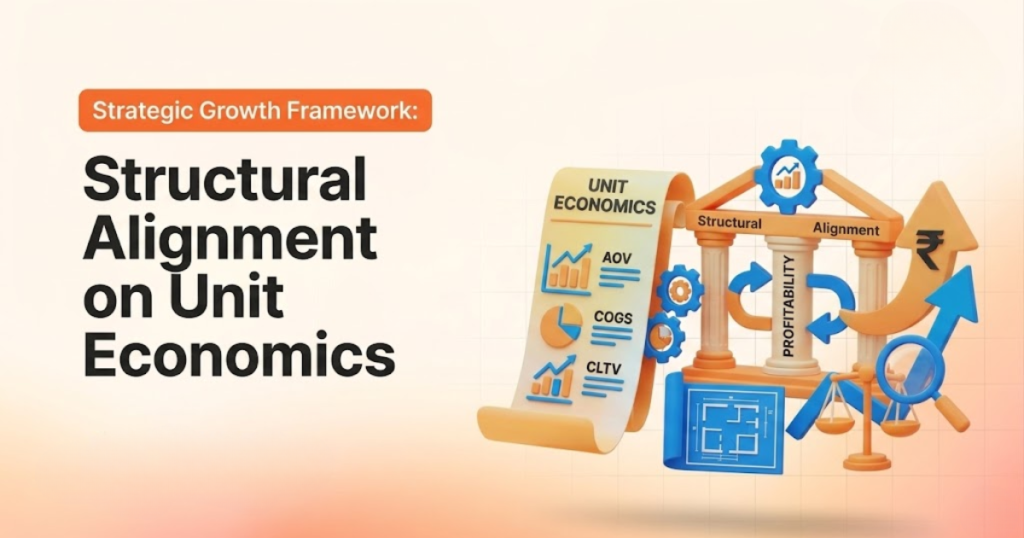
1. Structural Alignment on Unit Economics
A primary red flag when auditing meta ads services is an over-emphasis on “vanity metrics.” If an agency pitches you based on how many clicks, impressions, or followers they can generate, run away. Clicks do not pay your employees; net profit does.
An elite service provider will refuse to launch a single campaign until they deeply understand your business’s financial skeleton.
The Financial Matrix Your Partner Must Master
During your initial discovery call, an expert partner should request details on the following three financial pillars:
- Average Order Value (AOV): What is the average bill value when a customer checks out on your website or finishes a lead cycle? If your AOV is low, your agency must design cross-sell and bundle strategies directly within the Meta funnel to absorb rising traffic costs.
- Gross Margin Architecture: If you sell a product for ₹2,000, what is the exact cost of goods sold (COGS), shipping, packaging, and gateway fees? If your margins are thin, an agency cannot rely on a generic 2x ROAS; they must build a high-efficiency framework to keep your business viable.
- Target Break-Even ROAS: The agency must explicitly calculate the exact point where ad spend matches profitability. For example, if your product margin is 50%, your break-even ROAS is precisely 2.0. Anything below that loses money; anything above scales the business.
Formula for Break-Even ROAS:
Break-Even ROAS = 1 / Gross Profit Margin Percentage
2. Advanced Technical Infrastructure Mastery
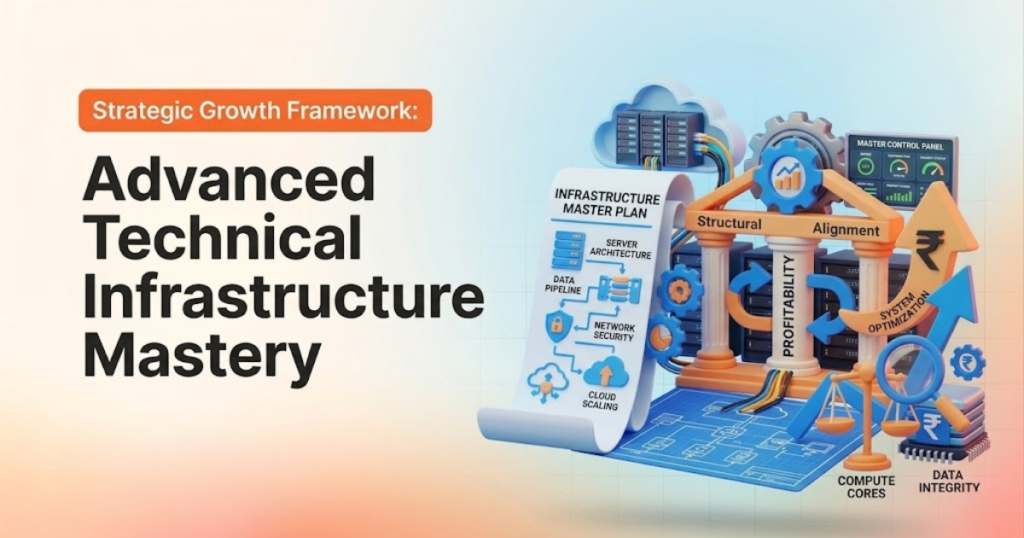
In today’s privacy-first era, data tracking has undergone a massive paradigm shift. Traditional browser-based tracking cookies are largely obsolete due to operating system updates (like iOS tracking restrictions) and widespread ad-blocker usage.
If your meta ads services provider only knows how to copy and paste a basic Javascript code snippet into your website header, your ad budget is at extreme risk.
The Technical Requirements Checklist
Server-Side Tracking & Meta Conversions API (CAPI)
Your agency must be proficient in setting up server-side tracking via tools like Google Tag Manager (GTM) hosted on cloud servers (AWS or Google Cloud). This creates a direct connection between your website’s server and Meta’s data centers. Without CAPI, you risk missing up to 30% to 40% of your conversion data, which leaves Meta’s optimization algorithm blind.
Advanced Matching Quality (AMQ)
To match an ad click to an actual purchase or lead form submission, Meta requires high-quality parameters (hashed emails, phone numbers, first names, and locations). Your partner must configure your checkout system to safely hash and pass this first-party data back to Meta to boost your Event Match Quality scores.
Data Deduplication
When both the browser pixel and the server-side API fire an event simultaneously, your tracking system must utilize a unique event_id to deduplicate them. If your agency sets this up incorrectly, your dashboard will report double the actual sales or leads, destroying your analytical accuracy.
CRM Deep Integration
For B2B or high-ticket lead generation frameworks (such as solar installations, luxury real estate, or industrial manufacturing), simple lead form captures are insufficient. Your agency should be skilled at connecting Meta leads straight to your CRM (e.g., Zoho, HubSpot, Salesforce, or LeadSquared). This passes downstream offline sales data back to Meta to optimize for actual closed deals rather than junk inquiries.
3. High-Performance Creative Capabilities
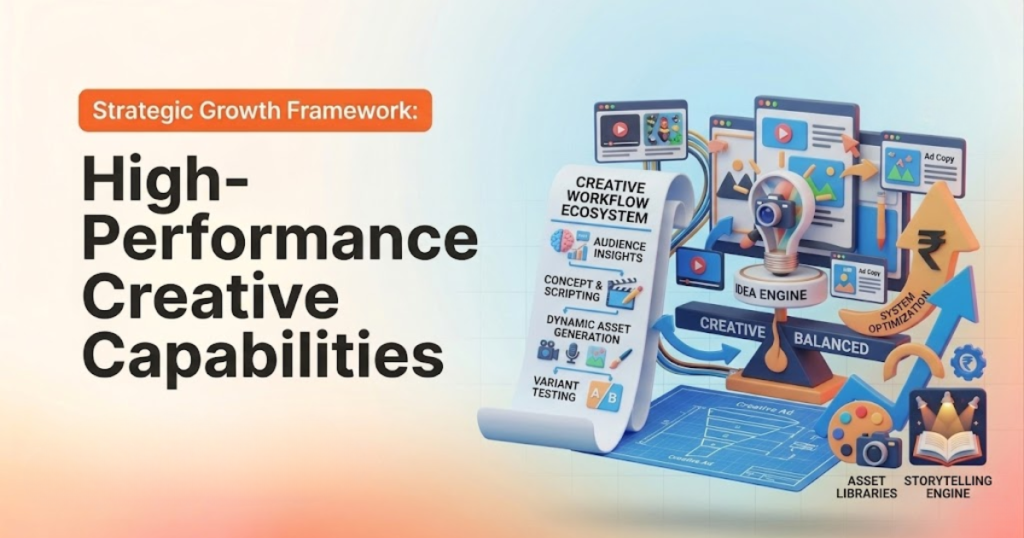
A common mistake in digital marketing is treating media buying (the technical budgeting and targeting) as completely separate from creative production. Modern machine-learning systems have fundamentally changed this workflow.
Today, creative is the new targeting. Because Meta’s AI algorithm automatically analyzes the visual and textual hooks of your ad to locate ideal consumers, your chosen agency must be an absolute powerhouse in content creation.
[Targeting Specs & Demographics] –> Minimal Impact (Handled by Meta AI)
[Visual Hook + Emotional Angle] –> Maximum Impact (Stops the User from Scrolling)
The Three Creative Pillars of Indian Meta Ads
Direct Response Video Frameworks
The attention span of an average Instagram user scrolling through Reels is less than three seconds. The agency must demonstrate a deep understanding of direct response video frameworks:
- 0–3 Seconds: A disruptive psychological or visual hook customized for the Indian demographic (e.g., addressing a core pain point like high electricity bills or low business margins).
- 3–15 Seconds: Core problem agitation followed by the seamless introduction of your product or service as the ultimate solution.
- 15–30 Seconds: Overcoming common conversion friction points (such as shipping times, product warranties, or trust elements).
- 30–45 Seconds: A single, completely unambiguous Call-to-Action (CTA).
Vernacular Content Architecture
India is a multilingual marketplace. While English and Hinglish work well in metro hubs like Mumbai or Delhi, scaling effectively into regional markets like Gujarat, Rajasthan, or Assam demands specialized local-language copy.
Your meta ads services provider must be capable of localized translation and cultural context mapping so your ads read naturally and authentically to regional consumers.
User-Generated Content (UGC) & Creator Whitelisting
Modern audiences have built up a strong resistance to overly polished, corporate-looking commercial ads. They trust real human experiences. Your agency should feature a dedicated system to source, direct, and edit UGC from everyday micro-influencers.
Furthermore, they should understand how to run whitelisted ad campaigns—launching ads directly through a creator’s personal profile rather than your brand’s corporate page—which significantly improves click-through rates.
4. Uncompromising Data Transparency & Account Governance
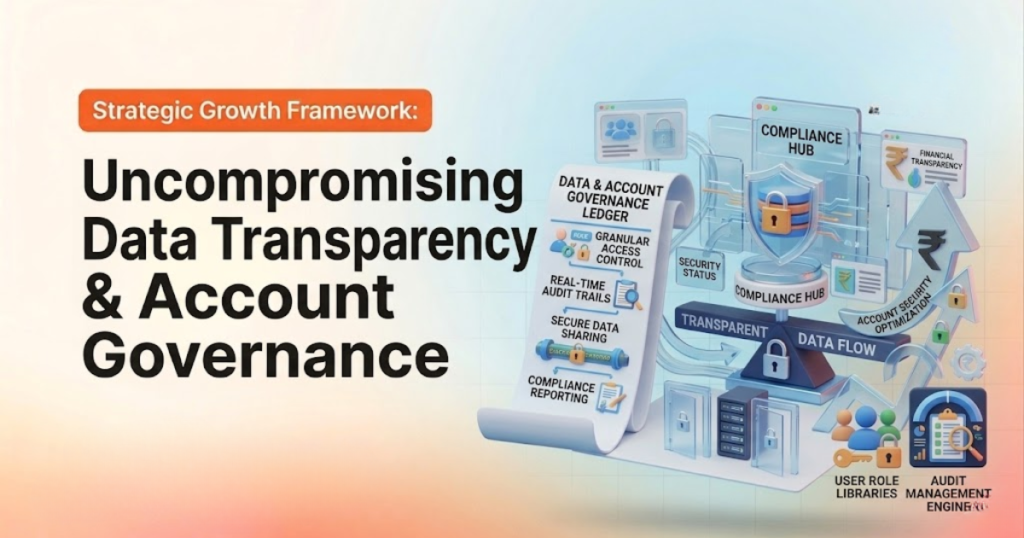
The operational ethics of your agency partner are just as critical as their technical capabilities. The digital marketing space contains several problematic management practices that can trap unsuspecting business owners.
Rules of Safe Ad Account Governance
- Absolute Asset Ownership: Your agency must never host your campaigns inside their personal or agency Meta Business Manager or ad accounts. Your Meta Pixel, Custom Audiences, Ad Accounts, Instagram Profiles, and Facebook Pages must remain strictly within your corporate Meta Business Suite. The agency should access these purely via the approved “Partners” access protocol.
- IP Protection and Data Control: If you decide to part ways with your agency down the road, your historical data, custom conversion configurations, and optimization histories must stay with your company. If an agency insists on using their own account infrastructure, they are essentially holding your business data hostage.
- Live Performance Dashboards: Avoid agencies that provide manual PDF reports at the end of every month. Monthly static reports allow poor performance to be masked with vanity data. Demand a live, dynamic, multi-source reporting framework (such as a Looker Studio or PowerBI dashboard) that pulls real-time data straight from the Meta API alongside your backend store platform (like Shopify or custom databases).
5. Strategic Comparison Blueprint
To simplify your evaluation process when interviewing multiple service providers, reference the comparative framework below to quickly separate amateur practitioners from enterprise-grade performance partners.
| Evaluation Metric | Beginner-Level Agencies | Enterprise-Grade Meta Ads Services |
| Primary Focus KPI | Cost-Per-Click (CPC), Impressions, Likes | Cost Per Acquisition (CPA), MER (Marketing Efficiency Ratio), Net ROI |
| Targeting Approach | Manual interest stacking and hyper-segmented demographic layering | Broad targeting frameworks driven by high-converting creative angles |
| Data Testing Strategy | Testing random images without a core thesis or strategic direction | Systematic variable testing (testing specific hooks, visual styles, and copy angles) |
| Technical Stack Capability | Basic web browser setup via standard pixel insertion | Advanced cloud server-side setup, CAPI configuration, and CRM synchronization |
| Communication Schedule | Irregular updates or generic end-of-month PDF summaries | Weekly strategic syncs paired with access to real-time live reporting dashboards |
| Localization Ability | Generic English copy applied broadly across all Indian regions | Tailored localized copy variations matched to regional market trends |
6. The 10-Point Meta Ads Selection Checklist
Use this definitive checklist during your negotiation and discovery phases before signing a contract with any digital marketing service provider.
1: Operational & Administrative Setup
- [ ] Requirement 1: The service provider confirms that all assets (Meta Business Suite, Ad Accounts, Pixel, Datasets) will be owned 100% by your brand, with agency access granted via partner credentials only.
- [ ] Requirement 2: The agency provides a clear, legally binding contract detailing intellectual property ownership over all ad creatives, copy assets, and video edits produced during the campaign.
- [ ] Requirement 3: A dedicated, real-time communications channel (such as Slack, Microsoft Teams, or a structured WhatsApp Business group) is established with defined service-level agreements (SLAs) for responses.
2: Technical & Creative Infrastructure
- [ ] Requirement 4: The agency demonstrates explicit, hands-on experience setting up server-side tracking, GTM architectures, and Meta Conversions API (CAPI).
- [ ] Requirement 5: The team possesses native internal creative capabilities (graphic design, video editing, and copywriting) instead of outsourcing asset creation to unverified third-party vendors.
- [ ] Requirement 6: The creative team demonstrates an understanding of the Indian consumer landscape, including the production of Hinglish and regional vernacular variations.
3: Analytical Framework & Methodology
- [ ] Requirement 7: The agency provides an automated, live analytics dashboard that showcases clear correlations between Meta ad spend and actual sales or verified CRM lead states.
- [ ] Requirement 8: The partner can clearly define and calculate your brand’s Break-Even ROAS, Target CAC, and Gross Margins prior to deploying capital.
- [ ] Requirement 9: The team presents a highly structured testing framework explaining exactly how they isolate variables (e.g., testing hooks separately from offers or call-to-actions).
- [ ] Requirement 10: The service provider displays real, verified Indian case studies with verifiable data from your specific industry or an adjacent business vertical.
Deep-Dive Frequently Asked Questions (FAQs)
Q1: What is the minimum ad budget required to start with professional Meta Ads services in India?
There is no fixed minimum budget set by Meta, but from an operational scaling perspective, you need enough budget to cross the Learning Phase. Meta requires roughly 50 conversion events per ad set per week to fully optimize its algorithm.
Q2: How long does it take to see stable, profitable ROI from Meta Ads?
Meta advertising is an compounding asset, not an overnight lottery system.
- Weeks 1–2: This is the foundational testing phase. The agency sets up tracking infrastructure, builds initial creative batches, and maps out baseline audiences. Data collected here is used to locate problems in your checkout or lead funnel.
- Weeks 3–4: The optimization phase. The agency cuts underperforming creative concepts and allocates budget into winning asset structures.
- Month 2 and Beyond: Stabilization and scaling. Predictable ROI and controlled CAC trends generally stabilize during the second month of consistent, data-backed optimization.
Q3: Should we hire an agency that charges a fixed fee or a percentage of ad spend?
Both compensation structures have clear pros and cons:
- Fixed Monthly Retainer: Ideal for brands with stable, predictable monthly budgets. It protects your margins as your spend scales up, but ensure the agency has clear performance incentives built in so they stay motivated to optimize aggressively.
- Percentage of Ad Spend (typically 10% to 20%): Aligns agency growth with your budget growth. This functions well if your scaling is tied strictly to profitability. However, ensure your partner only scales spend when your net profit metrics allow for it, rather than simply blowing through budget to increase their own fee.
Q4: Why is our website’s internal data showing fewer sales/leads than the Meta Ads Manager dashboard?
This common discrepancy is caused by varying attribution windows and data tracking setups. By default, Meta uses a 7-day click and 1-day view attribution window. This means if a user views your ad, doesn’t click, but searches your brand name on Google and buys three days later, Meta will claim 100% credit for that sale.
Conversely, privacy-restricted devices might block the browser pixel entirely, causing your internal dashboard to miss the Meta connection. To resolve this, your meta ads services provider must implement Server-Side tracking (CAPI) and utilize UTM tracking parameters analyzed via server-side analytics platforms to achieve an accurate, deduplicated view of your data.
Q5: Can Meta Ads work effectively for B2B or complex industrial manufacturing niches in India?
Absolutely. The key change lies in the funnel design. For a B2C e-commerce brand, you can run direct-to-purchase catalog or conversion ads. For B2B industrial products, you must build a multi-stage lead generation and nurture funnel.