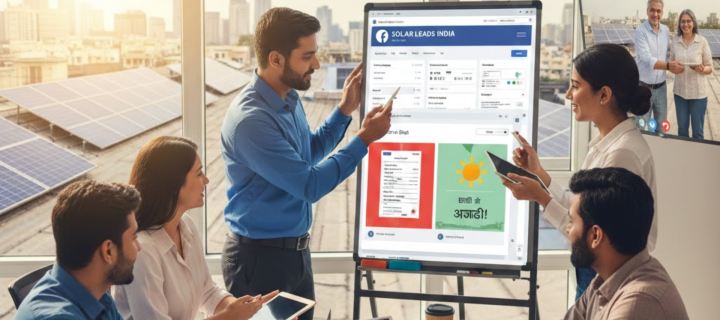
The Indian renewable energy sector is witnessing an unprecedented boom. With the launch of the PM Surya Ghar: Muft Bijli Yojana and the central government’s aggressive target of 500 GW of non-fossil fuel capacity by 2030, residential and commercial solar adoption is at an all-time high.However, for a solar business, the biggest hurdle isn’t the technology—it’s the customer acquisition. Traditional marketing methods like newspapers and cold calling are becoming expensive and less effective. Today, the most powerful tool at your disposal is Facebook Ads for solar leads.
In this exhaustive guide, we will explore the strategies, technical setups, and psychological triggers required to dominate the Indian solar market using Meta ads.
1. Why Facebook Ads for Solar Leads Are a Goldmine for Solar Businesses
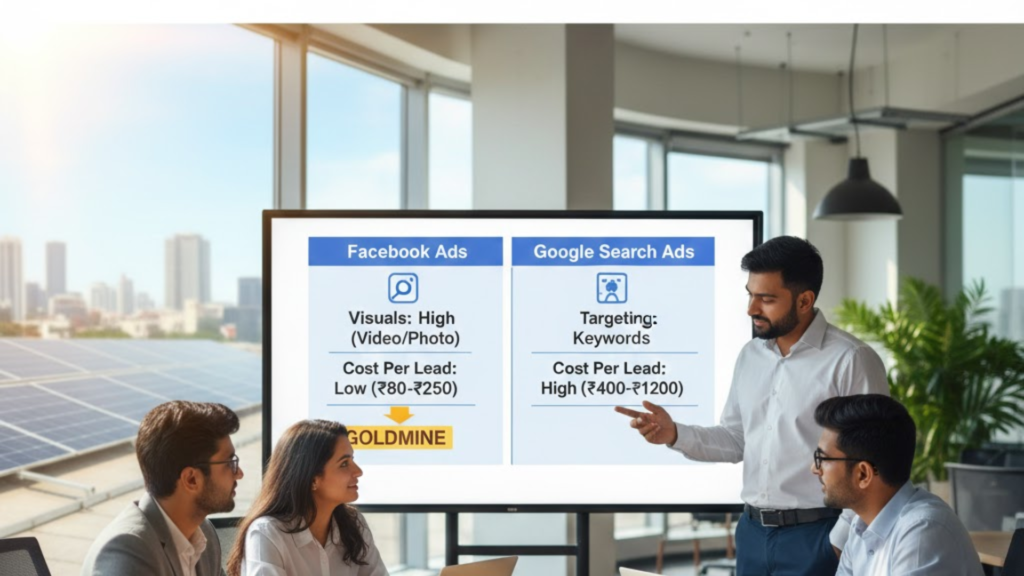
Many marketers wonder if Google Search is better than Facebook for solar. While Google captures people “actively searching,” Facebook allows you to generate demand by reaching homeowners before they even look for a quote.
Comparison of Lead Generation Platforms: Facebook Ads for Solar Leads vs Google Ads
| Feature | Facebook Ads (Meta) | Google Search Ads |
| User Intent | Passive/Discovery (Interest-based) | Active (Keyword-based) |
| Average CPL (India) | ₹150 – ₹350 | ₹500 – ₹1,500 |
| Visual Capability | High (Video/Image/Carousel) | Low (Text-heavy) |
| Audience Size | Massive (Over 400M Indian users) | Medium |
| Trust Building | High (Social Proof/Comments) | Medium |
The Verdict: For scaling quickly and keeping the Cost Per Lead (CPL) low, Facebook Ads is the undisputed winner for residential solar installations.
2. Strategy 1: The “Bachat” (Savings) Psychological Trigger
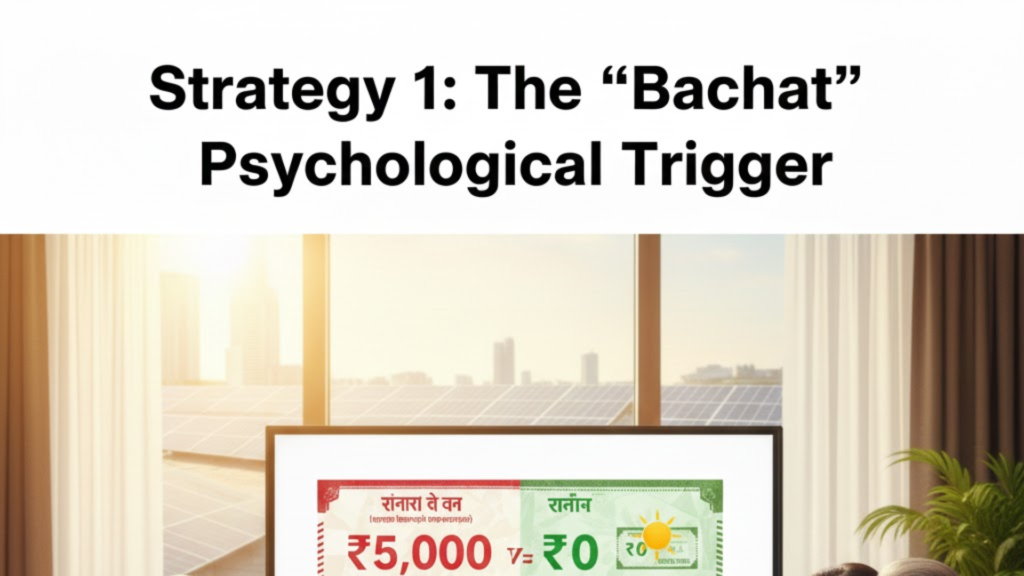
In India, solar is rarely bought solely for environmental reasons. It is viewed as a financial investment. Your ad campaigns must pivot around the concept of “Return on Investment” (ROI).
Visual Hooks that Work:
- The Bill Comparison: Use a graphic showing a Current Bill of ₹6,000 vs. a Post-Solar Bill of ₹0. This visual contrast stops the scroll instantly.
- The “Zero Investment” Angle: If you offer financing or EMI options, highlight “Solar at ₹0 Downpayment”.
- Regional Language Power: India is a land of many languages. Running ads in Hindi, Marathi, Tamil, or Gujarati (depending on your state) builds 3x more trust than plain English ads.
Actionable Tip:
Always use bold, red text for “High Bills” and bright green text for “Savings.” This color psychology is deeply rooted in the Indian consumer’s mind.
3. Strategy 2: Targeting the “Right” Indian Homeowner
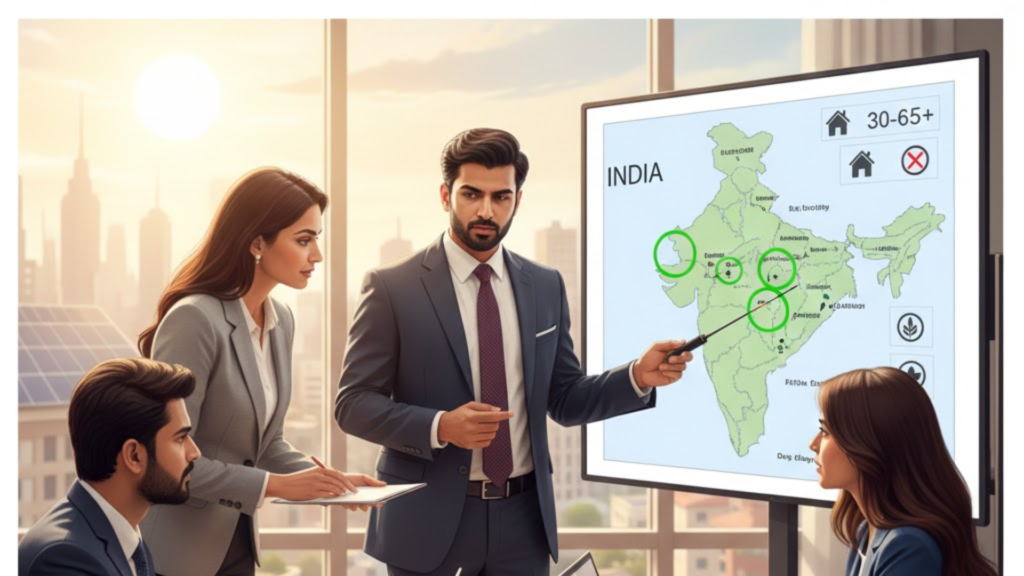
One of the biggest mistakes in Facebook ads for solar leads is targeting everyone. If you target a 22-year-old living in a rented apartment, you are wasting money.
Precision Targeting Parameters:
- Age Bracket: Focus on 30 – 65+. These are usually the house owners and decision-makers.
- Home Ownership: Facebook has removed some specific “homeowner” tags, so you must target via Interests:
- Home Improvement
- Villas / Bungalows
- Sustainability
- Luxury Real Estate
- The “Apartment” Filter: If you only provide rooftop solar for independent houses, use exclusions to remove people interested in “Apartments” or “Flats.”
- Geofencing: Don’t target the whole state if you can’t service it. Target specific Pincodes of posh localities where independent bungalows are prevalent.
4. Strategy 3: High-Converting Ad Formats
Not all ads are created equal. For solar, you need a mix of educational and social proof content.
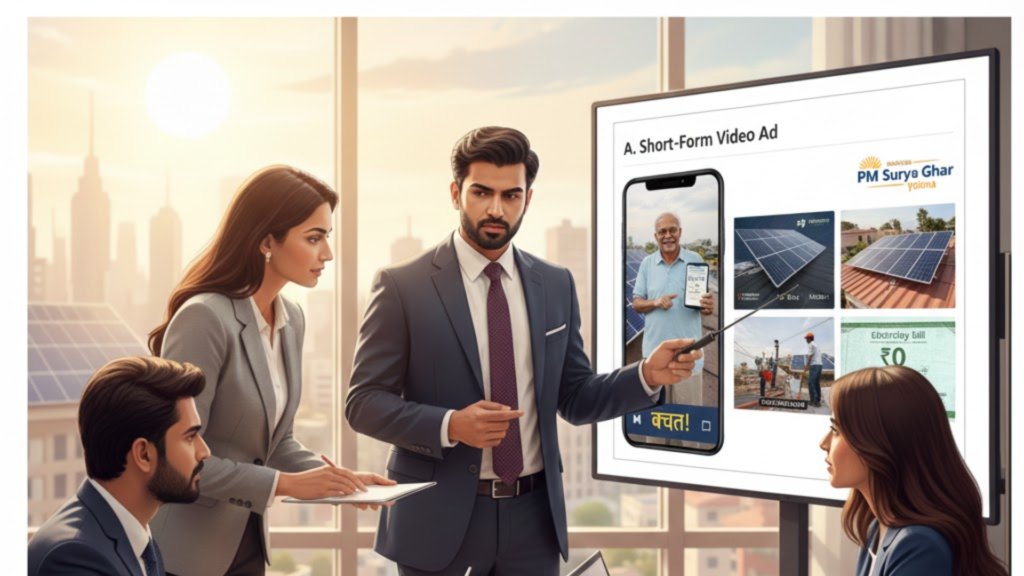
A. Short-Form Video (The King of 2025)
A 30-60 second video of an installer standing on a roof in a sunny Indian city.
- The Hook: “Stop paying for sunlight! See how this family in Jaipur saved ₹50k last year.”
- The Body: Quick shots of the panels, the inverter, and the happy customer.
- The CTA: “Click the ‘Learn More’ button for a free site survey.”
B. The Carousel Ad
Use this to show the step-by-step process:
- Slide 1: Government Subsidy Info.
- Slide 2: High-quality panel brands you use.
- Slide 3: A photo of a recent installation.
- Slide 4: A screenshot of a ₹0 electricity bill.
5. Strategy 4: Mastering the Lead Form (Quality over Quantity)
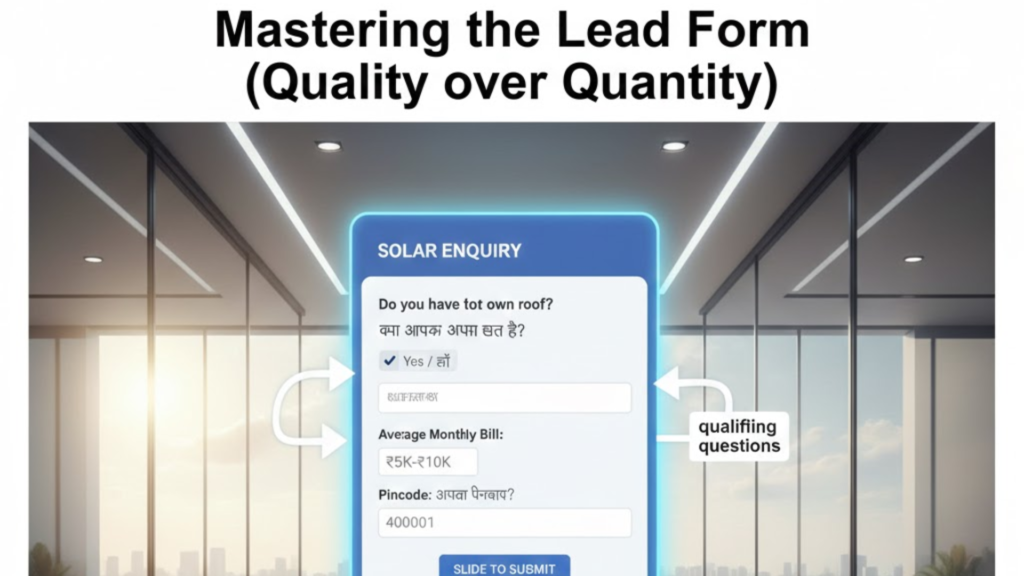
The “Instant Form” on Facebook is great for speed, but it often brings in “accidental clicks.” To ensure your Facebook ads for solar leads bring in people who actually want to buy, you must add Friction.
How to Add Intent-Based Friction:
- Question 1 (The Qualifier): “Do you have your own roof?” (Yes/No).
- Question 2 (The Budget): “What is your average monthly electricity bill?” (₹2k-₹5k, ₹5k-₹10k, ₹10k+).
- Question 3 (The Pincode): Asking for a pincode forces the user to type, ensuring they are conscious of what they are doing.
The “Higher Intent” Setting: Always choose the “Higher Intent” option in the Lead Form settings. This adds a review screen that forces users to slide a button to confirm their details.
6. Strategy 5: The “Subsidy” Advantage (PM Surya Ghar Yojana)
As of 2025, the Indian government offers substantial subsidies (up to ₹78,000 for 3kW). Your ads must act as an Information Bridge.
- Headlines to use: “Apply for PM Surya Ghar Subsidy Today!”
- Ad Copy: “Don’t miss out on the ₹78,000 central government subsidy. Our team handles all the paperwork for you.”
Trust Signal: Mention that you are an MNRE-approved vendor (if applicable). This is the single biggest factor in winning trust over local, unorganized competitors.
7. Technical Optimization: Pixel, API, and Retargeting
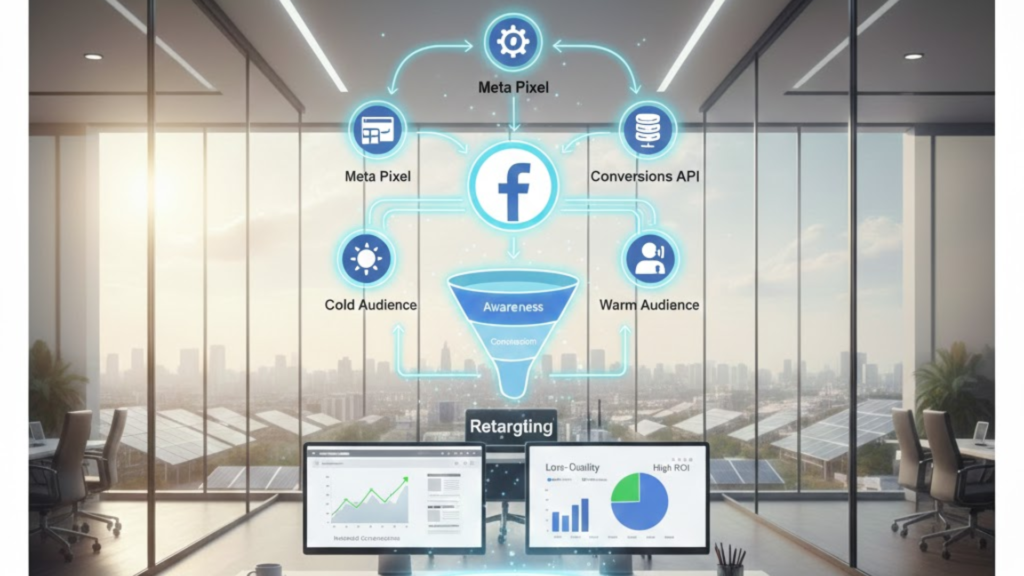
If you are just running “Lead Generation” campaigns without a funnel, you are leaving 70% of the money on the table.
The Retargeting Funnel:
- Layer 1 (Cold): Educational video about solar benefits.
- Layer 2 (Warm): Retarget those who watched 50% of the video with a Customer Testimonial.
- Layer 3 (Hot): Retarget those who visited the lead form but didn’t submit with a “Limited Time Offer: Free Maintenance for 5 Years”.
8. Analyzing the Cost: What should you spend?
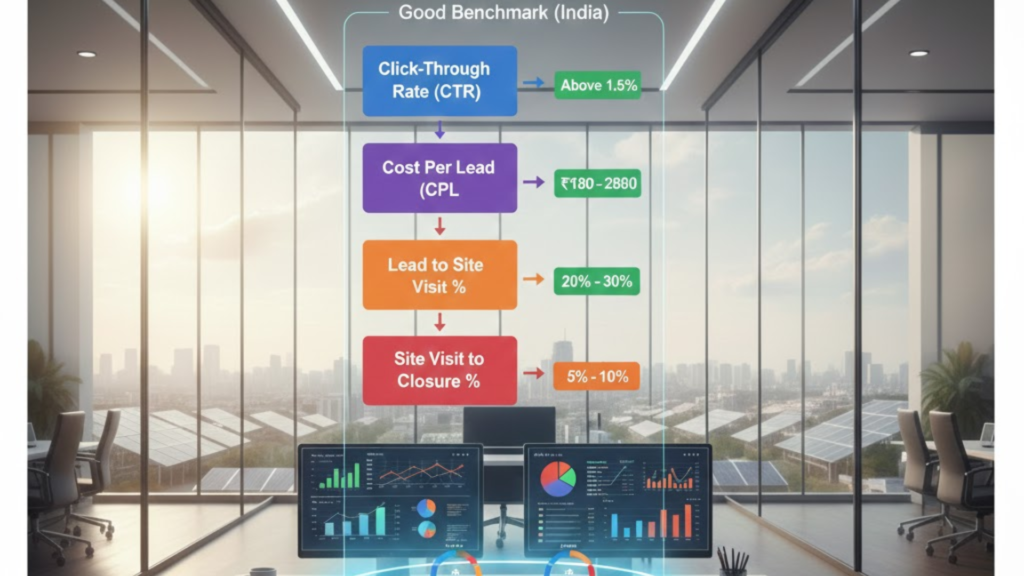
In the Indian market, your budget should be allocated based on the Customer Lifetime Value (CLV).
| Metric | Good Benchmark (India) |
| Click-Through Rate (CTR) | Above 1.5% |
| Cost Per Lead (CPL) | ₹180 – ₹280 |
| Lead to Site Visit % | 20% – 30% |
| Site Visit to Closure % | 5% – 10% |
If your CPL is higher than ₹400, your Ad Creative is likely the problem. If your Closure rate is low, your Sales Team’s follow-up speed is the problem.
Frequently Asked Questions (FAQ)
Q: How many leads can I generate with ₹2,000 per day? A: With an optimized campaign, you can expect 8 to 12 leads per day in India.
Q: Does Facebook provide fake leads? A: Facebook provides the data users have on their profiles. “Fake” leads are usually people who clicked by mistake. Using Qualifying Questions in your form solves this.
Q: Is video mandatory for solar ads? A: Not mandatory, but Video Ads convert 40% better than static images in the solar industry because they explain complex technology simply.
Q: Should I target all of India? A: No. Solar is a local business. Target only the states or cities where you have installation teams.
Final Thoughts: The 5-Minute Rule
The most successful solar companies in India have one thing in common: Speed.
A lead generated through Facebook ads for solar leads is “hot” for exactly 15 minutes. After that, the user might forget which form they filled out or get distracted by a competitor’s ad.
- Action: Integrate your Facebook Lead Form with a CRM or a simple WhatsApp Automation tool.
- Immediate Response: Send an automated WhatsApp message with your portfolio and a “Thank You” note the second they submit the form.