The digital landscape in India is no longer about just “being online.” As we move through 2026, the boundary between our physical and digital lives has blurred. With 5G now a standard and 6G testing underway in urban hubs like Bangalore and Mumbai, the speed of consumption has changed the rules of the game.For a brand to survive in Digital Marketing 2026, it must move beyond traditional “funnel” thinking and embrace a Flywheel Model powered by Artificial Intelligence, Trust, and Vernacular reach.
1. The Revolution of Search in Digital Marketing 2026: From SEO to AEO
The most significant shift in 2026 is the transition from Search Engine Optimization (SEO) to Answer Engine Optimization (AEO).
The Death of the “Link”
Google’s Search Generative Experience (SGE) now provides 80% of answers directly on the search results page. If a user asks, “Best budget smartphones under ₹20,000 in India,” they get an AI-curated list with pros and cons immediately. They don’t need to click a website.
How to Rank in 2026:
- The 10% Rule: Since AI summarizes the web, you must provide the “Unique 10%”—insights, personal experiments, or expert opinions that AI cannot replicate.
- Schema 3.0: You must use advanced technical markups so AI agents can “read” your inventory, pricing, and author credentials in milliseconds.
- Voice-First Indexing: 70% of Indian users now use voice search. Your content must sound like a conversation, not an encyclopedia.
| Search Era | Primary Goal | User Behavior |
| 2015-2020 | Keyword Matching | Clicking multiple links |
| 2021-2024 | User Intent | Seeking specific answers |
| 2026 & Beyond | Predictive Solutions | Conversing with AI Agents |
2. Artificial Intelligence in Digital Marketing 2026: The “Digital Brain” of Modern Marketing
In 2026, AI is not a tool; it is a team member. Marketing departments in India have shifted from “Content Creators” to “AI Orchestrators.”
A. Hyper-Personalization at Scale
Generic emails are officially dead. AI now analyzes a user’s Digital Body Language—how long they hover over an image, their scroll speed, and their past purchases—to create a “Segment of One.”
- Example: If a user in Jaipur looks at blue kurtas, the website dynamically changes its homepage to show blue ethnic wear, specifically in fabrics suitable for Rajasthan’s weather.
B. Generative Video (The Veo & Sora Impact)
Producing high-quality video ads used to take weeks. In 2026, brands use AI to generate localized video ads in minutes. You can now create a video featuring a virtual brand ambassador speaking in Marathi, Bengali, or Malayalam, drastically reducing production costs while increasing relevance.
3. Social Commerce in Digital Marketing 2026: The Rise of the “Shoptertainment” Boom
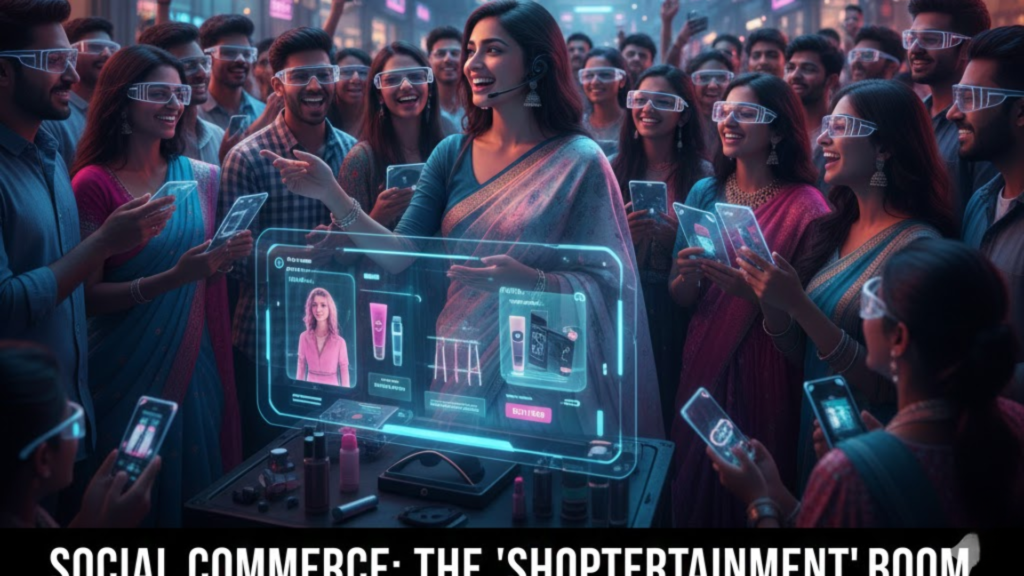
India has become the world leader in Social Commerce. Social media platforms like Instagram, YouTube, and native Indian apps (like Moj and Josh) have integrated the entire supply chain.
The Rise of Live-Stream Shopping
Imagine a virtual “Tele-shopping” experience but interactive. Influencers host live sessions where viewers can ask questions (“Does this fabric shrink?”) and click a button to buy instantly without leaving the video.
- The Trust Factor: Indian consumers trust a “face” more than a “logo.” This is why CEO-branding and Founder-led marketing are at an all-time high.
Decentralized Social Media
In 2026, many users are moving to “Fediverse” platforms where they own their data. Marketers are shifting focus from mass-following to Niche Communities on Discord and specialized WhatsApp Groups.
4.The Privacy-Trust Paradox in Digital Marketing 2026
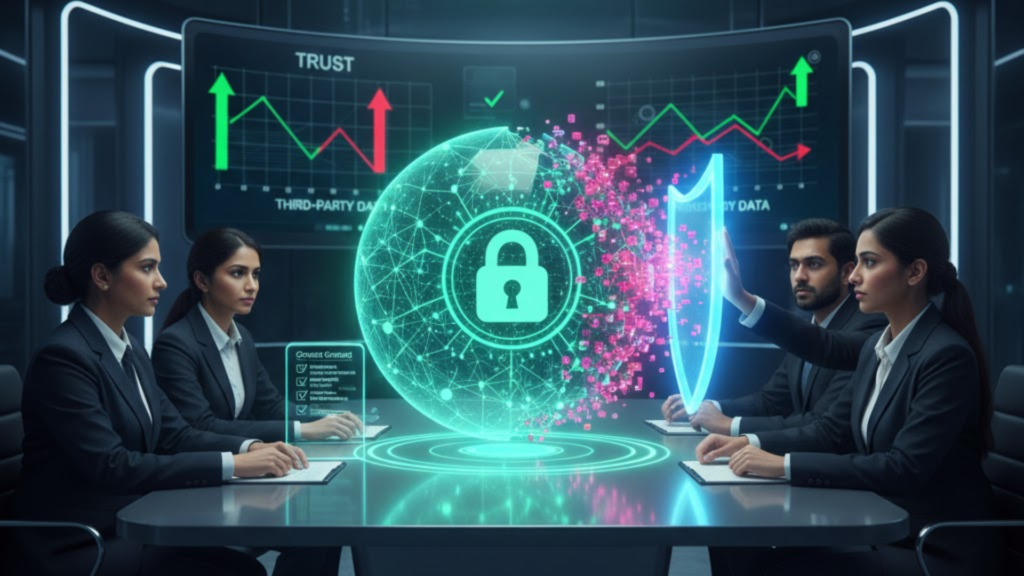
With the implementation of the Digital Personal Data Protection (DPDP) Act in India, data privacy is no longer optional—it’s a legal requirement.
The Shift to First-Party Data
Since third-party cookies are gone, brands are incentivizing users to share data voluntarily.
- Gamification: Users play a quick 30-second game to win a discount, and in return, provide their preferences.
- Utility-Driven Data: “Give us your size and style preference to get a curated digital wardrobe,” rather than “Sign up for our newsletter.”
Note: In 2026, a “Leaked Database” is a brand-killer. Cybersecurity is now a vital part of the Marketing budget.
5. Vernacular Marketing: Winning the “Real India”
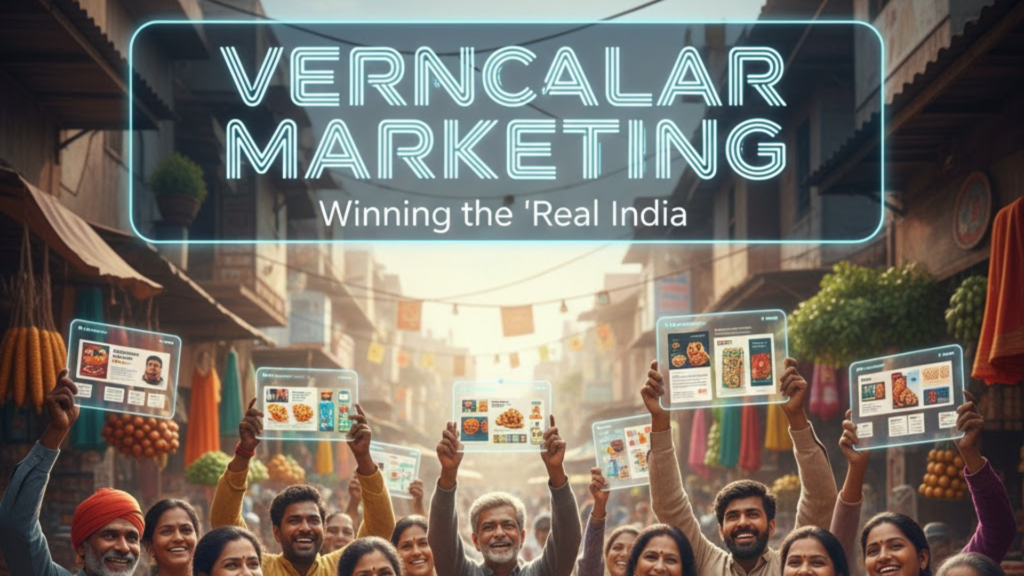
The next 200 million internet users in India do not speak English as their primary language. In Digital Marketing 2026, if you aren’t local, you aren’t relevant. This isn’t just a trend; it’s the new baseline for survival in the Indian market.
A. Transcreation vs. Translation: The 2026 Mandate
By 2026, simple translation is considered “lazy marketing.” To truly connect, brands must use Transcreation—the process of adapting a message from one language to another while maintaining its intent, style, tone, and emotional context.
- Cultural Nuance: An ad for a festival in Punjab should feel vastly different from one in Tamil Nadu. It’s about using local idioms, humor, and symbols that resonate.
- The Trust Factor: Studies show that 88% of Indian consumers trust local-language content more than English. When a brand speaks a mother tongue, it ceases to be a “corporate entity” and becomes a “trusted neighbor.”
B. The “V-U-C” Strategy for Bharat
To capture the “Bharat” audience, marketers are deploying the V-U-C Framework:
- Voice (The Hands-Free Revolution): Over 50% of Indian users now use voice commands for search. Your SEO must optimize for “Phonetic Keywords”—how people speak in Hinglish or regional dialects, not just how they type.
- Unique Localized Content: Stop repurposing global ads. Create content that reflects local attire, food, and daily struggles. Regional influencers (Nano & Micro) are the keys to this authenticity.
- Community-First Platforms: Marketing has moved to closed circles. Private WhatsApp Channels and Telegram Groups in regional languages are seeing engagement rates 5x higher than open social feeds.
C. Regional Dominance by the Numbers
| Language | Performance Metric (vs. English) | Best Content Format |
| Hindi | 40% Higher Search Volume | Explainer Videos & News |
| Malayalam | 30% Higher Reel Completion | Lifestyle & Tech Reviews |
| Bengali | 25% Higher Ad Click-Through (CTR) | Story-based Ads |
| Tamil | 35% Higher Brand Loyalty | Celebrity/Influencer Collabs |
6. Metaverse and Spatial Computing (AR/VR)
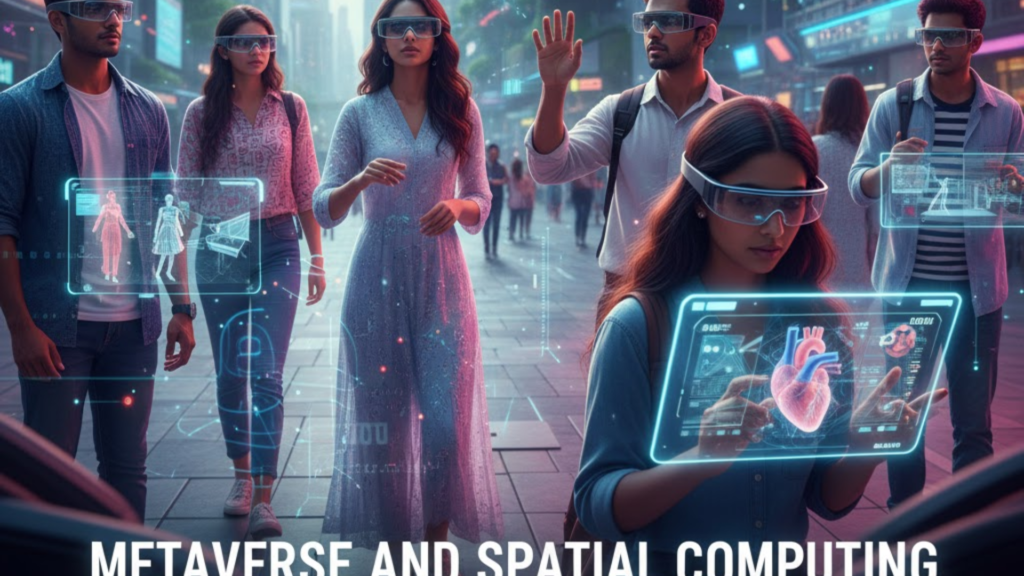
With the rise of affordable AR glasses and headsets, “Spatial Marketing” has arrived in India.
Real-World Use Cases:
- Virtual Try-Ons: Brands like Lenskart and Asian Paints have pioneered this. Customers “try on” glasses or see “paint on their walls” using AR.
- Virtual Showrooms: Tata Motors and other auto giants now offer “Fleet Verse” experiences—allowing you to sit inside a car virtually before visiting the showroom.
- 3D Product Visuals: 75% of Indian customers hesitate to buy furniture online. AR eliminates this by letting them see the sofa in their actual living room.
7. Sustainable and Ethical Marketing
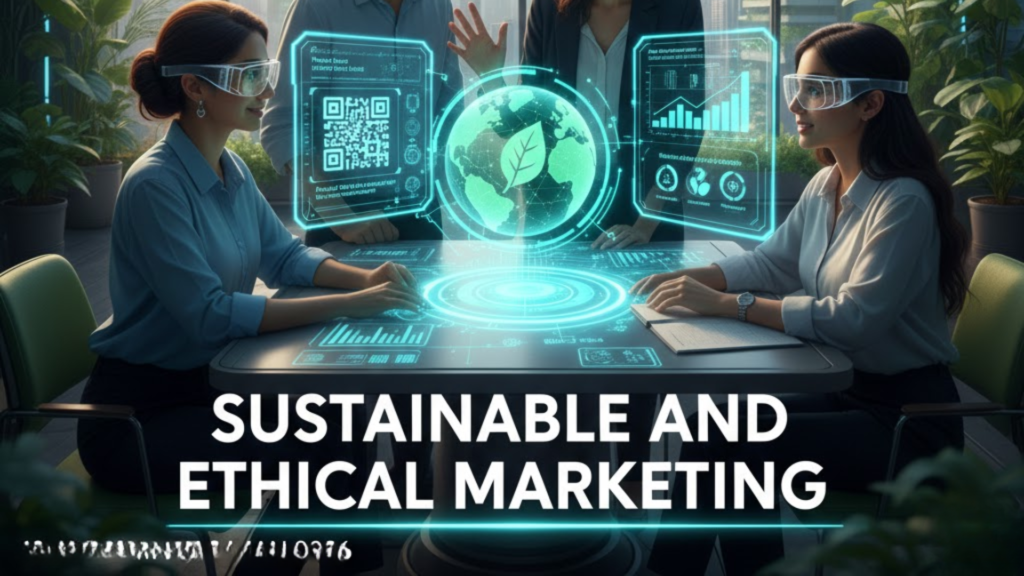
In 2026, “Green-marketing” is not a buzzword; it’s a conversion trigger. Indian Gen Z consumers are actively rejecting brands that make vague claims.
How to Implement Ethical Marketing:
- Product Passports: Use QR codes to show the supply chain—from the organic cotton farm to the factory.
- Circular Economy: Launch “Recycle & Reward” programs where customers get store credit for returning old packaging.
- Authentic Purpose: Brands that promote digital wellbeing and “slow content” are winning the trust of anxious consumers.
FAQ: Frequently Asked Questions about Digital Marketing 2026
Q1. Is SEO still a viable career in 2026?
Absolutely. However, the role has changed. An SEO professional is now an “Experience Optimizer.” Instead of just keywords, they focus on site speed, user experience, and “Answer Engine” visibility.
Q2. How has AI affected the job market for marketers in India?
AI has automated repetitive tasks like basic copywriting and data entry. However, it has created a massive demand for AI Strategists, Prompt Engineers, and Ethical Data Officers. The “human element”—creativity and empathy—is more valuable than ever.
Q3. Which social media platform is most dominant in India in 2026?
While Instagram remains king for lifestyle, YouTube has become the primary search engine for “How-to” and educational content. WhatsApp is the primary “conversion” tool for 90% of Indian businesses.
Q4. What is “Zero-Click Content”?
This is content designed to give value directly on the platform (like a detailed LinkedIn post or an Instagram Carousel) without forcing the user to click a link. This builds massive brand trust, which leads to higher-quality conversions later.
Conclusion: The Future belongs to the Agile
As we look at Digital Marketing 2026, the biggest takeaway is that change is the only constant. The brands that will lead the Indian market are those that use AI to be efficient, but use human storytelling to be memorable.
Technology will change every six months, but the human desire for connection, trust, and value will remain the same.