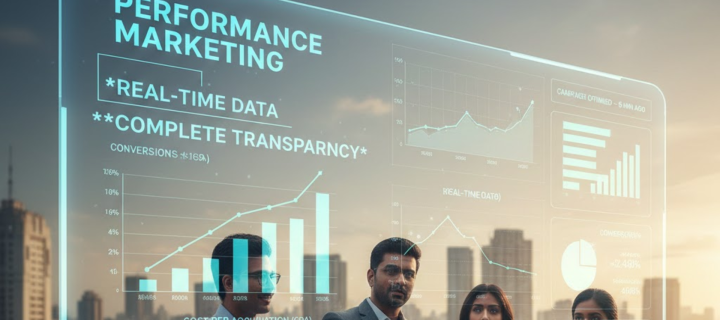
In the bustling digital landscape of India, where competition is fierce and every Rupee counts, businesses often find themselves asking a crucial question: Is my marketing budget truly working for me?Traditional marketing often feels like throwing money into a black box—you hope for the best, but tracking the actual return on investment (ROI) is notoriously difficult. But there’s a revolutionary shift happening, a model that demands accountability and delivers verifiable results: Performance Marketing.For Indian businesses, from ambitious start-ups in Bengaluru to established manufacturers in Ahmedabad, understanding the benefits of performance marketing is no longer optional—it is essential for sustainable growth. This model isn’t about impressions or views; it’s about paying for concrete actions: a click, a lead, or a definitive sale.
This deep dive explores how Performance Marketing operates as a transparent, data-driven engine, giving businesses the clarity and control needed to thrive in the world’s fastest-growing major economy.
I. Demystifying Performance Marketing: The ‘Pay-for-Results’ Principle

Performance Marketing is a comprehensive term for online marketing and advertising programs in which the advertiser only pays when a specific, measurable result or action is completed.
Unlike traditional brand advertising, where the focus is on creating awareness through mass media (paying for the potential of an action), Performance Marketing flips the script by making the payment directly contingent on the actual performance.
Key Performance Models: How You Pay for Results
Performance campaigns typically run on various payment models, ensuring the advertiser assumes less risk and gains maximum ROI:
- Cost Per Click (CPC): Payment only when a user clicks on the ad (e.g., Google Search Ads). This is ideal for driving traffic.
- Cost Per Lead (CPL): Payment when a user fills out a form or signs up for a newsletter. This is critical for lead generation campaigns.
- Cost Per Acquisition/Sale (CPA/CPS): Payment only when a direct purchase or conversion happens (most common in Affiliate Marketing and E-commerce). This is the gold standard for profitability.
- Cost Per Install (CPI): Payment for every mobile app installation (critical for India’s booming app market).
This fundamental shift to paying for measurable outcomes is the source of all the profound benefits of performance marketing.
II. The Core Benefits of Performance Marketing: Data, Transparency, and Control

The power of Performance Marketing lies in its ability to strip away guesswork and inject scientific rigour into marketing spend.
1. Absolute Financial Transparency and Accountability
Performance Marketing eliminates ambiguity and offers a clear, auditable trail for every rupee spent.
Key takeaway: You see exactly what you pay for, leading to minimal wasted budget and higher ROI.
2. Real-Time Data and Immediate Optimization Capabilities
Perhaps the single most powerful tool in the Performance Marketer’s arsenal is Real-Time Data.
- Instant Feedback Loop: If an ad set is showing a high Cost Per Acquisition (CPA) within the first four hours of launch, the marketer can immediately pause the ad or tweak the targeting.
- Agile Testing: Performance Marketing thrives on A/B testing. Real-time data quickly identifies the winner, allowing the business to rapidly scale the effective strategy. This agility is crucial in the fast-moving Indian digital space.
- In-Depth User Insights: The data goes beyond just clicks; it reveals user behaviour (time spent on page, bounce rate, pages viewed, etc.).
3. Unprecedented Targeting Precision (The Pinpoint Approach)
Performance Marketing platforms offer unparalleled precision in reaching the right customer at the right time:
- Demographic and Geographic Specificity: Targeting users based on location (down to a specific pin code or city like Pune or Lucknow), income level, age, and gender.
- Interest and Behavioural Targeting: Reaching users who have shown a proven interest in related products or services (e.g., targeting individuals who have recently searched for “best hybrid car” or “online MBA courses”).
- Retargeting/Remarketing: This is one of the highest ROI strategies, allowing you to specifically target warm leads who visited your website but didn’t purchase, showing them customized ads.
III. Performance Marketing in the Indian Context: Driving Local Growth
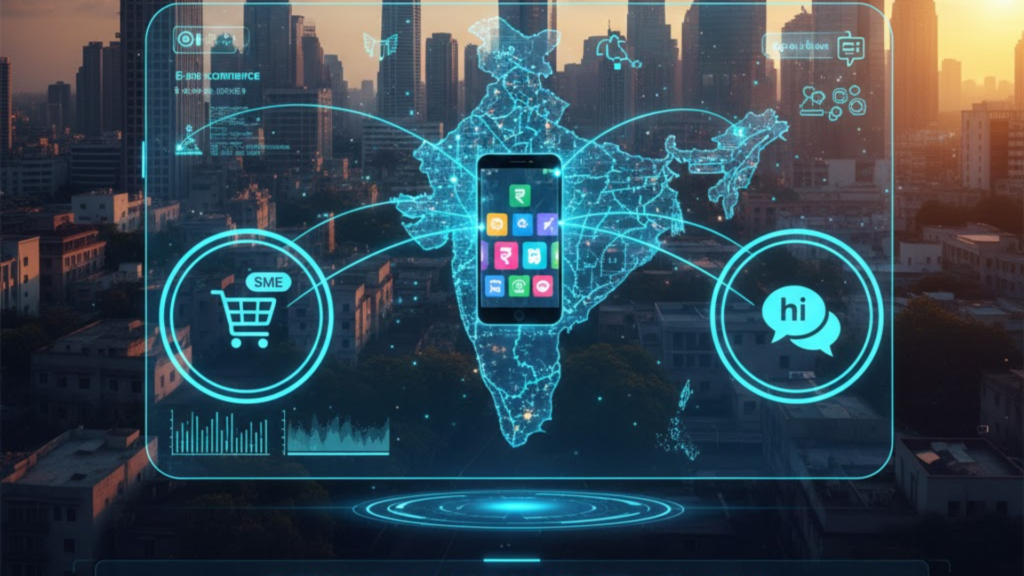
The specific dynamics of the Indian market make the benefits of Performance Marketing even more pronounced.
A. Leveling the Playing Field for SMEs and Start-ups
India’s economy is largely driven by Small and Medium Enterprises (SMEs). Performance Marketing is their secret weapon:
- Cost-Effective Reach: A small e-commerce brand in Jaipur can bid on the same keywords or display space as an Amazon or Flipkart, with budgets they can control.
- Focus on Localised Conversions: For a regional business (like a hospital or a training institute), they can strictly target a 5 km radius, ensuring their advertising spend is concentrated only on their potential service area.
B. Harnessing the Mobile-First Revolution
With over 800 million internet users, the vast majority of whom access the internet via mobile phones, the Indian audience is predominantly mobile-first.
- App Success: Performance Marketing is the engine behind the success of Indian FinTech, EdTech, and Gaming apps. By precisely tracking the Cost Per Install (CPI) and the Cost Per Activated User, businesses ensure their budget is leading to long-term adoption, not just vanity downloads.
IV. Beyond Vanity Metrics: Focusing on Business Outcomes
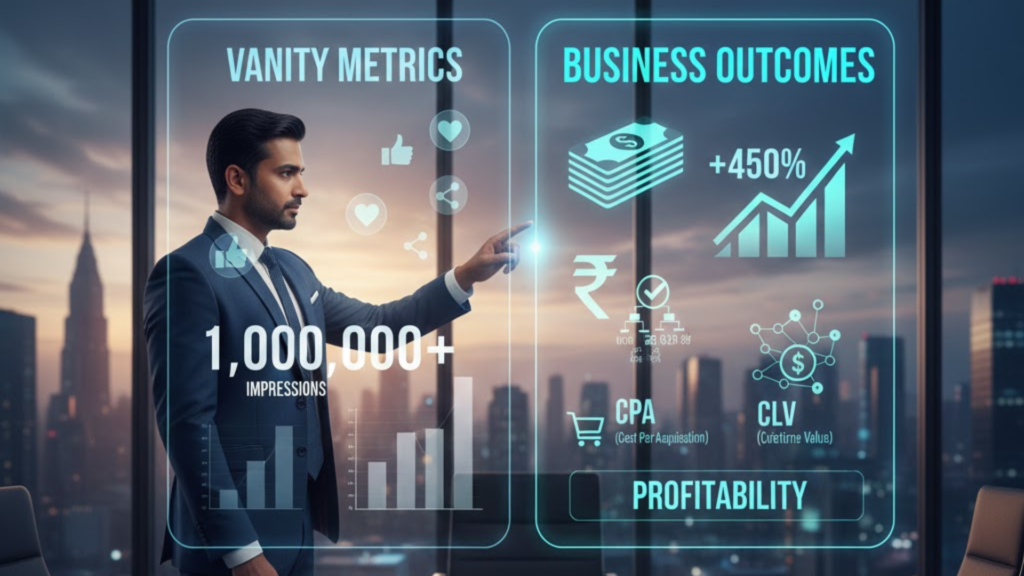
The ultimate value of Performance Marketing is its ability to shift the focus away from superficial metrics (likes, comments, views) toward the metrics that truly drive the bottom line.
The table below contrasts the metrics and highlights the profitability focus:
| Vanity Metric (Traditional) | Performance Metric (Actionable) | Impact on Business (The Real Value) |
| Total Impressions | Cost Per Click (CPC) | Measures efficiency of budget spent to drive traffic. |
| Website Traffic | Cost Per Lead (CPL) | Measures efficiency of budget to generate qualified prospects. |
| Engagement/Likes | Return on Ad Spend (ROAS) | The ultimate profitability measure: Revenue generated vs. Ad Spend. |
| Clicks/Shares | Customer Lifetime Value (CLV) | Projects long-term revenue potential from acquired customers. |
By prioritizing metrics like CPL and ROAS, Indian businesses can move beyond looking busy to being profitable. This data-backed approach allows leadership to justify every marketing investment as a calculated move towards generating revenue.
Frequently Asked Questions (FAQ)
Q1: Is Performance Marketing only for large E-commerce companies?
A: Absolutely not. While it’s crucial for e-commerce, Performance Marketing is essential for any business model that relies on a measurable digital action. This includes lead generation for B2B services, app downloads for FinTech, or even booking appointments for local clinics. Its low barrier to entry makes it perfect for SMEs and startups in India.
Q2: What is the biggest challenge in Performance Marketing in India?
A: The biggest challenge is attribution across multiple devices and platforms. Indian users often start their journey on a mobile ad, research on a desktop, and then convert on a mobile app. Accurately tracking the customer’s full journey and assigning credit to the right ad is complex, but modern attribution tools are making this easier.
Q3: How quickly can I see results with Performance Marketing?
A: Results are often seen much faster than traditional marketing. While initial setup and data gathering take a few days, a well-optimized campaign can start generating leads or sales within 7-10 days. The real growth, however, comes from consistent optimization over several months.
V. Conclusion: Performance Marketing is the Future of Accountable Growth
Performance Marketing is a paradigm shift, moving the industry from a world of speculation to a world of absolute data and transparency. For Indian businesses navigating a complex, multi-lingual, and rapidly digitizing market, this approach offers a unique competitive edge:
- Complete Visibility into where every rupee is spent.
- Real-time Insights that allow for immediate course correction.
- Lower Risk because payment is contingent upon measurable results.
- Scalable Growth that is directly tied to profitability.
In the coming decade, success will belong to those who master the art of data-driven advertising. Performance Marketing is the blueprint for that mastery.