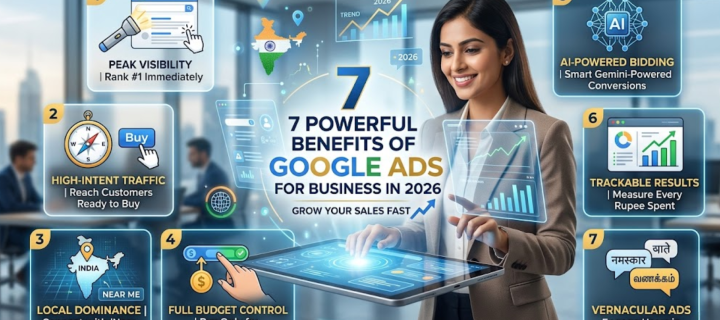
In the hyper-competitive digital ecosystem of 2026, a business without a search strategy is essentially invisible. As India pushes toward a trillion economy, the digital gateway—Google—has become the primary battlefield for customer acquisition. While many entrepreneurs debate the merits of organic vs. paid growth, the reality is that the benefits of Google Ads for business have evolved from being a “luxury” to a “survival necessity.”
This guide explores why Google Ads (formerly AdWords) remains the undisputed king of performance marketing and how you can leverage its advanced 2026 features to outpace your competitors.
1. Instant Visibility and Rapid Brand Entry: Key Benefits of Google Ads for Business
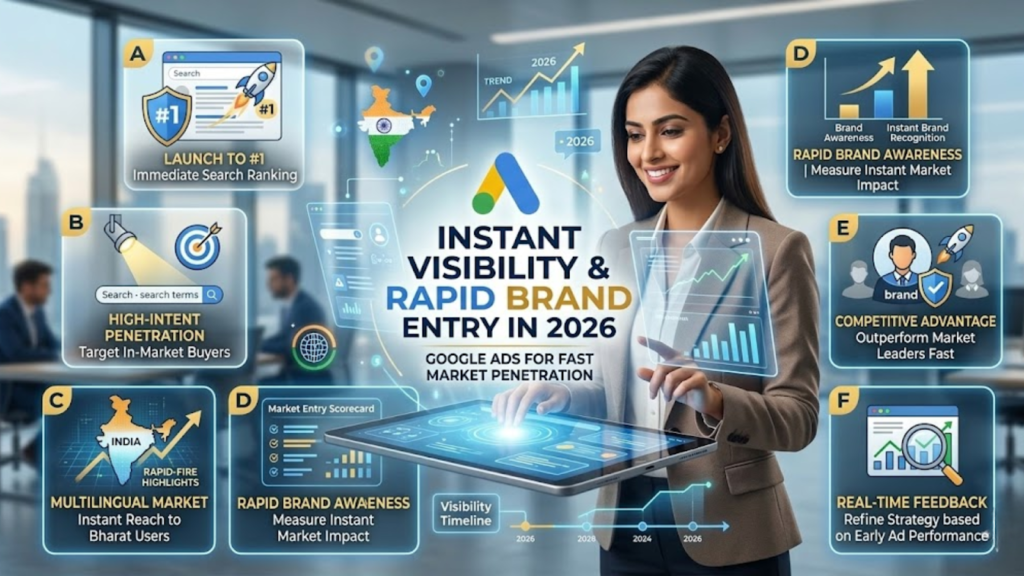
In the traditional marketing , building a brand took decades. the SEO , it takes months. In the Google Ads , it takes minutes.
The “Day Zero” Advantage
When you launch a new product—let’s say a new line of CCTV camera junction boxes or a solar installation service—you cannot afford to wait for Google’s crawlers to “discover” and “rank” your site.
- Top of the SERP: Google Ads allows you to bypass the organic rankings and sit at the very top of the Search Engine Results Page (SERP). In 2026, Google’s layout prioritizes “Sponsored” results, often pushing organic results below the first fold on mobile devices.
- Beating Established Giants: A small startup in Jaipur can appear right next to a multi-national corporation simply by having a better Quality Score and a strategic bid. This levels the playing field like never before.
Market Testing and Data Validation
Before investing thousands in an SEO campaign for a specific keyword, use Google Ads to see if that keyword actually converts. If people click the ad but don’t buy, your landing page or product-market fit needs work—not your SEO.
The single most significant benefit of Google Ads for business is the ability to target User Intent.
2. Advanced Intent-Based Targeting: One of the Key Benefits of Google Ads for Business
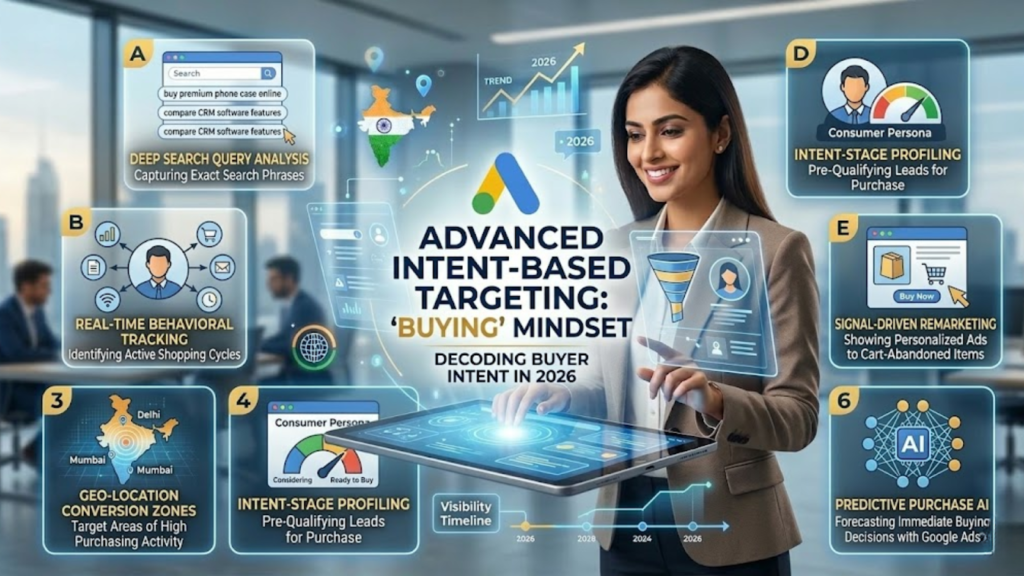
Compare Google Ads to Social Media Ads (Meta/Instagram):
- Social Media (Interruptive): You show an ad to someone while they are looking at photos of their friend’s wedding. They might be “interested” in your product, but they aren’t looking to buy right now.
- Google Ads (Intent-Driven): You show an ad to someone who literally typed “buy industrial PVC enclosure near me.” This user has their credit card in their hand. They have a problem, and they are looking for a solution.
Precision Targeting Layers
In 2026, Google allows you to layer your targeting to find the “Perfect Customer”:
- Keywords: The exact phrases people use.
- Demographics: Age, gender, and even household income levels (crucial for luxury real estate or high-end solar projects).
- In-Market Audiences: Targeting people who Google knows are currently “in the market” for a specific service based on their recent browsing history.
- Device Targeting: Showing ads only to mobile users if you want “Click-to-Call” leads, or desktop users for B2B software sign-ups.
3. The Power of Hyper-Local Targeting in “New India”
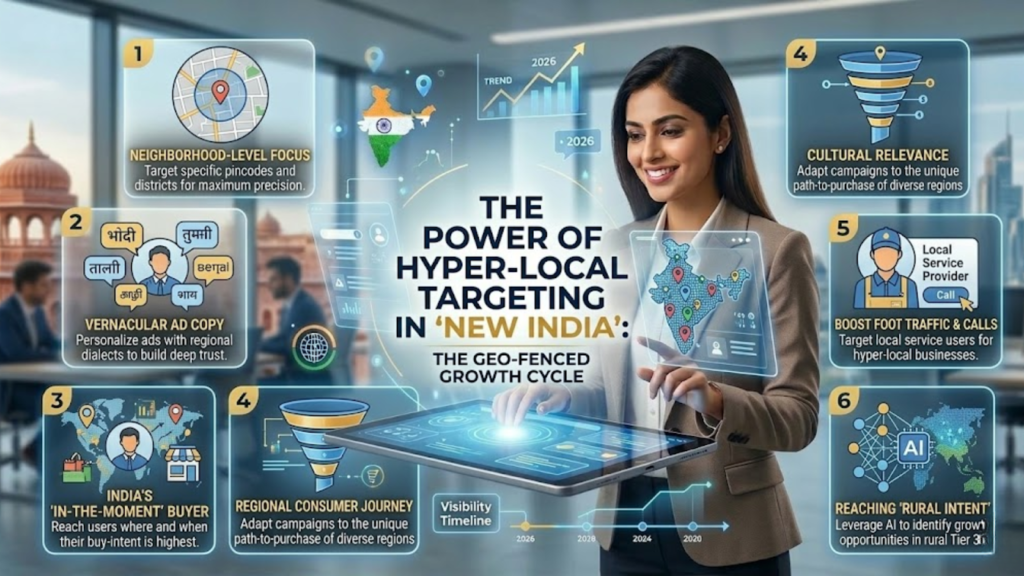
India is not one market; it is a collection of thousands of micro-markets. Google Ads is the only tool that allows you to respect these boundaries.
Local Services Ads (LSA) and Maps: Powerful Benefits of Google Ads for Business
For businesses like Aarogyam Acupressure Clinic or local interior designers, global traffic is useless. You need people in your zip code.
- Radius Bidding: You can set a 5km radius around your shop. If a user is within that circle, your bid increases. If they are outside, your ad doesn’t show, saving you money.
- Google Maps Dominance: When someone searches for “interior designer in Jhunjhunu,” your business can appear as a featured pin on the map. This drives physical foot traffic, not just website clicks.
Comparison of Local vs. Global Reach
| Feature | Local Targeting | Global Targeting |
| Primary Goal | Foot traffic / Local Leads | E-commerce / Subscriptions |
| Key Metric | Store visits / Phone calls | Conversion Rate / ROAS |
| Keyword Strategy | “Near me” / City-specific | Generic / Problem-solving |
| Budget Efficiency | Extremely High (Lower Competition) | Moderate (High Competition) |
4. Leveraging AI and Gemini-Powered Automation (The 2026 Edge)
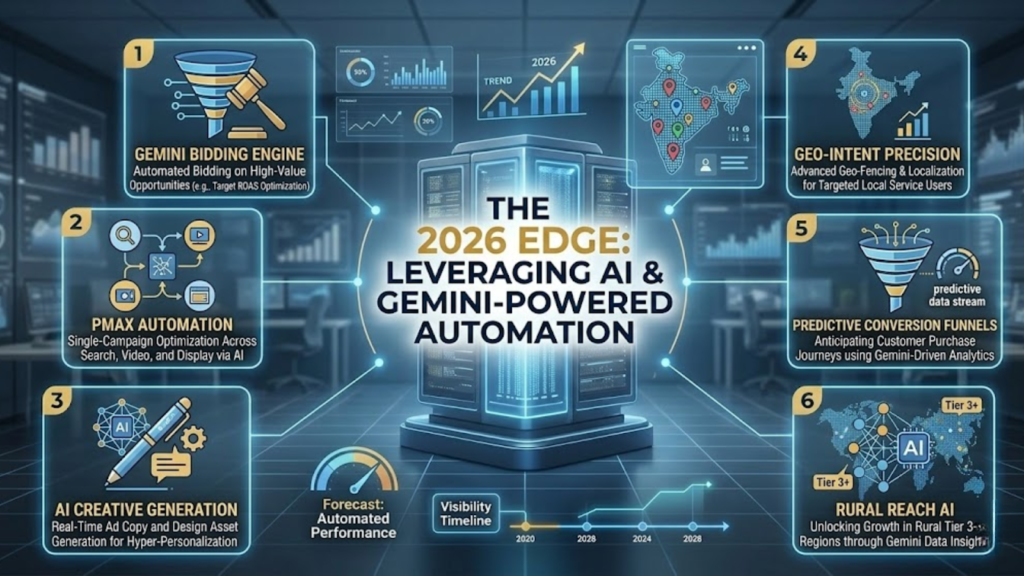
We have entered the era of AI-First Marketing. Google Ads in 2026 is powered by the Gemini 3 engine, which handles the heavy lifting that used to require a team of five people.
Smart Bidding and Performance Max
- Performance Max (PMax): This is a goal-based campaign type that allows you to access all of Google’s inventory (Search, YouTube, Display, Discover, Gmail, and Maps) from a single campaign. The AI decides which platform will give you the best ROI at any given second.
- Predictive Conversions: The AI can now predict which users are likely to become “High-Value Customers” based on patterns invisible to the human eye. It will bid more aggressively for a user who has a history of high-ticket purchases.
Creative Automation
You no longer need to design 50 different banners. You provide the images and headlines, and the AI generates thousands of permutations to see which one gets the most clicks from Indian consumers.
5. Unmatched ROI Control and Budget Flexibility
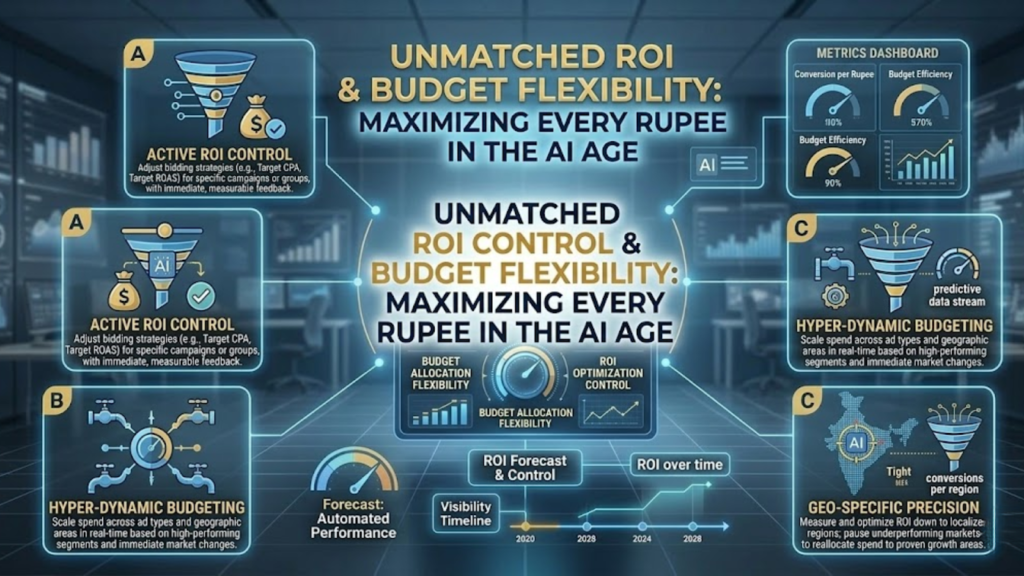
One of the most common myths is that Google Ads is “expensive.” In reality, it is only expensive if you don’t track it.
- No Minimum Spend: Whether you are a solo entrepreneur with ₹500/day or a large agency with ₹5,00,000/day, the platform works for you.
- The “Tap” Effect: Think of Google Ads as a water tap. When you need more leads, you turn it up. When your team is overwhelmed or you are out of stock, you turn it off instantly. No other advertising medium (Print, TV, Radio) offers this level of control.
- Quality Score Savings: Google rewards high-quality advertisers. If your ad is relevant and your website is fast, Google charges you less per click than your competitors. This is why “good quality” content matters.
6. Remarketing: Winning Back the 98%
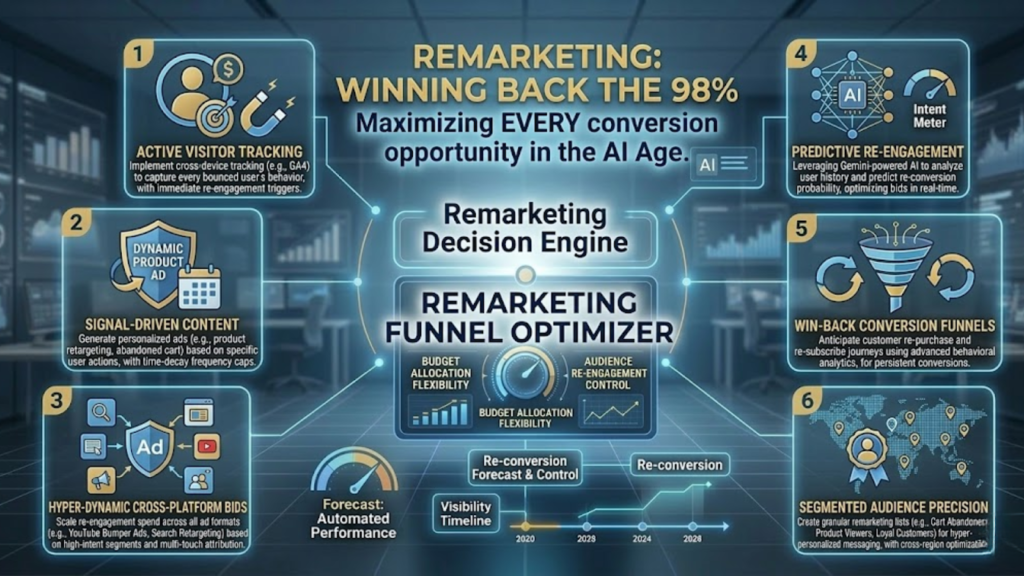
On average, 98% of people will leave your website without buying anything. Without Google Ads, those people are gone forever.
The Psychology of Remarketing
Remarketing (or Retargeting) keeps your brand top-of-mind.
- Scenario: A user looks at wedding accessories on your site but gets a phone call and closes the tab.
- The Fix: Later that evening, while they are watching a YouTube video or checking the news, they see a beautiful ad for the exact same product they were viewing.
- Result: This “gentle nudge” often results in a conversion rate that is 3x to 5x higher than the initial visit.
7. Deep Insights: Your Business Intelligence Hub
The data you get from Google Ads is a goldmine for your entire business strategy.
- Search Terms Report: You might discover that people are searching for “waterproof CCTV junction boxes” more than “PVC boxes.” This tells you exactly what product features to highlight in your manufacturing.
- Geographic Performance: You might find that while your shop is in Jaipur, you are getting massive interest from Jodhpur. This is a clear signal to expand your delivery or open a new branch.
- Time-of-Day Analytics: If 80% of your leads come between 6 PM and 10 PM, you can schedule your ads to only run during those hours, maximizing your budget.
FAQ: Frequently Asked Questions for Indian Business Owners
1. Is Google Ads better than Facebook (Meta) Ads?
It depends on the goal. For direct sales and urgent services (like a plumber, lawyer, or industrial supplier), Google Ads is superior because of intent. For visual products or impulse buys (like fashion or gadgets), Meta Ads can be very effective. Most successful businesses in 2026 use a 70/30 split favoring Google.
2. How long does it take to see results?
Technically, you can see traffic within an hour of your campaign being approved. However, the “Learning Phase” of the AI takes about 7 to 14 days to stabilize and start delivering the best ROI.
3. What is a “Click-through Rate” (CTR) and why does it matter?
CTR is the percentage of people who click your ad after seeing it. A high CTR tells Google your ad is helpful. In India, a CTR above 3% to 5% is considered good for search ads.
4. Can I manage Google Ads myself or do I need an agency?
With 2026’s AI tools, it is easier than ever for a business owner to start. However, as your budget grows beyond ₹50,000/month, hiring an expert can often pay for itself by reducing wasted ad spend.