The Indian business landscape has witnessed a paradigm shift. A few years ago, traditional marketing channels like print media, billboards, and local flyer distributions were the default choices for business growth. However, entering 2026, the ecosystem has fundamentally transformed.With over 1 billion active internet users across urban and rural landscapes, India represents one of the largest and most dynamic digital economies globally. Today, your potential customers are not looking at roadside hoardings; they are scrolling through their smartphones.If your goal is to scale your business sustainably this year, mastering internet marketing India is no longer a luxury—it is an absolute operational necessity. This comprehensive guide breaks down every critical component of the modern Indian digital marketplace, providing you with actionable, fluff-free strategies to maximize your ROI (Return on Investment).
1. The Macro Shift: Understanding the Indian Digital Landscape in 2026
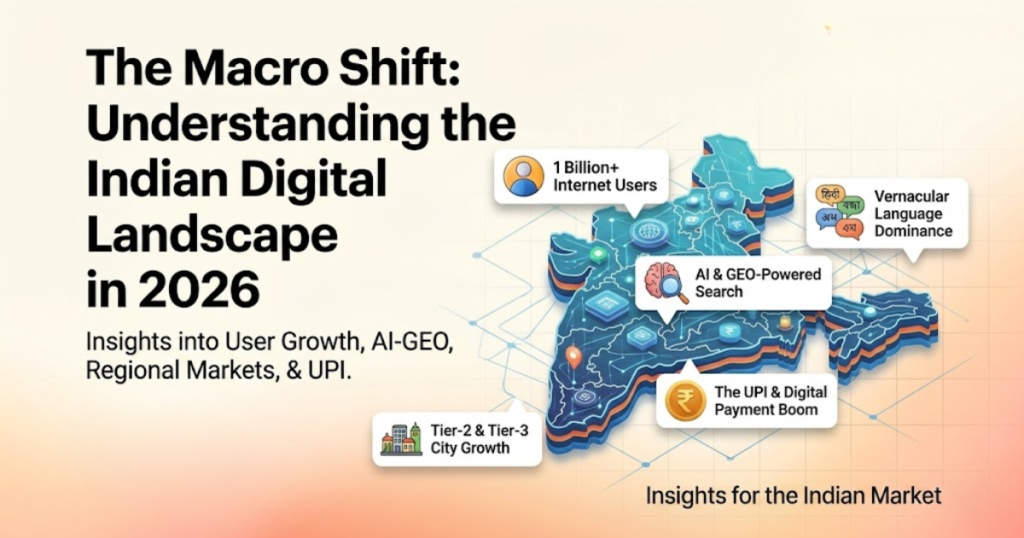
To implement a successful marketing campaign, you must first understand the unique consumer behavior driving the Indian internet ecosystem today. The market can no longer be treated as a single homogenous entity. Instead, it is defined by three distinct macroeconomic pillars:
A. The Rise of “Bharat” (Tier-2 and Tier-3 Domination)
The metro cities (Mumbai, Delhi, Bangalore, etc.) have reached a digital saturation point where customer acquisition costs (CAC) are exceptionally high. Growth in 2026 is heavily driven by Tier-2 and Tier-3 cities like Jaipur, Indore, Surat, Patna, and Guwahati. Consumers in these regions possess rising disposable incomes and a strong desire to consume both lifestyle and functional products.
B. The Frictionless Checkout Ecosystem
The absolute ubiquity of UPI (Unified Payments Interface) has stripped away the friction from online buying. In 2026, even micro-transactions are digitized. When combined with instant-delivery setups and highly localized logistical networks, an online lead can convert into a paid customer within a matter of minutes.
C. The Evolution of Search Engines (AI & GEO)
Traditional keyword stuffing is completely obsolete. With the mainstream integration of Generative Engine Optimization (GEO) and AI-assisted search engines (such as Google’s Search Generative Experience and ChatGPT Search), users look for direct, conversational, and hyper-reliable answers. Your online presence must be optimized to be cited as an authoritative source by these AI layers.
2. Core Pillars of Internet Marketing in India
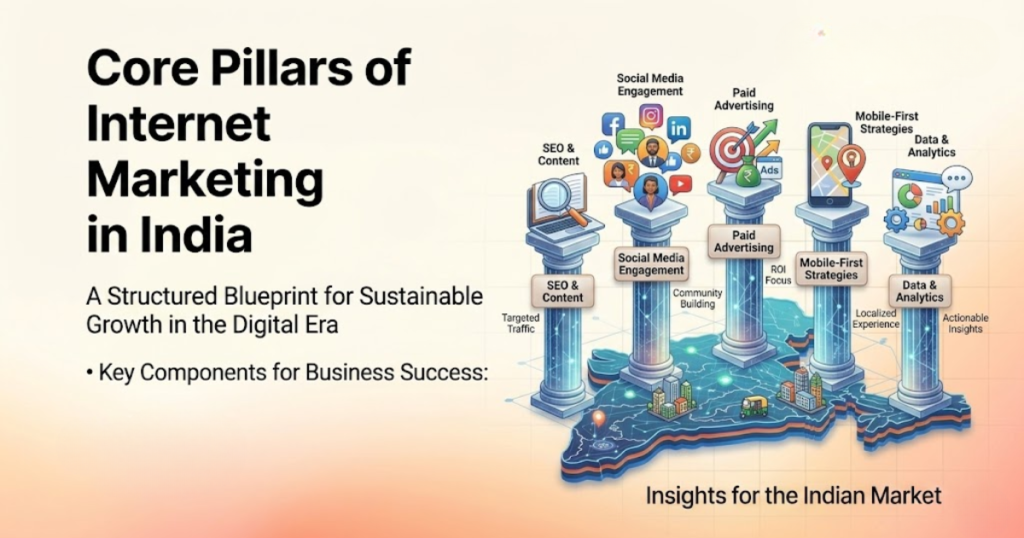
To build a resilient digital infrastructure, you must diversify your marketing mix. Relying on a single channel leaves your business vulnerable to sudden algorithm updates or ad price hikes.
Here is a detailed comparative breakdown of the primary digital channels available for Indian businesses today:
Comprehensive Channel Breakdown
| Marketing Channel | Primary Objectives | Ideal Business Fit | Key Success Metric |
| Search Engine Optimization (SEO) | Sustainable organic traffic, brand authority, long-term lead pipeline. | B2B Manufacturers, E-commerce, High-value services (Solar, Real Estate). | Organic Impressions & Non-branded Clicks |
| Social Media Ads (Meta / LinkedIn) | Rapid lead generation, brand awareness, direct-to-consumer sales. | Lifestyle brands, Local service providers, tech startups, B2B niches. | Cost Per Lead (CPL) & ROAS |
| Conversational Marketing | Instant customer support, lead nurturing, dropping cart abandonment rates. | D2C Brands, Local service agencies, EdTech, FinTech. | Chat-to-Sale Conversion Rate |
| Content Marketing (Video/Blogs) | Building customer trust, community cultivation, educating prospects. | All sectors (B2B, B2C, D2C). | Engagement Rate & Watch Time |
Deep Dive: Executing Each Pillar Professionally
1. Search Engine Optimization (SEO) & AI Visibility
SEO in the modern era requires high-topical authority. If you are targeting the keyword internet marketing India, you cannot simply write a shallow 500-word article. Search engines reward comprehensive, deeply researched content that answers user queries holistically.
- Technical Health: Your website must load in under 2 seconds on a standard 4G/5G mobile connection. Google uses mobile-first indexing; if your mobile UI is clunky, your desktop rankings will drop automatically.
- Search Intent Alignment: Structure your pages to cater to informational, commercial, and transactional search intents. Use clear headings (H2, H3) so search scrapers can easily index your answers.
2. Paid Advertising (Meta, Google, & LinkedIn Ads)
Paid channels offer immediate scalability. However, your approach must change depending on user intent:
- Push Marketing (Meta Ads): Used for products or services that users aren’t explicitly searching for but would buy if presented attractively. Focus heavily on visual hooks within the first 3 seconds of your video ads.
- Pull Marketing (Google Ads): Used when a user has a high-intent, immediate problem. For instance, someone searching for “industrial IP67 junction boxes manufacturer in India” is ready to buy. Your ad copy must offer clear USPs (e.g., 100% Certified, Ready Stock, Factory Pricing).
3. Short-Form & User-Generated Video Content (UGC)
High-production-value television commercials no longer hold a monopoly on consumer trust. Modern Indian consumers crave authenticity.
- The Power of UGC: Videos shot on smartphone cameras by real customers or founders often outperform polished studio productions. They feel native to platforms like Instagram Reels and YouTube Shorts.
- Educational Hooks: Instead of shouting “Buy my product,” create content that answers a specific pain point. For example, a solar agency shouldn’t just sell panels; they should create a 45-second reel explaining: “How to read your electricity bill to check if you qualify for the latest government solar subsidy.”
4. The Vernacular Advantage (Regional Languages)
English-only campaigns miss out on a massive portion of the Indian consumer base. Localized marketing builds an immediate psychological bridge of trust with the consumer.
- Strategic Execution: Localize your landing pages, ad creatives, and customer support channels. If you are running ad campaigns in states like Gujarat, Rajasthan, or Assam, translating your ad copy into Gujarati, Hindi, or Assamese can drastically lower your Cost Per Lead (CPL) while improving response rates.
5. Conversational Ecosystems (WhatsApp Marketing)
In India, email open rates hover around 5% to 10%, whereas WhatsApp message open rates sit comfortably at over 90%. WhatsApp has transformed from a simple messaging app into a fully operational business engine.
- Automated Nurturing: Implement WhatsApp Business API solutions to send automated order confirmations, shipping updates, and localized promotional offers.
- Reducing Drop-offs: If a user drops off your website contact form, trigger an automated WhatsApp message offering instant assistance. It makes the customer feel valued and prevents them from moving to a competitor.
3. Step-by-Step Execution Framework to Scale in 2026
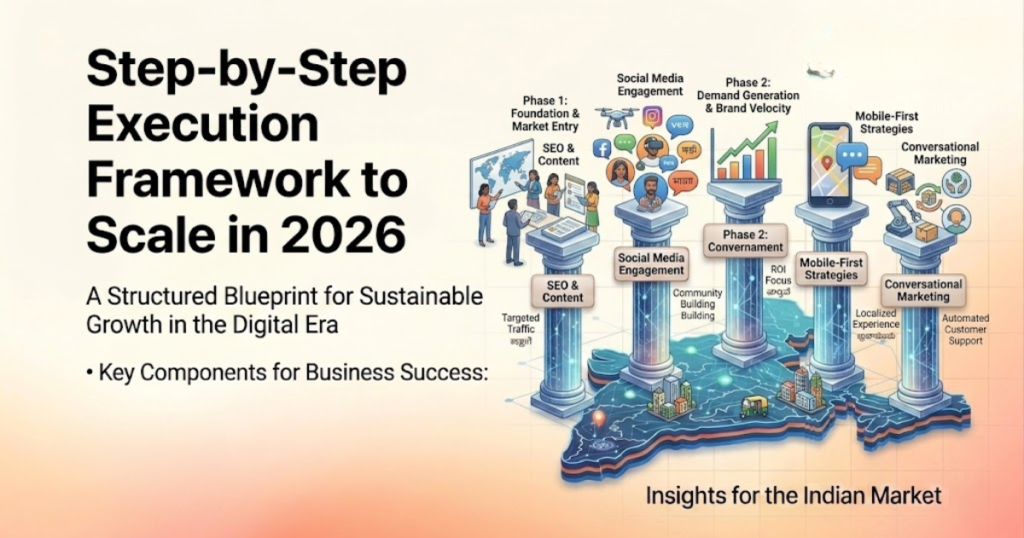
Launching a digital campaign without a systematic workflow results in fractured data and wasted ad spend. Follow this exact sequential structure to set up a high-converting digital marketing funnel from scratch:
1.Establish Your Digital Foundation:Phase 1: Infrastructure.
Build a highly responsive website optimized for mobile viewing. Set up robust web analytics tracking (like Google Analytics 4) along with Meta Conversion Pixels to ensure all user actions are logged accurately. Secure your local footprint by claiming and optimizing your Google My Business profile.
2.Deploy Your Content & Trust Architecture:Phase 2: Authority Building.
Produce deeply informative, high-quality articles, landing pages, and customer case studies. Create high-value lead magnets—such as free cost calculators, downloadable checklists, or regional subsidy guides—to build industry credibility before asking for a sale.
3.Launch High-Intent Traffic Campaigns:Phase 3: Acquisition.
Activate targeted Google Search ads to capture users looking for your specific services right now. Simultaneously, launch Meta lookalike campaigns targeting demographics similar to your existing customer base. Use localized languages to drive maximum resonance.
4.Implement Retention & Automated Follow-Ups:Phase 4: Optimization.
Integrate automated WhatsApp chat systems and retargeting ads to re-engage users who visited your landing page but didn’t complete a purchase. Regularly review your performance data to cut underperforming ad variations and scale winning creatives.
4. Crucial Pitfalls Indian Businesses Must Avoid
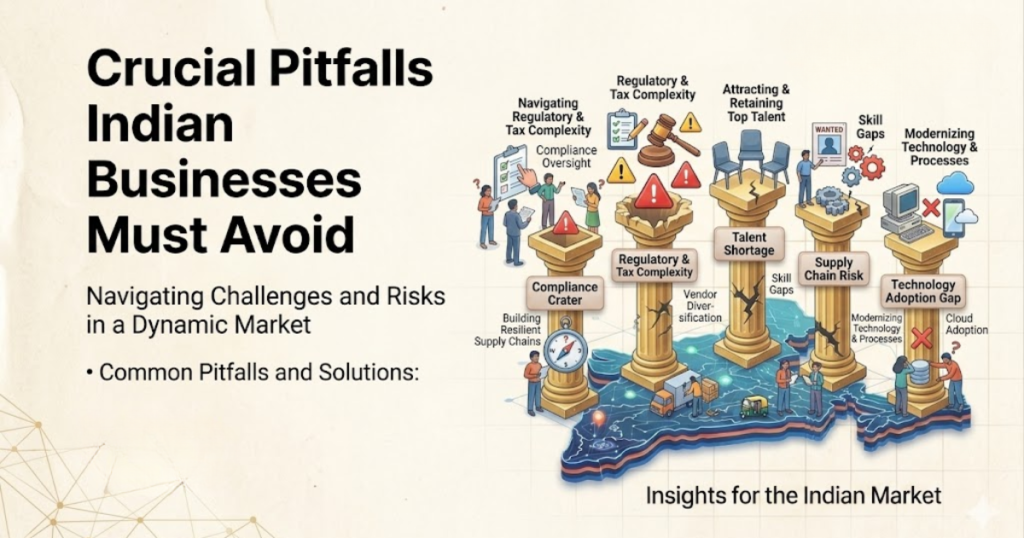
Navigating the internet marketing space can be treacherous if you fall into common strategic traps. Be hyper-aware of these three frequent errors:
- Prioritizing Vanity Metrics Over Revenue: Do not obsess over likes, shares, or follower counts. A piece of content can get thousands of views but generate zero qualified leads. Focus entirely on metrics that impact your bottom line: Cost Per Lead (CPL), Customer Acquisition Cost (CAC), and Lifetime Value (LTV).
- Treating All Regional Markets the Same: A creative asset that performs exceptionally well in urban Delhi might fail completely in rural Maharashtra. Always tailor your messaging, cultural nuances, and pricing strategies to the specific geographic audience you are targeting.
- Ignoring Post-Click Optimization: Many agencies spend 90% of their budget driving traffic to a website but leave the landing page outdated or confusing. If your landing page lacks a clear Call to Action (CTA), a simple checkout path, or visible social proof, your traffic spend is completely wasted. internet marketing India
5. Frequently Asked Questions (FAQs)
Highly optimized for localized search queries and Featured Snippet indexing.
Q1: Is internet marketing India effective for traditional manufacturing and B2B businesses in India?
Absolute Yes. Traditional Indian B2B buyers now use search engines to vet suppliers, compare material certifications, and request bulk quotes. A well-optimized SEO strategy combined with targeted LinkedIn or Google Search campaigns can reliably generate high-volume industrial inquiries without relying solely on traditional offline broker networks.
Q2: What is a realistic monthly budget to start digital marketing for a small business?
There is no fixed barrier to entry, but a practical testing budget for small local businesses starts around ₹15,000 to ₹30,000 per month dedicated to paid ad spend. This gives you enough data to test ad creatives and understand your target Cost Per Lead. For organic SEO, the investment lies in creating high-quality, deeply researched content over a consistent 4-to-6-month window.
Q3: How do we optimize our website for AI and voice search queries?
To rank in AI-driven search models, you must structure your content in a conversational, Q&A format. Use schema markup (Structured Data) to clearly declare your business details to search engines. Ensure your content directly solves complex user queries in a highly scannable manner, using specific data points and expert insights.
Q4: Which platform is better for lead generation in India: Google Ads or Meta Ads?
It entirely depends on user intent. If your service addresses an immediate, urgent requirement (e.g., commercial business financing, legal consulting, emergency repairs), Google Ads is superior because it captures active search intent. If your product requires visual storytelling or is a lifestyle/D2C brand (e.g., modern interior design, fashion apparel), Meta Ads will deliver a significantly higher volume of leads at a lower cost.
Summary: The Human-Centric Equation
No matter how advanced AI algorithms, automated ad bidding tools, or conversational software platforms become, the core principle of marketing remains unchanged: People buy from brands they trust.
The secret to mastering internet marketing India in 2026 is using automated technology to optimize your scale, while keeping your brand voice incredibly authentic, honest, and hyper-focused on solving the actual problems of the Indian consumer.