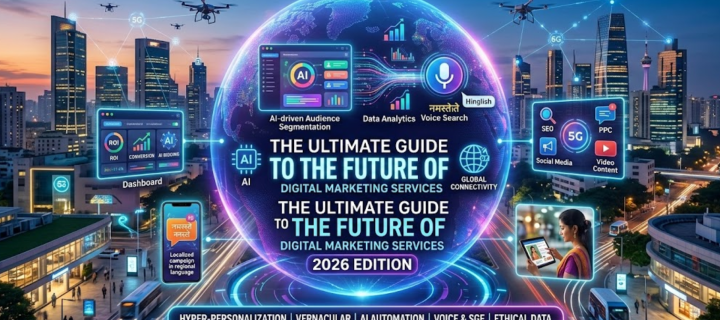
In the rapidly evolving Indian economy, digital transformation is no longer a luxury—it is the baseline for survival. From local Kirana stores using WhatsApp Business to tech giants in Gurgaon using predictive AI, the definition of digital marketing services has shifted from simple “ad placement” to “human-centric data science.”
1. Understanding the Core Pillars of Modern Digital Marketing
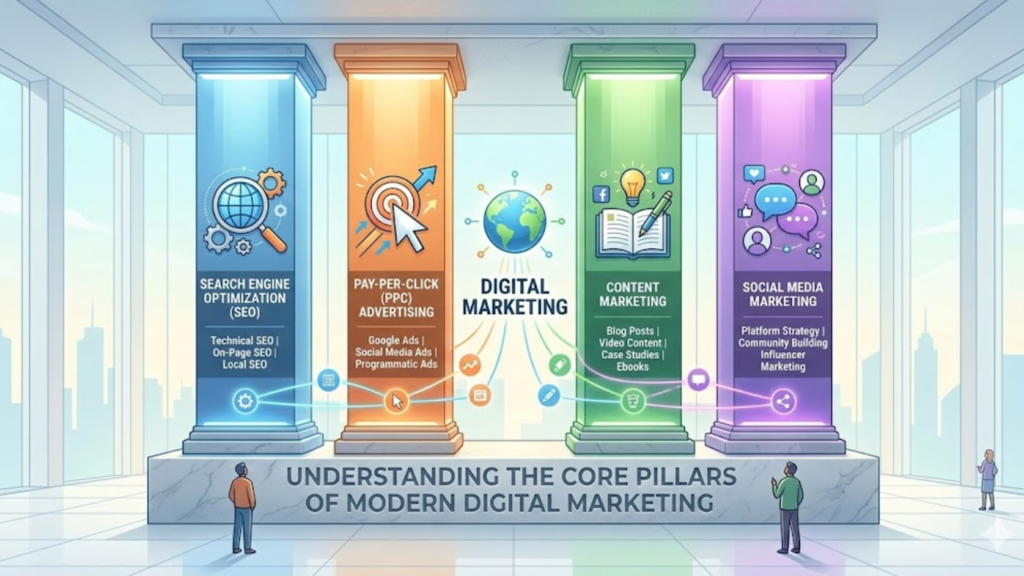
Before diving into AI and future trends, it is essential to understand the foundational services that form a successful digital strategy.
A. Search Engine Optimization (SEO) 2.0
SEO is no longer just about keywords. In 2026, it is about SGE (Search Generative Experience) and EEAT (Experience, Expertise, Authoritativeness, and Trustworthiness).
- Technical SEO: Ensuring your site is lightning-fast on 5G networks.
- On-Page SEO: Creating content that answers the “Searcher’s Intent” better than anyone else.
- Local SEO: Essential for Indian businesses to show up in “near me” searches in specific cities like Mumbai, Bangalore, or Jaipur.
B. Pay-Per-Click (PPC) and Performance Marketing
This is where the math meets the art. You pay for results, not just views.
- Google Ads: Targeting users at the moment of high intent.
- Meta Ads: Leveraging Instagram and Facebook’s deep psychological profiles.
- Programmatic Advertising: Using AI to buy ad space in real-time across the web.
2. How AI is Revolutionizing Digital Marketing Services
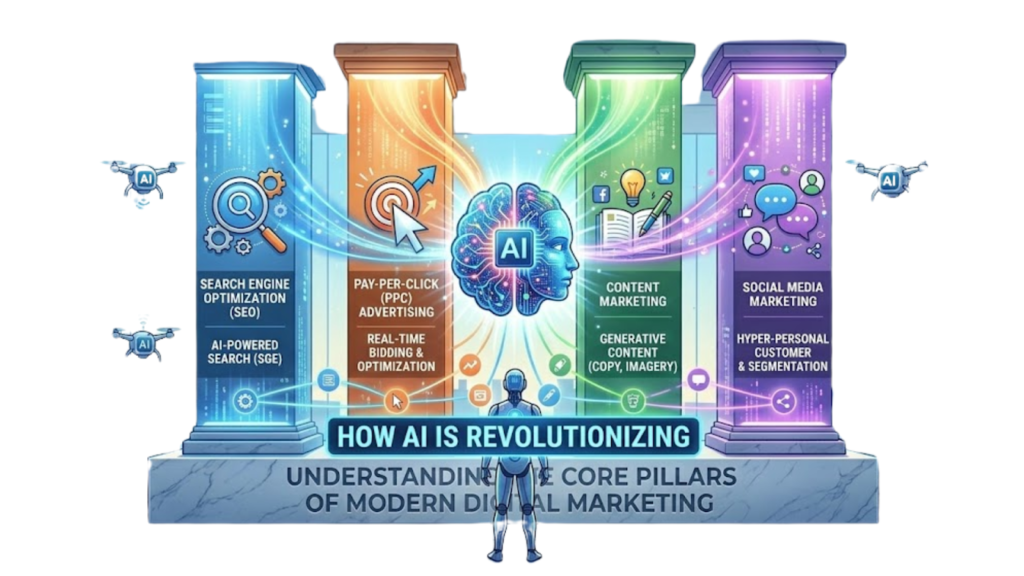
Artificial Intelligence is the “engine” under the hood of 2026 marketing. It allows for a level of scale that was previously impossible.
The AI Workflow Table
| Service Area | Traditional Approach (Manual) | AI-Enhanced Approach (2026) |
| Content Creation | Weeks of writing and editing. | Real-time generation with human oversight. |
| Customer Support | Static FAQs and limited calling hours. | 24/7 Multilingual AI Chatbots (Hinglish/Regional). |
| Ad Bidding | Manual adjustment of CPC rates. | Predictive bidding based on user behavior. |
| Data Analysis | Looking at spreadsheets once a month. | Real-time dashboards with “Next Best Action” alerts. |
3. The Power of Personalization in the Indian Context (Expanded)
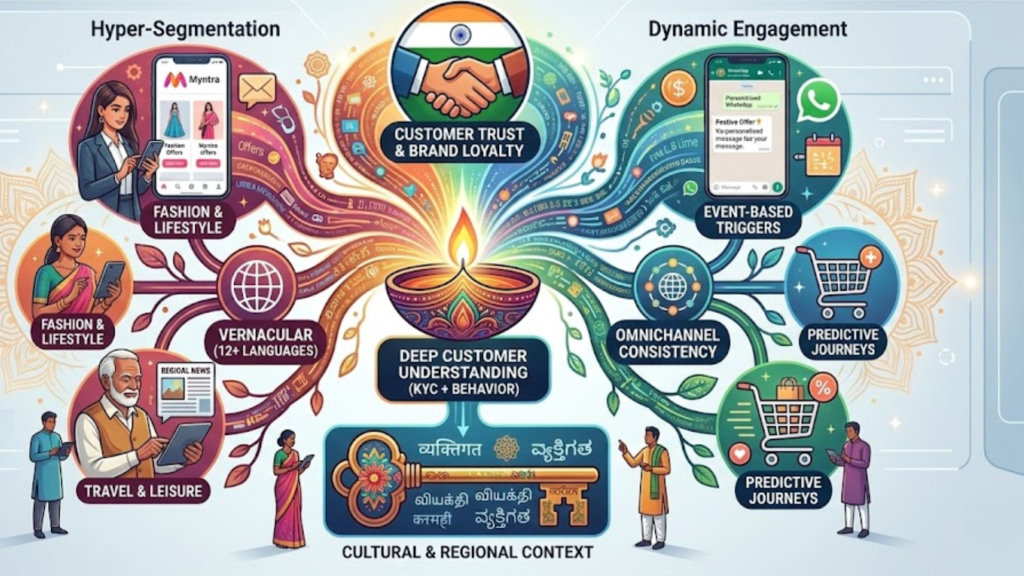
India is not a single market; it is a “continent of sub-cultures.” A generic digital marketing strategy that works in Mumbai will likely fail in rural Bihar or urban Kerala. In 2026, digital marketing services must prioritize “Hyper-Local Personalization” to stay relevant.
- The Vernacular Revolution (Language-Based Targeting): English is spoken by a small fraction of India’s internet users. The “Next Billion Users” are searching in Hindi, Marathi, Bengali, and Kannada. Modern services now use AI-driven translation and transliteration to create ads that resonate emotionally. It’s not just about changing the words; it’s about changing the cultural context (e.g., using local slang or regional festivals like Chhath Puja or Onam in the ad copy).
- Predictive Consumer Behavior: By leveraging Big Data, digital marketing agencies can now predict when a household in India is likely to buy a new refrigerator or upgrade their mobile data plan. Through “Lookalike Modeling,” AI identifies patterns in existing customers and finds new prospects who “look” and “act” just like them online. This reduces the Cost Per Acquisition (CPA) and increases the efficiency of every Rupee spent.
- Omnichannel Personalization: The Indian buyer’s journey is messy. They might see an ad on Instagram, ask for reviews on a WhatsApp group, and finally buy on Amazon. A high-quality digital marketing service ensures that the brand follows the user across all these platforms with a consistent message. If a user leaves an item in a cart on a website, they shouldn’t just get a generic email; they should get a personalized WhatsApp message with a special discount code tailored to their browsing history.
4. Why You Should Invest in Professional Digital Marketing Services
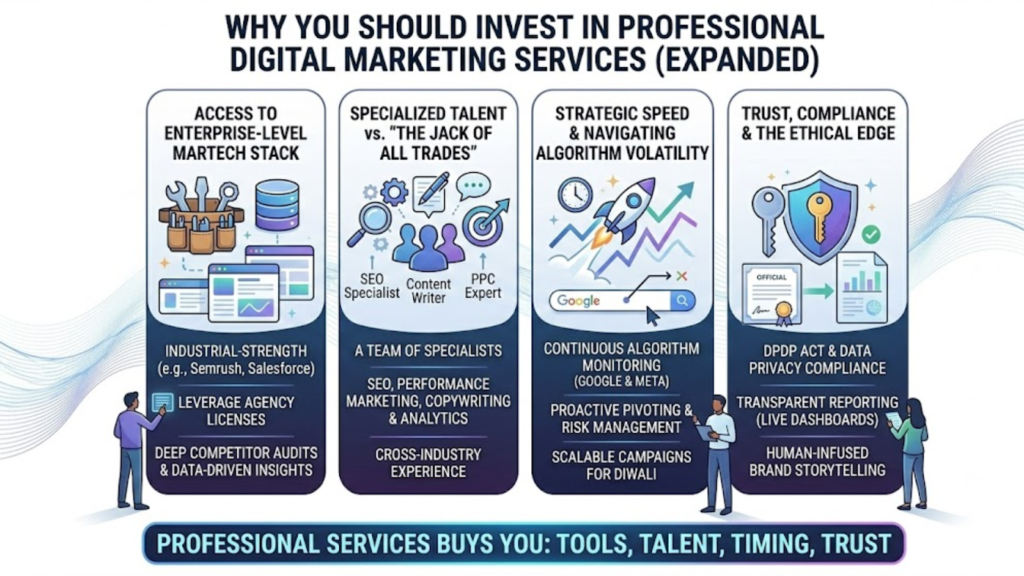
In an era where “everyone is a social media manager,” businesses often fall into the trap of DIY (Do-It-Yourself) marketing. However, the complexity of the 2026 digital ecosystem makes professional digital marketing services a necessity for sustainable growth.
- Access to High-End MarTech (Marketing Technology) Stacks: Professional agencies invest lakhs of Rupees annually in premium tools like Semrush (for SEO), Salesforce (for CRM), and Midjourney/Canva Pro (for AI-design). For a small or medium-sized Indian business, buying these licenses individually is financially draining. By hiring an agency, you gain access to a “Full-Stack Technology” infrastructure without the overhead costs.
- Navigating Algorithm Volatility: Google and Meta update their algorithms almost every week. What worked in January 2026 might be penalized by June 2026. A dedicated digital marketing team spends 40+ hours a week just monitoring these shifts. They act as a “shield” for your business, ensuring that your website doesn’t suddenly disappear from search results due to a technical update you weren’t aware of.
- Creative Storytelling Meets Data Science: Good marketing requires a “Left Brain and Right Brain” approach. You need the data scientist to analyze the CPC (Cost Per Click) and the creative writer to tell a story that touches the heart of an Indian mother or a young Gen Z professional. Professional services provide a team of specialists—copywriters, graphic designers, data analysts, and SEO experts—working in harmony. This level of synergy is impossible to achieve with a single “Generalist” employee.
- Strategic Scalability and Risk Management: When an Indian startup goes from “Seed Funding” to “Series A,” their marketing needs change overnight. Professional services allow a business to scale up or down instantly. If you need to launch a nationwide campaign for Diwali, an agency can deploy a team of 10 experts immediately.
5. Summary Table: DIY vs. Professional Digital Marketing
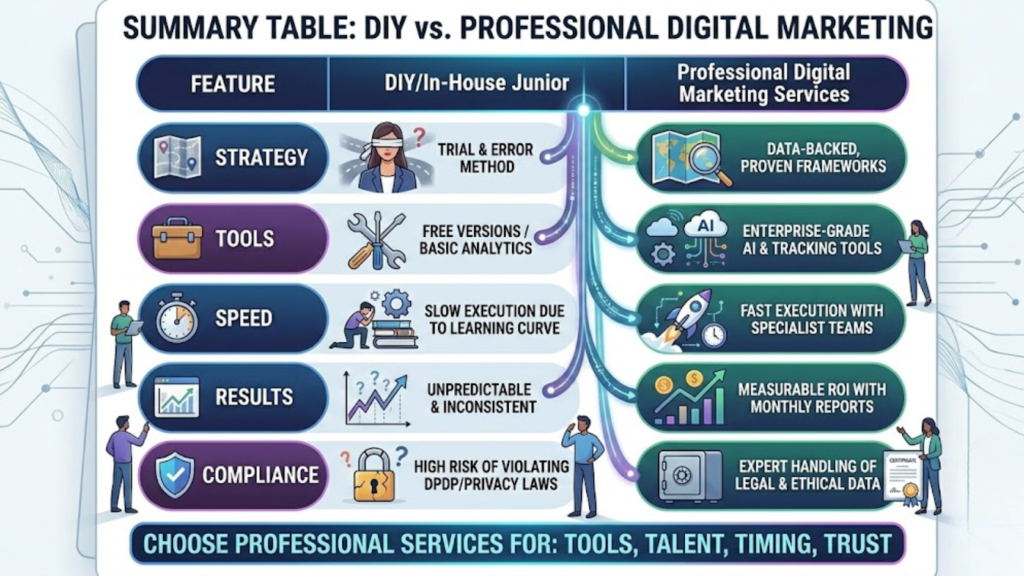
| Feature | DIY / In-House Junior | Professional Digital Marketing Services |
| Strategy | Trial and error method. | Data-backed, proven frameworks. |
| Tools | Free versions/Basic analytics. | Enterprise-grade AI & Tracking tools. |
| Speed | Slow execution due to learning curve. | Fast execution with specialist teams. |
| Results | Unpredictable & inconsistent. | Measurable ROI with monthly reports. |
| Compliance | High risk of violating DPDP/Privacy laws. | Expert handling of legal & ethical data. |
Frequently Asked Questions (FAQ)
Q1: How much do digital marketing services cost in India? A: Pricing varies wildly. Freelancers might charge ₹15,000–₹30,000/month, while mid-sized agencies start at ₹50,000–₹1,50,000/month. The key is to look at the ROI (Return on Investment) rather than the flat cost.
Q2: Can AI replace my marketing agency? A: No. AI is a tool, like a calculator. You still need a mathematician to solve the problem. A human is needed for strategy, ethics, and brand storytelling.
Q3: How long does it take to see results from SEO? A: In the 2026 landscape, expect 3 to 6 months for significant organic growth. However, PPC (Paid Ads) can start generating leads within 24 to 48 hours.
Q4: Is WhatsApp marketing part of digital marketing services? A: Absolutely. In India, WhatsApp is the primary communication tool. Modern agencies use WhatsApp API to send automated updates, catalogs, and customer support.