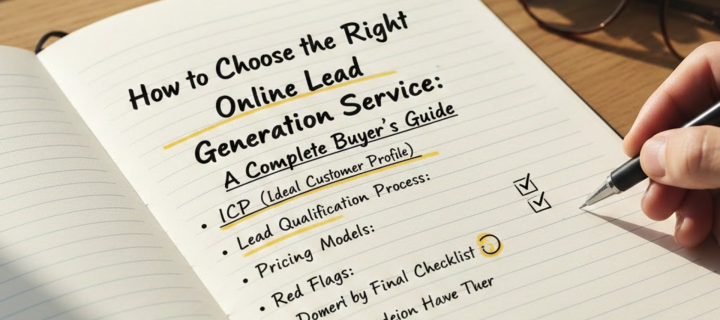
In the competitive Indian business landscape of 2026, “Growth” is no longer just a buzzword—it is a survival necessity. Whether you are a Real Estate developer in Gurgaon, a SaaS founder in Bangalore, or a manufacturing unit in Pune, your business lives and dies by its sales pipeline.However, generating high-quality leads is getting harder. With the rise of AI-driven spam and rising ad costs, many businesses are turning to professional online lead generation services to bridge the gap. But how do you separate the experts from the amateurs? This guide will walk you through everything you need to know.
1. Understanding the Core of Online Lead Generation (with Online Lead Generation Services)
Before signing a contract, you must understand what you are actually buying. Lead generation isn’t just about getting a list of phone numbers; it’s about opening a door to a conversation.
What are Modern Online Lead Generation Services?
In 2026, these services have evolved. They no longer just “scrape” data. They use a mix of:
- Inbound Marketing: Attracting users through blogs, SEO, and webinars.
- Outbound Prospecting: Reaching out via LinkedIn, Email, or personalized Video messages.
- Paid Media: High-intent targeting on Google Ads, Meta, and LinkedIn Ads.
Why this matters for Indian Businesses: The Indian consumer is value-conscious. A “cold call” rarely works today. You need services that build trust before the first sales pitch.
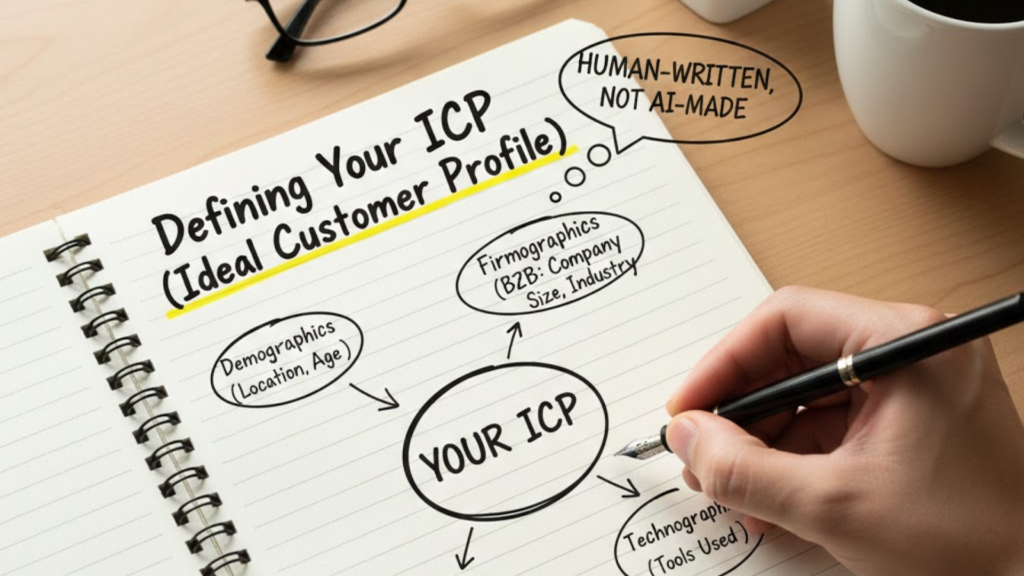
2. Defining Your ICP (Ideal Customer Profile) for Effective Online Lead Generation Services
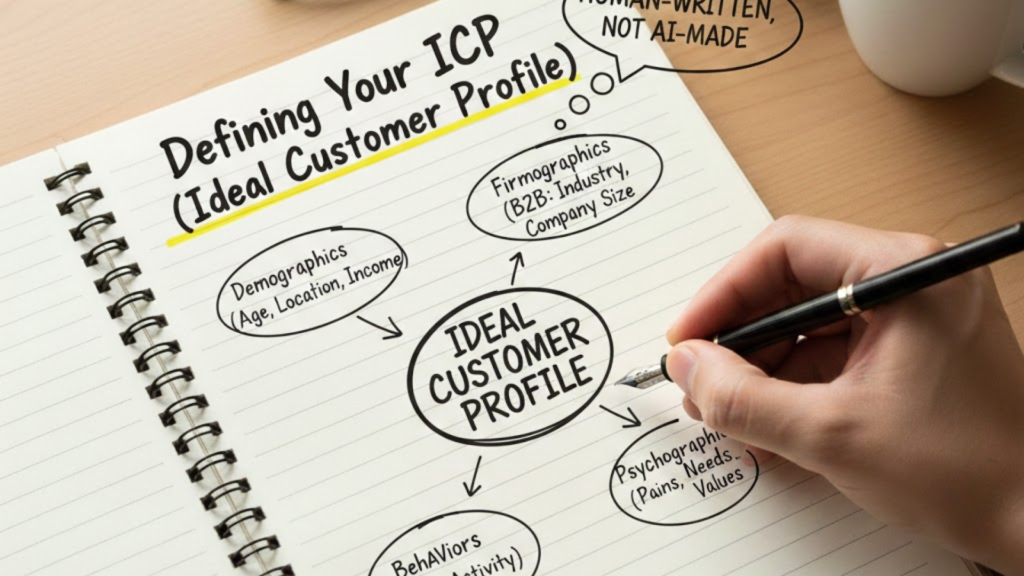
A common mistake is asking for “any leads.” To get ROI, you must be specific. A professional agency will ask you for your ICP.
Key Elements of an ICP:
- Demographics: Location (Tier 1 vs. Tier 2 cities), Age, Gender.
- Firmographics (B2B): Company size, Industry, Revenue, and Geography.
- Psychographics: What are their pain points? What keeps your customer awake at night?
- Technographics: What tools do they already use?
Pro Tip: If an agency doesn’t ask who your “Ideal Customer” is within the first 10 minutes of a meeting, they are likely just selling you “junk data.”
3. Comparing Lead Generation Channels
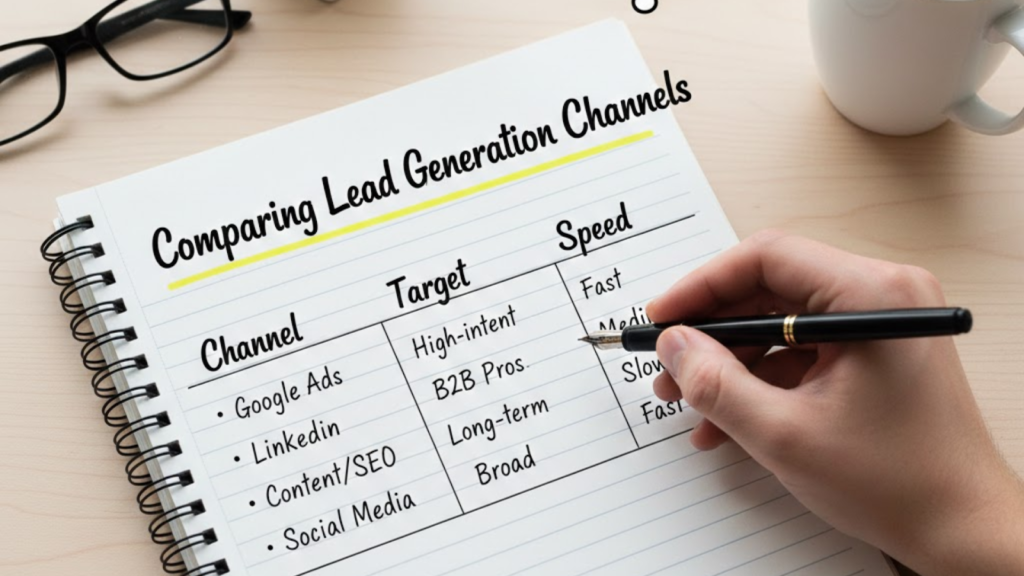
Not all channels are created equal. Depending on your business type, the “right” service might focus on different platforms.
| Channel | Best For | Engagement Level | Cost per Lead (CPL) |
| Google Search Ads | High-intent buyers (Immediate need) | Very High | High |
| LinkedIn Marketing | B2B Decision Makers, CEOs | High | Premium |
| Facebook/Instagram | Lifestyle, Real Estate, Fashion | Moderate | Budget-friendly |
| Content & SEO | Long-term Brand Authority | High (Trust-based) | Low (Long-term) |
| WhatsApp Marketing | Retargeting & Direct Sales | Instant | Low |
4. The 5-Step Evaluation Framework
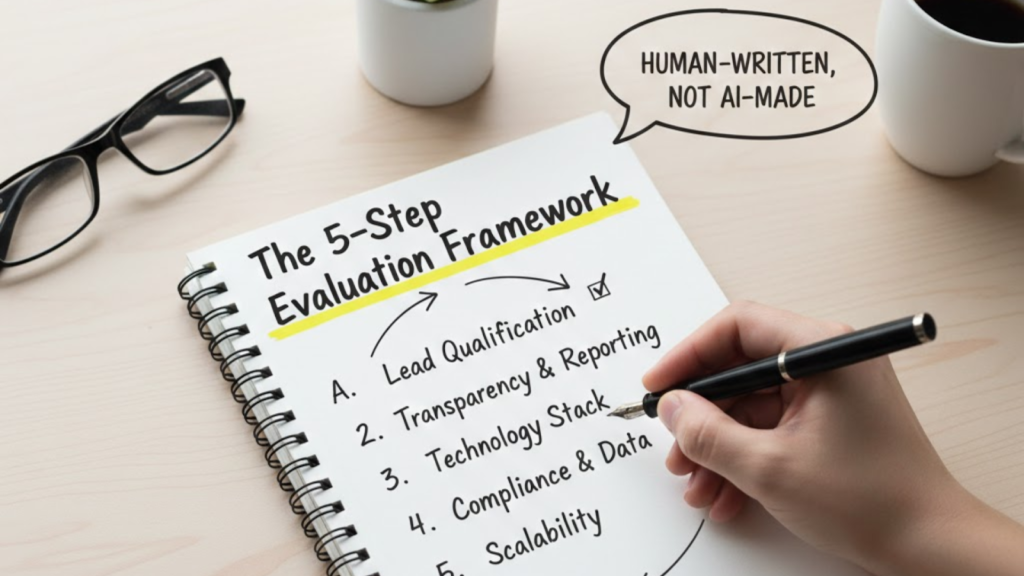
When interviewing online lead generation services, use this framework to evaluate their capability:
A. Lead Qualification Process (MQL to SQL)
Don’t settle for “raw leads.” Ask the agency how they qualify them.
- MQL (Marketing Qualified Lead): Someone who downloaded a brochure.
- SQL (Sales Qualified Lead): Someone who requested a quote or demo.
Demand SQLs if you want your sales team to be productive.
B. Transparency and Reporting
In India, “transparency” is often a gray area. Ensure the agency provides:
- Real-time access to a Lead Dashboard (Google Sheets, CRM, or custom portal).
- Recording of calls (if they do tele-calling).
- Attribution (where did the lead come from?).
C. Technology Stack
Does the agency use modern tools? In 2026, they should be using:
- AI Analytics: To predict lead behavior.
- CRM Integration: Directly pushing leads into your Salesforce, Zoho, or HubSpot.
- Automated Nurturing: Sending immediate “Thank You” emails or WhatsApp messages.
D. Compliance (GDPR & Digital Personal Data Protection Act)
With India’s new data laws, you cannot afford to use “stolen” or “scraped” data. Ensure the service provider follows opt-in methods. Illegal data usage can lead to massive legal fines for your brand.
E. Scalability
Can they handle your growth? If you need 50 leads today but 500 next month, can their systems and team scale without losing quality?
5. Pricing Models: A Deep Dive into Investment Strategies
When evaluating online lead generation services, the “how you pay” is just as important as “how much you pay.” In the Indian market, where budget optimization is key, understanding these four primary models will save you from hidden costs.
A. The Pay-Per-Lead (PPL) Model
In this performance-based structure, you only pay for the actual leads delivered.
- The Mechanics: The agency takes on all the advertising risk (ad spend, creative costs). You agree on a fixed price per lead (e.g., ₹500/lead).
- Pros: Very low risk for the buyer; easy to calculate ROI.
- Cons: Agencies may prioritize “quantity” over “intent.” You might get 100 leads, but only 2 might be reachable.
- Best For: High-volume industries like Real Estate, Insurance, and Education.
B. Monthly Retainer / Management Fee
This is the most common model for high-end digital marketing agencies.
- The Mechanics: You pay a fixed monthly fee (e.g., ₹50,000 to ₹2,00,000) for the agency’s expertise, and you pay the “Ad Spend” (Google/Meta) directly to the platforms.
- Pros: Complete transparency. You own the ad accounts and the data. The agency focuses on optimizing your brand, not just hitting a number.
- Cons: No “guarantee” on the number of leads; requires a long-term commitment.
- Best For: B2B Tech, SaaS, and niche consulting services.
C. The Hybrid Model (Retainer + Performance Bonus)
This is widely considered the “Gold Standard” in 2026.
- The Mechanics: A base fee covers the agency’s operational costs, while a “Success Fee” is paid for every lead that converts into a meeting or a sale.
- Pros: Aligns the agency’s goals with your revenue. They are incentivized to find “High-Intent” buyers.
- Best For: High-ticket items like Luxury Property or Enterprise Software.
D. Revenue Share / Commission Model
- The Mechanics: Rare but effective. The agency gets a percentage of the final sale value.
- Challenge: This requires deep integration between your CRM and the agency’s tracking tools to ensure trust on both sides.
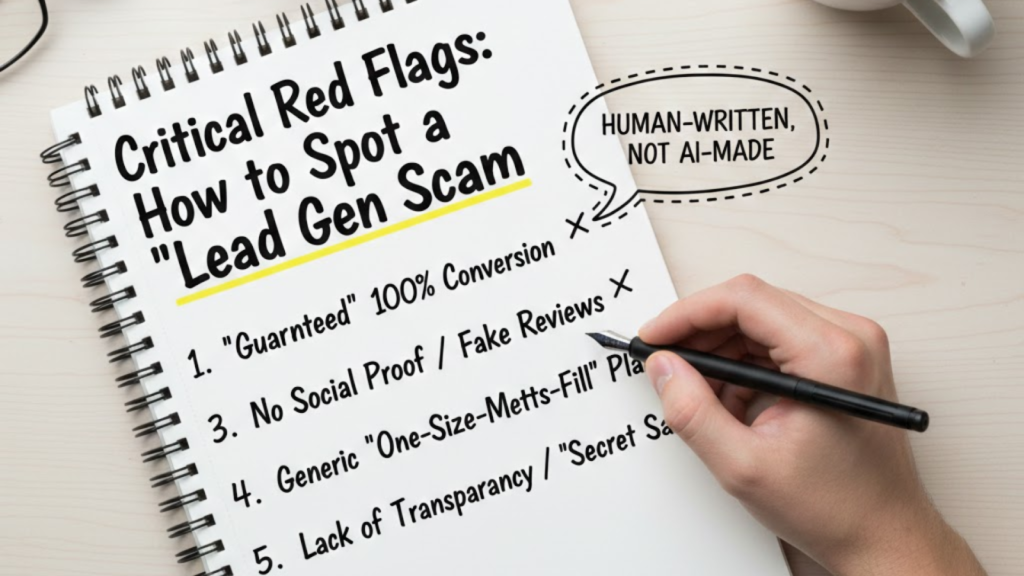
6. Critical Red Flags: How to Spot a “Lead Gen Scam”
The Indian digital space is crowded with “fly-by-night” operators. To protect your brand reputation and budget, watch out for these detailed warning signs when hiring online lead generation services.
Red Flag #1: The “Secret Sauce” or Lack of Process
If an agency says, “Don’t worry about how we do it, just look at the results,” be very careful.
- The Danger: They might be using “Black Hat” techniques, such as scraping private data from LinkedIn or buying leaked bank databases. This can lead to legal action under India’s DPDP (Digital Personal Data Protection) Act.
- The Standard: A professional service will explain their funnel—from the ad copy to the landing page to the lead magnet.
Red Flag #2: Instant Results without “Warm-up”
Lead generation is a psychological process. If a service promises 500 leads on Day 1:
- The Reality: These are likely “Recycled Leads.” These are people who were interested in a product 6 months ago and have already been called by 10 other companies.
- The Impact: Your sales team will face “Lead Fatigue” and high rejection rates, killing their morale.
Red Flag #3: Ownership of Assets
Many agencies build landing pages on their domains and run ads from their accounts.
- The Trap: If you stop paying them, they take all the data and the “learning” with them. You are left with nothing.
- The Solution: Always insist that the Facebook Pixel, Google Tag Manager, and Ad Accounts are owned by your company. The agency should only have “Manager Access.”
Red Flag #4: No Focus on “Lead Nurturing”
In 2026, a lead is just a “maybe.”
- The Red Flag: If an agency just “dumps” a CSV file of names in your inbox once a week.
- The Modern Approach: Quality online lead generation services provide an automated “Nurture Sequence”—an immediate SMS or WhatsApp to the lead so they don’t forget you by the time your sales team calls.
Red Flag #5: The “Cheap Data” Trap
India has a massive market for “Database Sellers” posing as lead gen agencies.
- The Difference: A database is a list of people who don’t know you. A Lead is a person who has specifically asked to hear from you. Never pay for a database; only pay for permission-based leads.
Frequently Asked Questions (FAQ)
Q1. How much do online lead generation services cost in India?
Cost varies wildly. For B2C (Real Estate/Finance), it can range from ₹200 to ₹1500 per lead. For B2B (IT/SaaS), it can go from ₹2000 to ₹10,000+ per lead depending on the seniority of the prospect.
Q2. Can I do lead generation myself?
Yes, but it requires a dedicated team of SEO experts, ad managers, and content creators. Outsourcing to a specialized service is often cheaper and faster than hiring an in-house team.
Q3. How long does it take to see results?
Paid campaigns (Google/Meta) can start generating leads within 48-72 hours. Organic methods (SEO/Content) usually take 3 to 6 months to show significant volume.
Q4. Will these services close the sales for me?
Generally, no. Online lead generation services bring the “horse to the water,” but your sales team has to “make it drink.” Some agencies offer “Appointment Setting,” which gets you closer to the sale.
Conclusion: Making the Final Choice
Choosing the right online lead generation services is a partnership, not a transaction. Don’t just look for a vendor; look for a team that understands your business values and speaks to your Indian audience with cultural relevance.