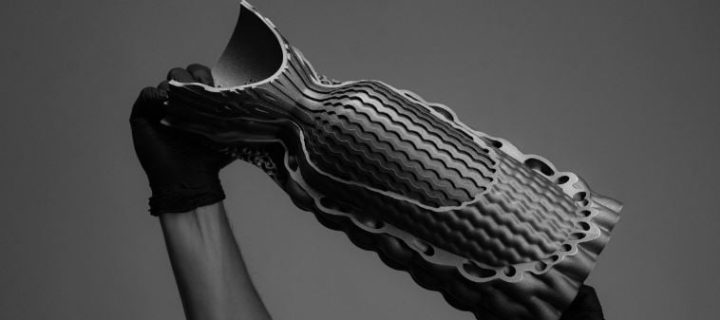
3D printing has been hailed as a game-changer in the manufacturing industry and beyond. It is a process of creating three-dimensional objects from a digital file, by layering material on top of each other until the desired shape is formed. This technology has the potential to transform the manufacturing industry, as well as other fields such as healthcare and architecture.
In this blog post, we will explore the various applications of 3D printing, its advantages and disadvantages, and the future of this technology.
Applications of 3D Printing
3D printing has numerous applications across various industries. In the manufacturing industry, 3D printing can be used for rapid prototyping, creating molds, and producing end-use parts. It can also enable companies to produce custom and complex parts that would otherwise be difficult or impossible to manufacture using traditional methods.
In the healthcare industry, 3D printing can be used to create customized prosthetics, implants, and even organs. This has the potential to revolutionize the way we approach medical treatments and surgeries.
In architecture, 3D printing can be used to create complex and intricate models, allowing architects to test their designs before construction begins. This can help to reduce errors and costs during the construction process.
Advantages and Disadvantages of 3D Printing
One of the main advantages of 3D printing is its speed and flexibility. With 3D printing, companies can quickly produce prototypes and iterate their designs, which can help to speed up the development process. Additionally, 3D printing can reduce waste and cost, as it can produce parts with minimal material and energy usage.
However, there are also some disadvantages of 3D printing. One of the main challenges is the limited material options available, as not all materials are compatible with 3D printing. Additionally, the quality of 3D printed parts may not always be as high as those produced using traditional manufacturing methods.
Future of 3D Printing
The future of 3D printing looks bright, as this technology continues to evolve and improve. In the future, we may see the development of new materials that are compatible with 3D printing, as well as the creation of larger and faster 3D printers. This could enable 3D printing to become more accessible and cost-effective, making it a viable option for a wider range of industries and applications.
Conclusion: 3D printing has the potential to revolutionize the manufacturing industry and beyond, with its speed, flexibility, and ability to produce custom and complex parts. However, there are also some challenges that need to be addressed, such as the limited material options and quality concerns. Despite these challenges, the future of 3D printing looks promising, and we can expect to see continued growth and innovation in this field in the years to come.